






Light color porcelain pavers are outdoor porcelain surfaces in beige, cream, sand, and pale grey. On a sunny patio or pool deck, the shade does more than set the style. It changes how large the area looks, how much sun the surface throws back, and how water marks read after a rinse. Hardscape.com makes 2CM porcelain pavers for residential outdoor spaces, including the neutral Beach Beige line used on patios and pool decks in Jupiter, Boca Raton, and Fort Myers.
Call (561) 998-5000 to compare light color porcelain pavers and order samples before you lock a palette.
This guide stays on that shade decision. It does not replace a full thickness guide, a heat-science article, or a patio design plan. Use it to decide whether a light field is the right outdoor surface, then look at a specific 2CM product.
What Are Light Color Porcelain Pavers?
Light color porcelain pavers are dense outdoor porcelain units whose face reads pale in daylight. Beach Beige is the clearest Hardscape.com example: a neutral beige 2CM paver offered in 12x24, 16x32, 24x24, and 24x36 inch sizes. Nearby light options in the same 2CM family include Snow White, Light Grey, Quartz Beige, and Sandstone Beige. Each is a porcelain paver, not a glazed indoor tile and not a natural-stone slab.
The color family is useful because it solves a different question from "which material should I use outside." Buyers who already want porcelain still have to choose a face. A pale field can make a compact patio feel more open. A warm beige can sit next to pool water and green lawn without fighting either one. A cooler grey can quiet a bright stucco house. Those are design outcomes, and they only show up when the sample is outside.
Hardscape.com describes Beach Beige as one of its most popular designs. The neutral beige works on a pool deck or patio, and it lets the blue of the water and the green of the yard stay visible. That is a practical way to think about any light shade. The paver should support the view, not become the only thing you notice.
The bottom line: light color porcelain pavers are pale porcelain faces, such as Beach Beige, chosen because they open a sunny outdoor room and stay visually quiet next to water and planting.
Why Do Light Shades Matter on a Sunny Patio?
Florida sun sits on a patio for most of the day. Hardscape.com notes that lighter porcelain reflects more sunlight than darker stone and is less likely to hold heat you feel underfoot. That is a color observation, not a promise that any paver stays cool at noon. A light deck in full sun can still feel warm. The useful comparison is light against dark in the same place, at the same hour, with the same thickness.
Openness is the second effect. Pale pavers make a laid area look larger. Darker faces pull the space in and can feel more intimate. On a small Jupiter courtyard or a narrow Boca Raton side yard, that difference is often the reason a homeowner picks a light field. If the goal is a cozier seating pocket, a darker border or a darker inset can do that work without darkening the whole deck.
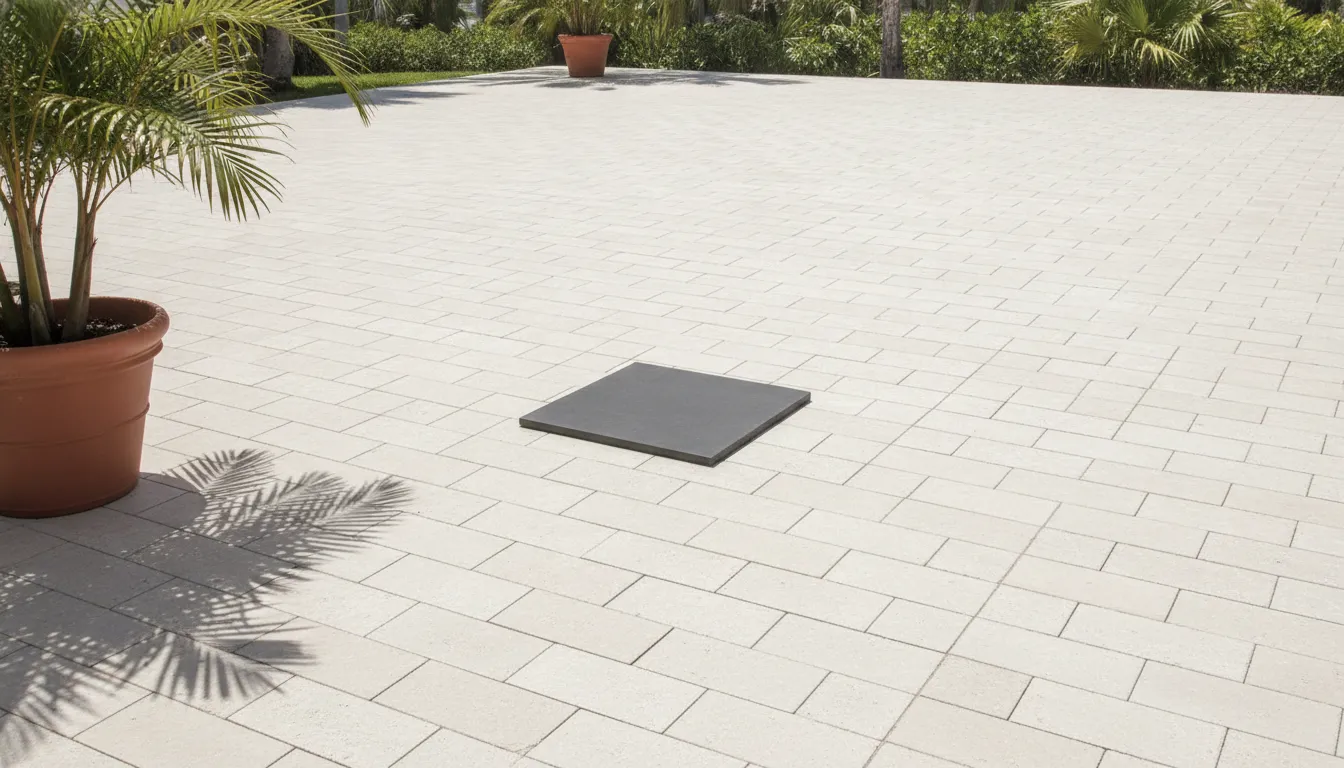
Water changes the read again. Pool decks and open patios get rinsed, rained on, and splashed. A very light face can show wet tracks and mineral film more clearly than a mid-tone beige. That is not a stain in the body of the paver. Porcelain used outdoors by Hardscape.com is described as nonporous and stain-resistant, so routine water marks usually sit on the surface and clean off. Still, if you dislike seeing wet footprints, compare a warm beige with a brighter white before you order the field.
The bottom line: a light shade can reflect more sun and make a patio feel larger, but you should compare samples wet and dry before treating that as the final look.
How Does Beach Beige Compare With Other Light 2CM Shades?
Beach Beige is the product to start with when the project is a residential patio or pool deck and the house exterior is already warm. It is a 2CM porcelain paver, which Hardscape.com positions for residential outdoor use rather than driveways. The face is neutral beige, so it can sit beside cream stucco, pale coping, and lawn without forcing a strong color story.
Other light 2CM faces answer a slightly different brief. Use the table as a shortlist, then confirm the live size list on each product page. Availability changes, and a size listed for one color is not a size for every color.
| Light 2CM face | What it does outside | Check before you choose it |
|---|---|---|
| 2CM Beach Beige porcelain pavers | Warm neutral field for patios and pool decks. Lets pool blue and lawn green stay visible. | Confirm 12x24, 16x32, 24x24, and 24x36 are the sizes you need. |
| Quartz Beige | Another warm beige if Beach Beige is too sandy or too even for the architecture. | View it next to Beach Beige in the same sun. Small beige shifts read larger on a full deck. |
| Sandstone Beige | A beige with a stone-like read for patios that should feel softer than a solid field. | Confirm the texture still feels comfortable for bare feet around the pool. |
| Snow White | The brightest light field. Makes a tight patio feel more open. | Look at it wet. Bright faces show water tracks and leaf debris more clearly. |
| Light Grey | A cool light face for white or grey houses that clash with warm beige. | Compare it with Beach Beige at the coping. Cool grey can look bluer beside pool water. |
None of these faces is a different installation system. They are color choices inside the residential 2CM range. If the area will take vehicles, stop the color conversation and move to a thicker category. A light face does not change what a 2CM paver is for.
The bottom line: start with Beach Beige for a warm patio or pool deck, then use Quartz Beige, Sandstone Beige, Snow White, or Light Grey only if the sample comparison shows a clearer match.
Which Outdoor Areas Suit a Light Porcelain Field?
A light field earns its place where people are barefoot, where the view matters, and where the area should feel open. That is the typical Florida patio and the typical pool surround. It is a weaker default on a utility path that collects irrigation stain, or on a covered lanai that never sees the sun the light shade is meant to handle.
Patios and seating areas
On a patio, light color porcelain pavers keep the furniture and the planting in front of the floor. Pair the field with one module size so the joints stay quiet. If the patio is small, a large pale module reduces the number of lines. The large format versus small format comparison covers that layout choice. This article does not.
Pool decks
Around a pool, the same pale field can connect coping, water, and deck. Hardscape.com calls out slip resistance on Beach Beige as a reason it is used on pool decks and patios that get wet. Ask for the current slip information for the exact item you are ordering. A color name is not a test result. The pool deck paver guide covers drains, edges, and deck planning in more detail.
Walkways and steps
A light walkway can lead the eye toward the patio without looking like a dark stripe through the yard. On steps, confirm the edge detail and the wet grip before you match the stair to the field. The outdoor step guide is the place for that check. Stepping stones are a separate product path if the route should read as pads in planting rather than a paved walk.
The bottom line: use a light field on open patios and pool decks first, and treat walkways and steps as matches to that field only after the edge and wet-use details are confirmed.
How Should You Judge a Light Shade Before You Order?
A screen photo cannot settle a light shade. Beach Beige, Snow White, and Light Grey can look almost interchangeable on a phone and clearly different on the ground. Hardscape.com showrooms in Jupiter, Boca Raton, and Fort Myers are the practical place to see full units together. Bring a photo of the house wall, the coping, and the furniture finish.
Review at least one light option and one darker option in the same sun. Use this order:
- Set the samples flat, not upright.
- Look at noon and again later in the afternoon.
- Wet both samples with a hose and let them dry partway.
- Check the halfway-dry stage, where mineral spots and splash marks show.
If the brighter sample bothers you wet, move one step warmer, toward Beach Beige or Sandstone Beige, instead of abandoning a light field.
Also check the shade across the pieces you are shown. Porcelain from one production run belongs together. If you need a later add-on, ask how that color is tracked before you assume a future pallet will match the deck you install now. The sample and outdoor palette guide walks through a broader sample review. Use it after you have narrowed the light family.
The bottom line: approve a light shade only after you see it flat, wet, and next to the house, with one darker sample beside it for scale.
What Should You Confirm About 2CM Use and Sand-Set Installation?
Color does not pick the thickness. Hardscape.com offers 2CM, 3CM, and 5CM porcelain pavers for different uses. The 2CM porcelain paver guide explains where the thinner residential category fits. Read it before you specify Beach Beige on anything beyond a patio, pool deck, or foot path. A driveway or heavy commercial deck needs its own thickness review.
Installation for these porcelain pavers is sand-set. The base, slope, and joint sand are what keep water moving and the field even. Hardscape.com publishes a porcelain paver installation guide for that sequence. Ask the installer to follow that sand-set method for the product you order.
Joints are part of the light-shade decision. A pale field makes the joint color obvious. Look at polymeric sand next to the paver sample, dry and wet. A joint that is much darker than Beach Beige will draw a grid across the deck. A joint that is too close to the paver can make the field look like one slab, which some owners want and others do not. Spacers keep that joint width consistent so the light face stays even.
Edges need the same preview. Porcelain coping should be viewed against the field, not chosen from a name. A white coping on Beach Beige reads cleaner than a dark bullnose, but only if the pool interior agrees. Pool planning beyond the color match belongs in the porcelain pool coping guide.
The bottom line: keep Beach Beige in the 2CM residential range, install it sand-set, and choose joint sand and coping while the light sample is still in your hand.
How Do You Keep a Light Porcelain Surface Looking Even?
Light color porcelain pavers do not need a sealer to stay light. What you maintain is the surface: irrigation overspray, leaf tannin, pool splash, and dirt in the joints. Because the face is pale, those films show sooner. That is a cleaning cadence, not a defect in the color.
Rinse planted edges and fertilizer zones before residue dries. Sweep grit so it does not travel across the deck. For routine washing, follow the porcelain cleaning guidance and the after-installation care notes instead of inventing a chemical mix. The care guide covers day-to-day cleaning if you want the longer version.
If a light deck will sit against a darker border, order both colors from the current run and keep a few spare pieces. A later repair is much easier to hide in a mid-tone beige than in a bright white field. Ask the showroom how extras from that order are packed before the pallets leave.
The bottom line: a light field stays visually even when you rinse films early, clean with the published method, and keep spare pieces from the same order.
Ready to compare shades in person? Call (561) 998-5000 or review 2CM porcelain pavers and ask for a Beach Beige sample.
Frequently Asked Questions
Are light color porcelain pavers cooler than dark ones?
Hardscape.com says lighter porcelain reflects more sunlight and holds less heat than darker stone. Compare your shortlisted colors outside before you treat that as a comfort guarantee. Full sun can still warm a light deck.
Is Beach Beige only for pool decks?
No. The product page presents 2CM Beach Beige for pool decks and patios. It is a residential 2CM paver, so confirm the use before you place it on a driveway or a heavy commercial walk.
Will a white or beige paver show every water spot?
Bright faces show wet tracks more than mid-tone beiges. Wet the sample and let it dry halfway. If the spots bother you, step from Snow White toward Beach Beige or Sandstone Beige.
Can I mix Beach Beige with a darker porcelain border?
Yes. A darker border can frame the light field and make a seating area feel smaller. View both pieces flat, in the same sun, and match the joint sand to the field rather than to the border.
Where can I see these shades in Florida?
Hardscape.com showrooms in Jupiter, Boca Raton, and Fort Myers can lay light samples out for a side-by-side look. Call (561) 998-5000 before you visit so Beach Beige and the comparison shades are on hand.
Choose a Light Shade You Have Seen Outside
Light color porcelain pavers are a shade decision inside an outdoor porcelain plan. Beach Beige is the practical starting point for a warm Florida patio or pool deck because the neutral face stays quiet next to water and lawn. Snow White opens a small space further. Light Grey cools a grey house. Quartz Beige and Sandstone Beige give you other warm steps if Beach Beige is not quite right.
See the finalists flat, wet, and next to the coping. Keep the choice in the 2CM residential range unless the project needs a thicker paver. Then install sand-set, with joint sand and coping chosen against the same sample.
Call (561) 998-5000 to request Beach Beige samples or talk through a light porcelain field for your patio or pool deck.


