20 Jul
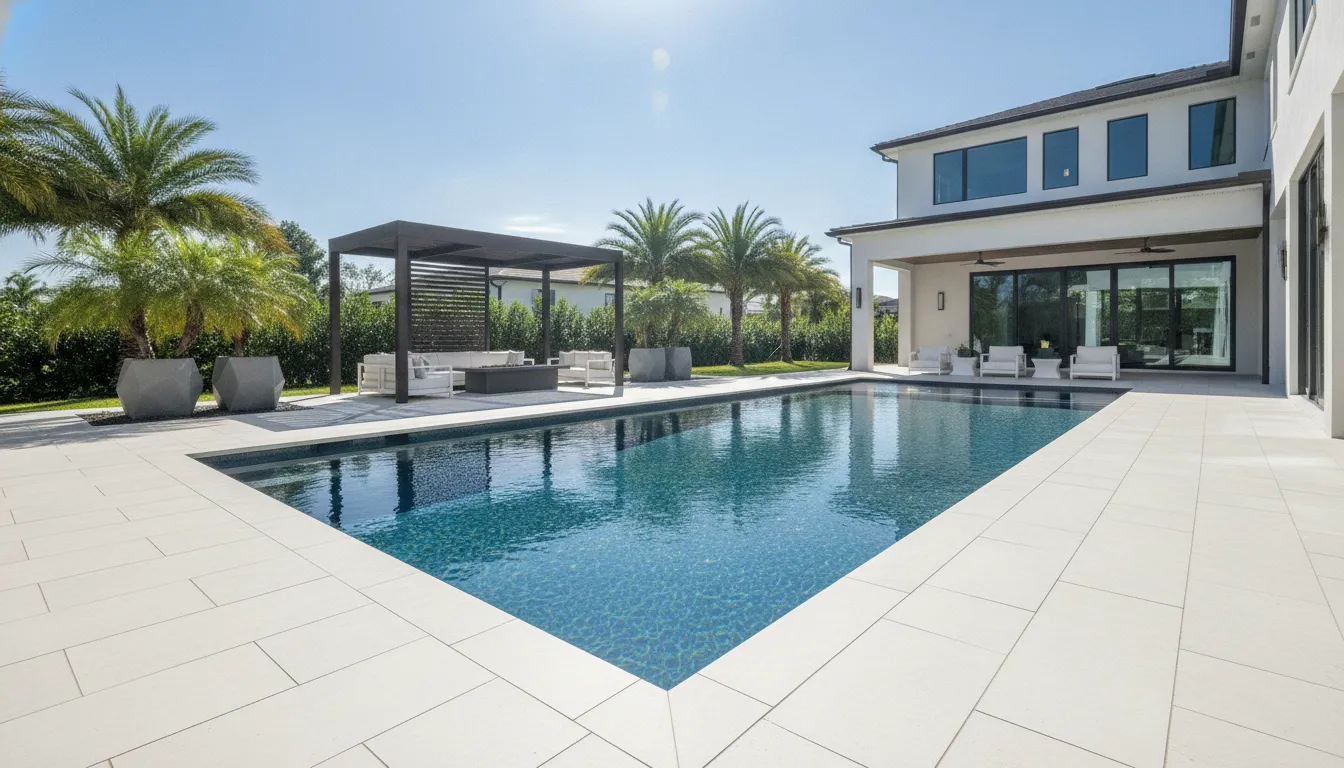
Porcelain pool coping is a highly durable, low-maintenance protective border installed around the periphery of a swimming pool to prevent structural damage and water intrusion. Engineered through a high-temperature vitrification process, this material achieves near-zero porosity and a water absorption rate under 0.5 percent, making it exceptionally frost-resistant and slip-resistant. According to an academic patent study on swimming pool coping, these surfaces are easy to clean and maintain compared to porous natural stone or concrete. Hardscape.com offers these engineered coping profiles in two-centimeter, three-centimeter, and five-centimeter thicknesses to ensure a perfect match with your sand-set pool deck pavers.
If you want to upgrade your pool area, understanding the fundamentals of this durable material is the first step. You might wonder how this engineered stone compares to older options like concrete or travertine. We will examine the core features and design options starting below.
Every swimming pool needs a strong border to protect its structure and make it look complete. This border is called pool coping. Coping sits right on the top edge of your pool shell, where it covers the concrete wall and acts as a cap. It helps redirect splashed water away from your pool deck, keeps water from getting behind the pool shell, and gives swimmers a safe place to hold onto. While builders have used natural stone and concrete for this task for a long time, porcelain pool coping has become the modern choice for high-end homes and resorts.
The main job of pool coping is to protect your pool. Without a solid cap, water can easily seep into the small gaps between the pool shell and the surrounding pool deck. Over time, this water can wash away the sub-base, crack the structure, and cause the ground to shift. Coping creates a vital shield that keeps your pool intact for decades. It also creates a clean, finished rim that frames your pool, turning a raw concrete edge into a beautiful design feature.
To understand why porcelain is such a tough material, you must look at how it is made. Modern outdoor porcelain is not like thin indoor tile. It is a highly engineered paver made from natural raw materials. Manufacturers mix premium clays, sands, kaolins, feldspars, quartz, and natural oxides to form a dense base. This raw mix is then fired in kiln ovens at temperatures that often exceed 2,200 degrees Fahrenheit.
This intense heat triggers a process called vitrification. During vitrification, the natural ingredients fuse together and melt into a glass-like state. This process eliminates almost all open pores in the clay. The result is a material with zero porosity and extremely low water absorption. Because it cannot absorb water, it will not swell, crack, or degrade when exposed to constant moisture or pool chemicals. This makes the coping highly durable and easy to maintain when installed around the periphery of a pool.
Old-fashioned concrete and natural stone coping can look nice at first, but they have major flaws. Both concrete and stones like travertine are highly porous. They act like sponges, absorbing water, salt, chlorine, and acid. In the hot sun, this trapped moisture can cause the stone to flake, stain, or grow dark mold. Concrete can also crack and fade as the years go by.
In contrast, vitrified porcelain stands up to the elements without changing. It does not stain from wet leaves or sunscreen, and mold cannot grow inside its dense surface. It also resists fade from UV rays, so its color stays rich and bright even under the intense Florida sun. While natural stone can vary wildly in strength and thickness, porcelain is made to precise standards. Giving you a perfectly flat, safe, and reliable surface for your pool edge.
Selecting the right coping is key to a beautiful and safe swimming area. High-performance material makes your pool deck last longer and work better. Hardscape porcelain pool coping offers strong perks that natural stone or concrete cannot match. Homeowners get a safer pool side that looks great for a long time.
Safety is the first goal around any swimming pool. Wet decks can get slick and lead to falls. High-quality outdoor porcelain pavers are skid-resistant and strong, as documented by Brown County UW-Extension. This grip keeps your family safe while they walk around the pool edge.
This material is also built to last. It handles high traffic and heavy weight without cracking or breaking. In fact, outdoor porcelain can hold up to 2,000 pounds of load. This makes it an ideal fit for busy backyards, commercial pools, and active family spaces.
Many pool owners spend too much time and cash on cleanups. Classic pool stones are porous, so they soak up water, dirt, and pool chemicals. This leads to stains, mold, and rot over time. Porcelain pool coping has a dense body that stops water from getting in. This makes the surface simple to clean and very low-maintenance compared to soft stone, as shown on PubChem NCBI.
Pool water contains harsh chemicals like chlorine and salt. These substances can eat away at concrete or limestone coping. Porcelain does not react to these pool chemicals, so it keeps its look and strength. You will not need to seal the coping year after year to guard it from salt water or chlorine.
Florida sun can make deck surfaces burn hot. Hot coping makes it hard to walk or sit near the pool edge. Outdoor porcelain is engineered to reflect heat better than dark natural stones. It stays cool underfoot, even on hot summer days. This cool-touch quality makes your pool area much more comfortable to use.
The bright sun also causes many materials to fade. UV rays break down pigments in concrete and some stone over time. Porcelain coping is UV-stable, which means its color will not fade or change under direct sunlight. Your pool edge will keep its rich look for years. For the best layout, you can pair your pool edge with a full deck using porcelain pool deck benefits.
Selecting the right size and shape for your pool border is key to its safety and look. High-quality porcelain pool coping comes in three main thicknesses and three classic edge styles. Each option works best for specific types of outdoor projects.
To match your specific site needs, you can choose from 2CM, 3CM, and 5CM thick options. Standard 2CM porcelain pavers are perfect for most backyard pool decks. They are light, strong, and easy to lay in a sand bed. For commercial spaces or areas with high foot traffic, 3CM porcelain pavers are the industry standard. They offer extra weight and strength to withstand heavy daily use. Finally, 5CM coping is made for special builds that need maximum bulk and a bold, thick border.
The edge profile of your pool border shapes both its style and comfort. The full round bullnose is a classic pool edge with a smooth, curved shape. It has no sharp corners, which makes it safe and gentle for swimmers who hold onto the pool side. For a modern, clean look, the eased edge profile is a great choice. It has a flat face with slightly softened top and bottom corners. If you are updating an old pool, the remodel edge works best. It has a special drop-down lip that hides the old pool beam beneath it during retrofits.
One major benefit of porcelain is that you can use the same material for both your coping and the pool deck. This design choice creates a seamless flow from the water's edge across your entire outdoor living area. Because the pavers and coping share the exact same raw clays, quartz, and sands, they match perfectly in texture and color. According to product design studies indexed by the National Institutes of Health, engineered coping of this type is highly durable, easy to install, and simple to maintain. This total design integration makes your pool deck look clean, unified, and highly professional.
Choosing the right material for your pool edge is key to the long-term health and look of your pool. Traditional pool coping choices like poured concrete, travertine, and cast stone each have distinct performance limits. Modern engineering makes porcelain pool coping a superior alternative that excels where traditional options fall short.
Concrete and natural stone have high rates of water absorption. Travertine is highly porous and prone to wear when exposed to pool chemicals. Chlorine can etch the surface of natural stone, which leads to early pitting and cracks. Concrete also absorbs oil and dirt easily, requiring frequent sealing and high-pressure washing to stay clean.
In contrast, high-temperature firing makes porcelain practically non-porous. It does not need sealing to block liquid penetration. This prevents salt, chemical, and moisture damage, ensuring the edges around your pool remain clean and intact for years.
This table compares key performance metrics of common pool coping materials based on durability, maintenance needs, slip safety, and total lifespan value.
| Material | Durability | Maintenance | Slip Resistance | Heat Retention | Lifespan Value |
|---|---|---|---|---|---|
| Porcelain Coping | Excellent (no frost damage) | Low (never seal) | High (skid-resistant wet) | Low (cool to touch) | High (lasts decades) |
| Concrete Coping | Moderate (can crack) | High (needs seals) | Moderate (wears down) | High (absorbs heat) | Low (frequent repair) |
| Travertine Coping | Moderate (can pit and etch) | High (needs seals) | High (natural texture) | Moderate (gets warm) | Moderate (high initial cost) |
| Cast Stone | Low to Moderate (moisture risk) | Moderate (needs seals) | Moderate (smooth) | High (retains heat) | Moderate (cracks over time) |
Safety is critical for any wet surface. Outdoor porcelain pool coping provides exceptional skid resistance, keeping your pool deck safe for bare feet. According to a study on porcelain performance by Brown County UW-Extension, outdoor porcelain is frost-resistant, skid-resistant, and durable under heavy loads. It stays cool under direct sunlight, while concrete and cast stone retain high heat, making them uncomfortable to walk on during hot summer days.
From a maintenance perspective, porcelain requires minimal care compared to porous concrete or travertine. Choosing porcelain reduces your overall upkeep costs and eliminates the need for expensive chemical sealants. This makes it the most cost-effective, long-term solution for modern pool designs.
Florida pool decks face intense heat, high humidity, salt air, and heavy storms. Standard pool deck materials often fade, crack, or grow slick with mold under these harsh conditions. Choosing porcelain pool pavers in Florida along with matching coping ensures your pool area stays beautiful and safe for decades.
The local climate places unique demands on pool borders. Strong sun and high ultraviolet rays can fade natural stone, while high moisture leads to mold growth on porous concrete. Non-porous porcelain resists these issues because it does not absorb water or trap dirt. This low water absorption, often backed by studies from the University of Wisconsin-Extension, makes porcelain highly resistant to salt air, pool chemicals, and heavy storms.
Buying coping online without seeing it in person can lead to unexpected color or texture mismatches. Ordering samples lets you test how the material looks in real sunlight and how slip-resistant it feels when wet. Checking physical samples helps you match the coping perfectly with your deck pavers. Hardscape.com makes it easy to order samples so you can make an informed choice for your home.
Seeing a full layout is the best way to choose the perfect material for your pool deck. Hardscape.com has local showrooms across the state to help you plan your project. You can speak with a team member and view our full selection in Jupiter, Boca Raton, or Fort Myers. Viewing the products in person helps you select the right edge profile and thickness for your specific sand-set installation needs.
Porcelain pool coping offers extreme durability and safety. According to industry research, outdoor porcelain is skid-resistant, frost-resistant, and easy to clean. Since it is non-porous, it resists algae growth, chlorine damage, and salt stain marks. This keeps your pool edge clean, safe, and beautiful for decades with very little maintenance.
Yes, it is exceptionally strong. The high-heat firing process makes porcelain dense and tough. These pavers can support heavy loads up to 2,000 pounds without cracking. This high breaking strength means your pool borders can easily handle constant foot traffic, heavy patio furniture, and intense Florida weather without showing wear.
Proper installation requires a sand-set method. Builders set the coping over a compacted gravel sub-base and a thin sand bed instead of laying it on concrete. This sand-set method allows the pool deck to flex naturally during temperature shifts. It prevents cracking and ensures excellent drainage around your swimming pool perimeter.
No, it remains comfortable to walk on. High-quality porcelain has a low thermal conductivity, which helps it resist heat absorption. It stays cooler under direct sunlight than dark natural stones or concrete materials. This makes it a comfortable, bare-foot friendly option for sunny pool decks in Florida.
Delaying your pool deck project or choosing porous materials can lead to stained edges and constant upkeep. Installing a durable sand-set system now ensures you get a clean, slip-resistant pool border that stays beautiful for decades. Take the first step today to secure a safe and stunning outdoor space that lasts.
Ready to request samples or plan your project? Call Hardscape.com at 561-998-5000 to speak with our team, or visit one of our Florida showrooms today.