2 Oct
Choosing an outdoor palette from a screen or showroom wall can hide the details that matter on site. Florida light, nearby walls, planting, and existing hardscape can change the balance, while a pattern that looks right in isolation may feel different beside the finished space. A physical sample gives you a practical way to test those decisions before narrowing the field.
.Ask Hardscape.com about porcelain paver samples and compare your leading options against the setting where they will be used.
Porcelain paver samples are physical decision aids that let you compare color, texture, scale, and project fit in the setting where the materials will be used. Review them in natural light. Place them near adjacent materials and use them to guide the selection without assuming that one small piece represents every detail of a completed installation.
This approach helps homeowners make a clearer choice while giving designers, architects, and contractors a shared reference for discussing the palette. The value is not simply seeing more options. It is evaluating each option against the actual conditions, materials, and visual priorities of the project.
A palette can look convincing on a screen and still feel different beside a home, landscape, pool, or existing hardscape. Physical porcelain paver samples let you evaluate the actual material in the setting where you plan to use it. You can move candidates outdoors, compare them at different times of day, and see whether the colors support the overall direction of the project.
Samples are especially useful when two or three options appear suitable. Place candidates near walls, coping, plantings, furniture, pool water, or other materials that will remain part of the space. That comparison can reveal whether a paver feels too visually prominent, too close in tone to an adjacent element, or appropriately balanced.
They also give a project team a common point of reference. A homeowner can explain a preference by pointing to a real piece. A designer can discuss the intended visual direction. An architect or contractor can carry the selected product conversation into questions about application, layout, ordering, and sand-set installation planning.
Review each candidate where the finished pavers are expected to go, then step back and consider the relationship among the materials. Designers and contractors can use the same process to align the material conversation with the broader plan. Homeowners gain a clearer basis for discussing preferences with their project team.
A sample is a useful guide, not a promise that every paver in a completed installation will look identical. A larger field can create a different overall impression because the material occupies more space and is viewed from more angles. Use the sample to understand the intended color and visual character, then confirm product-specific questions before ordering.
The bottom line: Porcelain paver samples turn a palette decision into a practical comparison. Reviewing them in the intended outdoor setting helps you assess color relationships, visual scale, and overall fit before selecting a product. Treat each sample as evidence for the decision, while allowing the full installation to create its own visual rhythm.
A sample is most useful when you evaluate it as part of the project, not as an isolated square. Place each porcelain paver sample where the finished material may be used, then compare how it relates to surrounding colors, textures, dimensions, and design purpose. This turns a quick visual preference into a more informed selection.
Start with color in context. View the sample beside existing walls, coping, pool elements, furnishings, planting, and other hardscape materials that will remain. The goal is not to find a piece that looks attractive by itself. The goal is to see whether the overall palette feels intentional beside the features already shaping the space.
Next, assess surface character from the viewing distance people will use most often. Look at the sample close up, then step back and consider how much visual variation remains noticeable. This is useful for comparing a quieter selection with one that has stronger movement or contrast.
Size also affects visual scale. Hold or place the sample near the project area and consider whether its proportions feel appropriate for a patio, walkway, pool deck, driveway, or another intended application. A format that feels balanced in a small display may create a different impression across a larger outdoor space. Compare the sample with the layout, sightlines, and neighboring materials rather than judging it only under showroom conditions.
Finally, connect appearance to use. Ask whether the candidate belongs in the application you are planning and whether its product category fits the project's requirements. Hardscape.com offers porcelain paver categories that include 2CM, 3CM, and 5CM options. Product-specific guidance should determine which category fits the project, not appearance alone. You can browse porcelain paver options while narrowing the candidates you want to evaluate.
| Sample check | What to observe | Why it matters |
|---|---|---|
| Color | Relationship to walls, coping, planting, water, and existing hardscape | Shows whether the palette feels cohesive. |
| Surface character | Visual movement from close and normal viewing distances | Helps you judge the piece in the way the finished space will be experienced. |
| Scale | How the sample relates to the planned area and layout | Connects a small sample to the visual rhythm of the project. |
| Application | Whether the candidate belongs in the planned product category | Keeps appearance connected to project-fit questions. |
The bottom line: Compare each sample against your actual surroundings, not a blank background. Check color beside adjacent materials, surface character at multiple distances, size against the intended scale, and overall suitability for the application. Use the sample to choose a direction, then confirm product details for the project.
There is no universal sample count for every patio, walkway, pool deck, or commercial project. A useful set is large enough to reveal meaningful differences, but focused enough that you can compare each option against the same project requirements. Define the setting first, then choose the pieces that answer the most important design questions.
Begin with the intended application and the thickness category that may fit the project. Hardscape.com offers 2CM, 3CM, and 5CM porcelain paver categories, but the right category depends on the project and the product-specific guidance. Keep the first comparison focused on options that could realistically fit the planned use rather than mixing every available candidate at once.
Then choose a focused range based on the visual decisions that matter most:
Review the set together in the actual project setting when possible. Move the samples through different areas and compare them at the time of day when the space is most often used. The goal is to identify the strongest direction and the questions that still need product-specific answers, not to collect an unmanageable number of pieces.
Homeowners may want a compact group that makes a decision easier. Designers and contractors may need a broader comparison when a project includes more than one application or coordinating area. In either case, label the candidates and record why each one remains in consideration.
The bottom line: Choose samples by application and relevant product category first, then narrow the set by color family, surface character, scale, and adjacent materials. A focused comparison makes differences easier to assess while keeping the final selection connected to the real project context.
A porcelain paver sample can look different as the light around it changes. Florida's strong sun, open skies, screened patios, covered lanais, and deep shade each create a different viewing condition. A color that feels soft in a showroom may appear brighter outdoors, while a shaded area can make neighboring tones seem deeper or cooler.
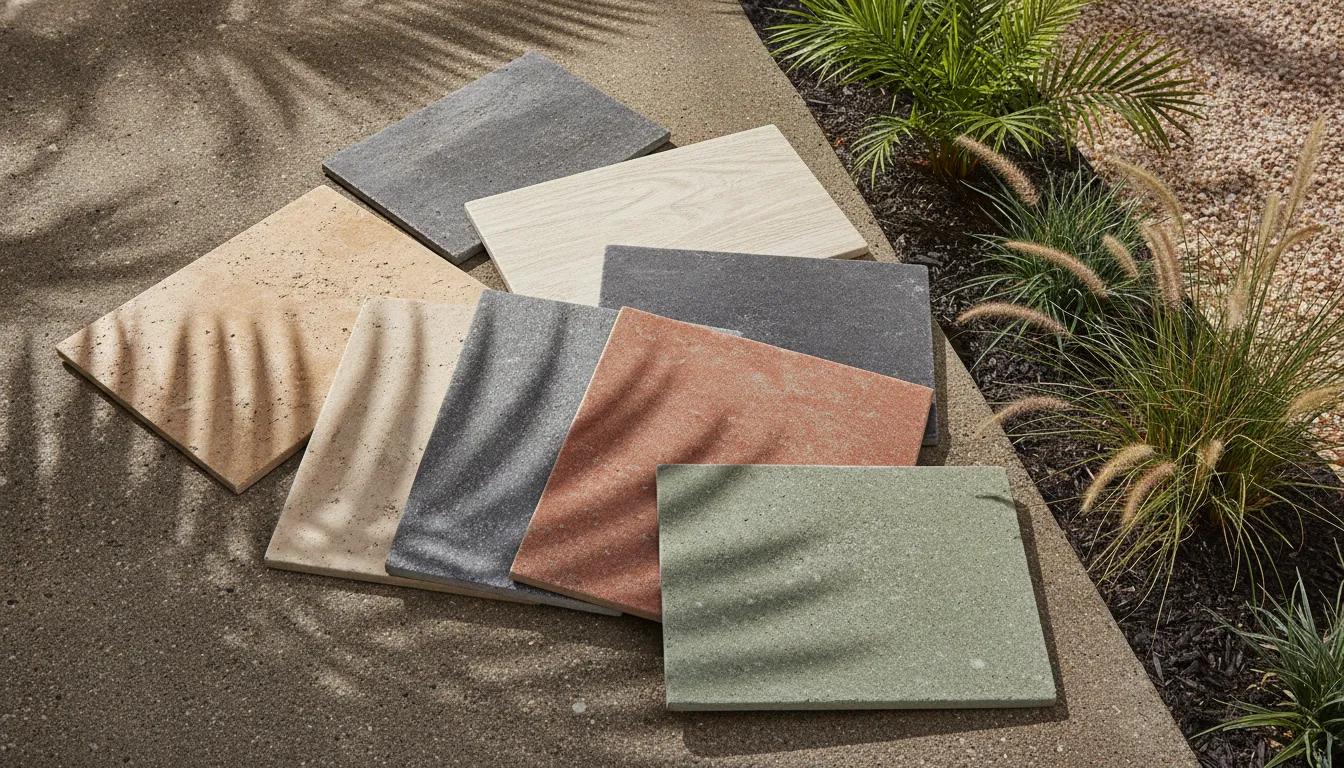
Use that difference as part of your evaluation. Place each option where the pavers are likely to be used, then view it in morning light, midday sun, and late afternoon. If the project includes both sunny and covered areas, check the sample in each setting. This helps you judge whether the palette feels consistent with the overall outdoor space.
Surrounding materials also affect perception. Pool water, painted walls, landscaping, wood, furniture, and existing hardscape can reflect or absorb light near the sample. Set two or three candidates beside those elements instead of viewing each piece against a blank surface. That comparison is more useful than relying on a single indoor observation.
Take notes about where the sample was viewed and which conditions changed your preference. A light neutral may feel open in direct sun but lose some contrast in shade. A darker or more varied selection may provide a stronger visual anchor near a light exterior. These are project-specific observations, so record them rather than assuming a digital image will answer the question.
The bottom line: Florida light can change how a porcelain paver sample is perceived from one setting to another. View samples outdoors, compare them at different times of day, and place them beside the landscape and materials they will work with. That process gives you a more useful basis for choosing a balanced palette.
A sample is most useful when it becomes part of a project conversation. Once you have narrowed the palette, bring the leading porcelain paver sample into discussions about the space, intended application, project scale, and installation plan. This keeps the visual decision connected to practical decisions instead of treating color as a separate step.
Start by identifying where the paver will be used. A patio, pool deck, walkway, driveway, and commercial outdoor space may each call for a different product conversation. The selected sample should lead to a product category that fits the project's application and the professional's specifications. Do not choose a thickness category from appearance alone.
Next, discuss the planned layout and the materials that meet the paver. A sample can help you decide whether the palette works with the home's exterior, coping, walls, planting, or other fixed elements. It can also help a designer or contractor identify whether the selected color family remains cohesive when the project uses more than one size or a coordinating accessory.
For a sand-set installation, the sample is one input in a larger planning process. The installer or project professional still needs to review site conditions, layout, drainage, edge details, joint approach, and the accessories required for the chosen system. Homeowners can make that conversation more productive by bringing the sample, site photos, measurements, and notes about how the space will be used.
Architects and contractors can also use the sample as a communication reference. Keep the product name, intended application, preferred layout, and open questions together so the same selection is discussed from design through ordering. If the project requires a different category, compare the relevant product options rather than assuming that one sample answers every technical question.
The bottom line: Use porcelain paver samples to start a project-fit conversation, not to make an isolated color decision. Connect the chosen sample to the application, product category, layout, and site conditions. Include sand-set planning so the final palette supports both the design goal and the work required to deliver it.
Once you have compared your porcelain paver samples, record the option that best supports the project rather than relying on memory. Note the preferred color, surface character, size, and likely application, then photograph the sample beside the surrounding materials. This creates a practical reference for the next conversation with your designer, architect, contractor, or supplier.
Next, verify that the selected product fits the intended use and project requirements. Hardscape.com presents porcelain paver options by product category and thickness. Browse porcelain paver options to review the product information alongside the sample you selected. If you are still narrowing the palette, use the Hardscape inspiration catalogs to gather more ideas for related colors and materials in outdoor settings.
If you want to continue comparing physical options, contact Hardscape.com to ask about sample availability and explain the application, location, and palette you are considering. A showroom visit may also be useful when you want to see product selections in person. Review Hardscape showroom locations before your visit, and bring your notes, sample photos, measurements, and project plans.
Keeping the selection connected to the actual project makes the next conversation more productive. It also helps the professional team distinguish a visual preference from a product requirement. This can prevent a palette decision from getting ahead of the application and installation plan.
The bottom line: After comparing porcelain paver samples, document your preferred option, confirm its product and application fit, and use Hardscape resources to resolve remaining questions. Ask about sample availability or visit a showroom to evaluate product selections in person before making the final decision.
Ask Hardscape.com about porcelain paver samples and discuss the right next step for your project.
Place the samples together and view them beside the home, existing hardscape, landscape materials, and exterior colors that will remain. Compare the overall palette, visual scale, surface character, and how each option looks from the distance where people will experience the finished space.
Lighting can change how a color appears from one setting to another. Review samples outdoors, near the project, and in a covered area when possible. Light conditions affect how colors are perceived, so one indoor observation is not the whole evaluation.
Ask about a focused group of options rather than trying to compare every available color. Start with the project application and relevant product category, then narrow the set by palette, scale, surface character, and surrounding materials. A manageable group makes meaningful side-by-side comparisons easier for homeowners and project professionals.
Keep the selected samples with your project notes and discuss the intended application, product dimensions, and sand-set installation plan with your designer, architect, or contractor. If you need more options or want to see products in person, use the samples as a starting point for a showroom visit or a focused conversation with Hardscape.com.
The bottom line: Use samples to compare the palette in context, then carry the selected color, surface character, scale, and application into the next project discussion. The best next step is the one that resolves the remaining visual or product-fit question.
Comparing porcelain paver samples in your project setting can make it easier to discuss color, scale, and overall fit with confidence. Contact Hardscape.com to ask about sample availability and get started with the next step for your project. You can also call 561-998-5000 to speak with the team.