17 Sep
Choosing tiles for outdoor steps non slip is not only a material decision. It is a transition-planning decision. Each tread, riser, edge, landing, and adjacent path has to work as one walking surface, especially after rain. Porcelain pavers can give homeowners and design professionals a durable, low-maintenance way to coordinate those areas, but the safest result starts with project measurements and an installation plan rather than a color choice alone.
Begin with the complete route, not just the visible stair faces. Photograph the approach, landing, steps, and destination area. Then record the number of risers, the approximate tread depth, the width of each flight, the location of handrails, and where water currently travels. This information helps a designer or qualified installer decide how the paver layout should meet the existing grade.
For a new stairway, the stair geometry should be designed before pavers are ordered. For a renovation, measure the existing conditions carefully because adding material at a tread or landing can change the relationship between the first step, the last step, doors, gates, and nearby drainage. A transition that looks minor in a plan can feel uneven when people walk it.
Plan the route as a sequence of zones:
A coordinated plan also prevents a common ordering mistake: selecting a paver for the treads without confirming whether the same collection, a matching coping piece, or a compatible edge detail is available for the risers and perimeter.
The bottom line: Outdoor steps are a connected system. Measure the entire route, resolve elevation and drainage first, and then select porcelain pavers, edge details, and accessories that can be specified together.
For step applications, evaluate more than appearance. Ask for current product information covering the intended application, thickness, dimensions, documented slip-resistance properties, edge options, and installation requirements. A product that works well on a broad patio may need a different edge or support detail when it is used at a stair transition.
Hardscape's porcelain paver collection includes an application filter for Steps, along with other uses such as walkways, patios, pool decks, and coping. Individual products should still be reviewed rather than treating one SKU's specifications as a promise for every paver. For example, the 2CM Antico Grigio product page lists steps among its applications and provides product-specific information for that paver.
Use this selection checklist when comparing samples and product data:
| Question | Why it matters on steps |
|---|---|
| Is the exact product listed for the intended outdoor application? | Step traffic and exposure should match the product's documented use. |
| What slip-resistance information is available for the exact product? | Wet weather changes how a walking surface should be evaluated. Avoid relying on a generic category label. |
| Which thickness and support system does the project require? | Transitions must account for the resulting elevation of the tread, riser, landing, and adjacent surfaces. |
| Can the edge be coordinated with the tread and riser? | A compatible edge detail helps limit abrupt changes and exposed corners. |
| Are matching pieces or samples available? | Physical samples show scale, color variation, texture, and how the paver reads in the project's light. |
Hardscape offers multiple porcelain paver categories, including 2CM porcelain pavers and 3CM porcelain pavers. Those category pages are useful starting points, but the correct choice depends on the stair design and the support details specified for the project.
The bottom line: Choose the exact paver by documented application, wet-use information, thickness, support requirements, and edge coordination. Samples and current product data are more reliable than choosing from a broad material label.
A safe-looking stair transition depends on visual and physical consistency. Tread edges should be easy to identify, risers should align from step to step, and the leading edge should not create an unexpected projection or sharp point. The paver layout should also meet the landing without leaving a narrow leftover strip that changes the walking pattern.
Consider these details during the design review:
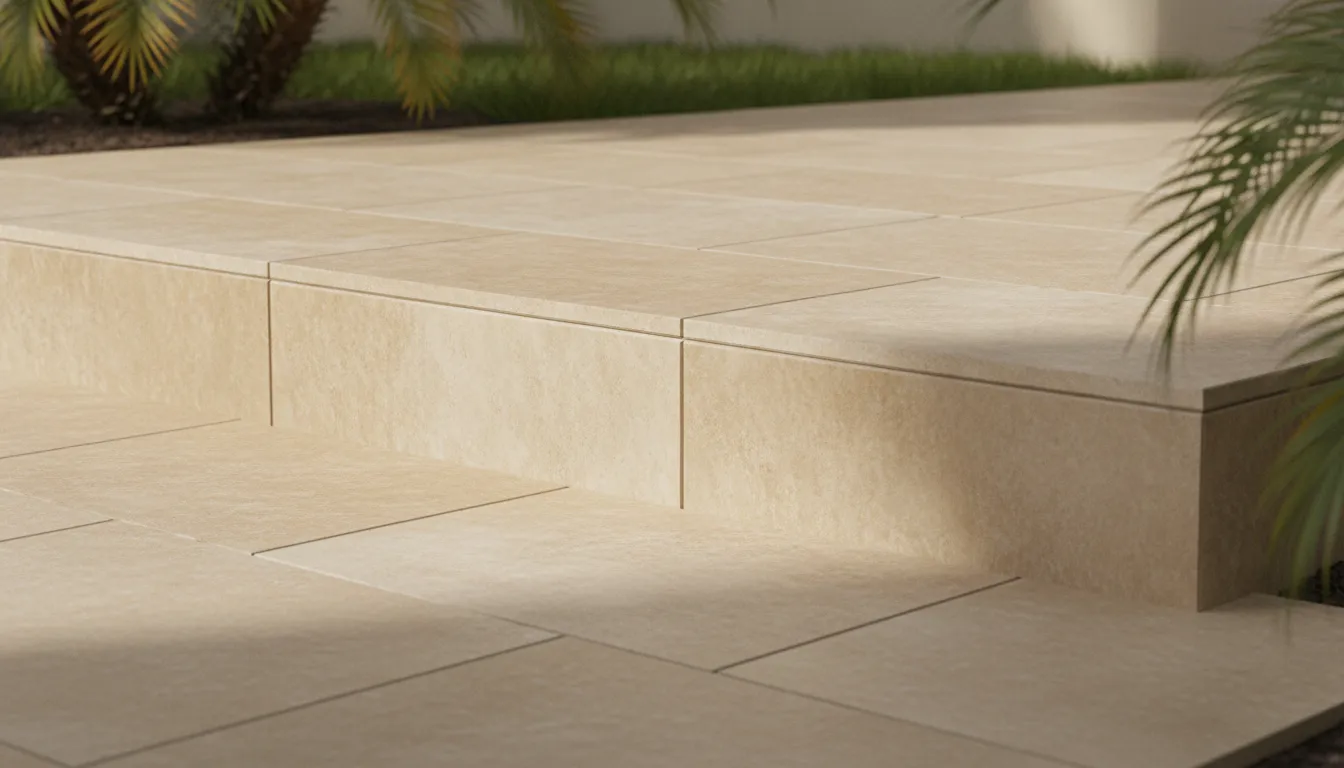
The porcelain coping full round bullnose page illustrates how a shaped edge can be used to create a softer profile in an outdoor application. It is presented as coping, so do not assume it is the right piece for every stair. Instead, use it as a reminder to ask whether the project needs a purpose-built edge, a straight paver layout, or another compatible detail.
For commercial work or stairs that are part of a required means of egress, consult the current requirements that apply to the site. The U.S. Access Board's stairways guide discusses treads, risers, surfaces, nosings, and handrails. Its scope is specific, so it should not be treated as a blanket specification for every private residential stair.
The bottom line: A step edge is part of a larger walking sequence. Coordinate tread depth, riser alignment, edge visibility, handrails, lighting, and the landing so people can read and use the route comfortably.
Hardscape's outdoor porcelain paver installation approach is sand-set. That method makes the relationship between the paver system and the surrounding grade especially important. A qualified installer should establish the base, drainage, edge restraint, tread elevations, and joint plan before placing pavers. The goal is a stable route with water managed away from the stair structure and no loose perimeter pieces at the edge of a flight.
Ask the installer to walk through the following before material is delivered:
Do not use a blog post as a substitute for a site-specific plan. Soil, grade, existing drainage, stair structure, and local requirements can change the appropriate detail. Hardscape's published guide on porcelain pavers on sloped lots is a useful related resource for thinking about water movement, but outdoor steps require their own measurements and review.
On a sloped property, the stair route should be considered with the surrounding landscape. A landing may need to slow or redirect water, while side edges may need a deliberate restraint detail. If the stairs connect to a pool deck, coordinate the step edge with the deck's drainage and walking pattern. If they connect to a garden path, confirm that the path does not create a new trip point at the final riser.
The bottom line: Sand-set success depends on the system beneath and around the pavers. Resolve elevations, drainage, edge restraint, and joints with a qualified installer before the material is ordered.
Florida projects often combine intense sun, humidity, heavy rain, pool water, coastal exposure, and frequent transitions between indoor and outdoor living. Those conditions make a sample review and site-specific planning worthwhile. View samples at the project's actual location when possible, because shade, landscaping, and nearby colors can change how the paver is perceived.
Before approving an order, confirm:
For homeowners, designers, and contractors who are still comparing formats, Hardscape's 2CM porcelain paver guide can provide broader product context. It should be paired with a step-specific review, because a general paver selection guide cannot resolve the dimensions or structure of a particular stairway.
The bottom line: Florida step projects deserve a full exposure and transition review. Confirm wet-use information, edges, accessories, drainage, and product continuity before placing the order.
Yes, porcelain pavers can be planned across a coordinated stair and landing design when the selected system, elevations, and installation details are compatible. The most important visual goal is continuity: the landing should look like a destination, not an afterthought, and the last tread should lead into it without a confusing change in level.
Start by deciding whether the landing should use the same format as the treads or a deliberate complementary layout. Larger formats can create a calm landing field, while smaller or coordinated pieces may make it easier to work around curves, posts, drains, or planting borders. Let the actual dimensions and required cuts guide the choice rather than forcing a pattern that creates slivers at the stair edge.
Steps leading to a pool area may also need to coordinate with coping. Steps leading to a garden can connect visually with porcelain stepping stones, but the stepping-stone application should not be assumed to replace a properly designed stair tread. Each zone needs the support and edge details appropriate to its use.
Before construction, mark the transition full size if possible. Walk the route, check the landing approach, observe it in wet conditions, and confirm that doors, gates, lighting, and handrails remain usable. This simple review often reveals a joint, edge, or leftover strip that would be difficult to correct after installation.
The bottom line: A porcelain paver landing can make outdoor steps feel connected and complete. Coordinate formats, joints, coping, lighting, and the final elevation before installation begins.
Look for an exterior porcelain paver that is documented for the intended application, offers product-specific slip-resistance information, and can be coordinated with the tread edge, riser, landing, and support system. The best choice depends on the site and stair design, not a single universal product label.
Wet conditions should be part of the selection review. Ask for the exact product's current slip-resistance information, inspect a sample, and have the complete route reviewed by a qualified professional. Drainage, cleaning, footwear, lighting, and the edge design also affect how a stair is experienced.
Some Hardscape product pages list Steps among their applications, but the exact product, thickness, edge detail, and sand-set system must be confirmed for the project. Do not assume that a paver selected for a patio automatically resolves the requirements of a stairway.
They may. The edge should be reviewed for visibility, comfort, drainage, exposed corners, and compatibility with the chosen paver and riser. A shaped coping or edge piece can be useful in some designs, while a straight paver layout may be appropriate in others.
No. Measure the full route first, including risers, treads, landings, side edges, doors, gates, handrails, and drainage. Those measurements help determine the quantity, format, cuts, thickness, and edge details that should be discussed with the installer.
The bottom line: Safe outdoor steps come from coordinated product selection and site planning. Review the exact porcelain paver, wet-use information, stair geometry, edge treatment, drainage, and installation system before ordering.
Bring your measurements, photos, project location, and preferred design direction to a porcelain paver specialist. Hardscape can help you compare product categories, review samples, and identify the questions a qualified installer should answer for your stair and landing transition. The company serves homeowners, landscape designers, architects, and contractors with product guidance for residential and commercial outdoor applications.
For a project-specific conversation, visit the Hardscape contact page. You can also visit a Florida showroom in Jupiter, Boca Raton, or Fort Myers. The official company phone number is 561-998-5000.
The bottom line: The right outdoor-step plan starts with measured conditions, verified product information, and a coordinated sand-set installation approach. Resolve the transition details before you order the pavers.