28 Jul
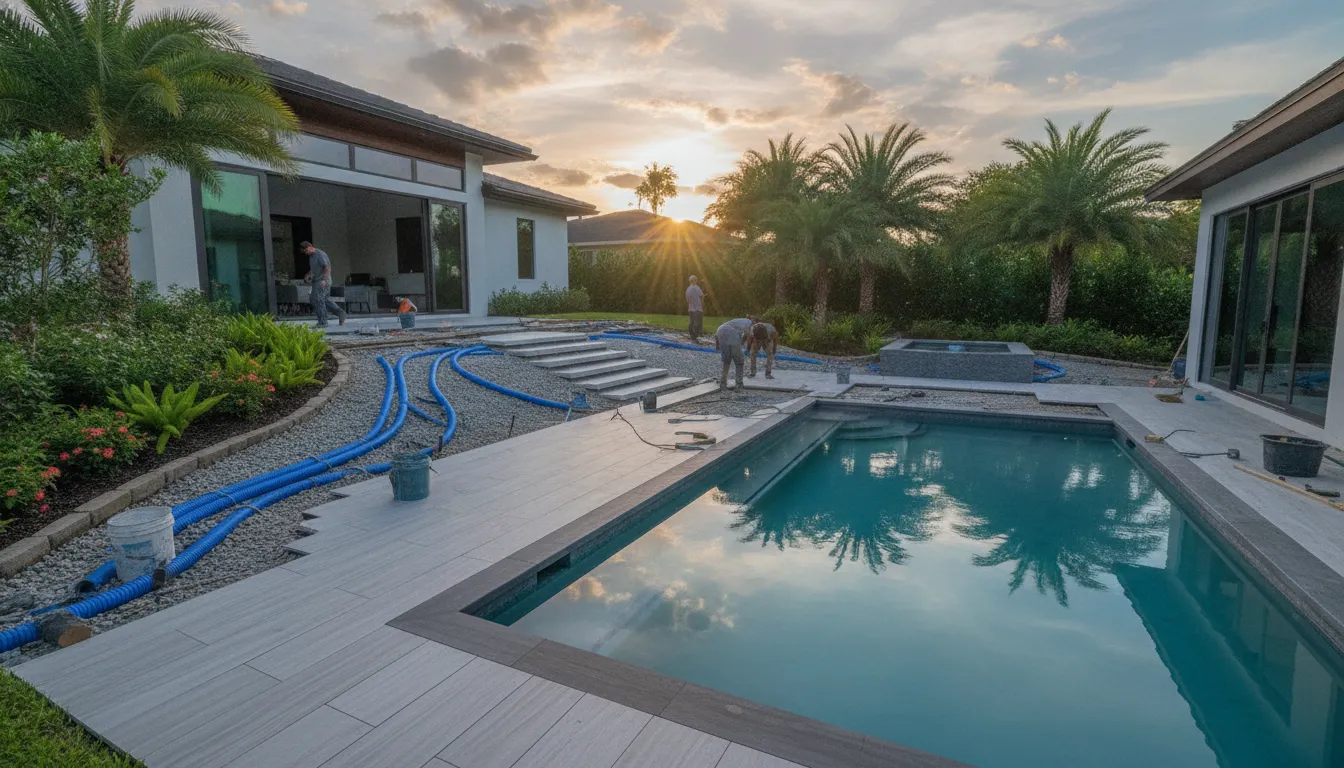
Florida homeowners with sloped yards face washout risks during heavy tropical rains. Building a stable patio on these steep spots requires the right paver and a smart drainage plan. Porcelain pavers on sloped lots deliver a durable, beautiful solution that turns challenging terrain into luxury outdoor living space.
Ready to start your sloped lot project? Call 561-998-5000 to order free samples or visit our showrooms in Jupiter, Boca Raton, and Fort Myers today.
Porcelain pavers on sloped lots offer a durable solution for Florida homeowners who must manage heavy tropical rainwater runoff. These premium pavers absorb almost no water (0.5% or less), so they do not trap moisture, rot, or crack when wet soils shift on a hill. Experts use a sand-set installation method with thick gravel bases and joint sand to prevent shifting and ensure safety. Standard patios on sloped areas need a maximum slope of two percent, which equals a two-inch drop over one hundred inches. This layout lets heavy storm water drain safely away from your home without causing soil erosion.
Installing pavers on a slope requires careful planning. Water must flow away from your home to prevent damage. When you lay porcelain pavers on sloped lots, the angle needs precise grading. This keeps the ground stable and avoids costly repairs.
For most outdoor jobs, drainage slopes range from one-eighth to one-half inch per foot. A flat patio should slope no more than two percent, which equals a two-inch drop over one hundred inches. Walkways can handle up to five percent if the surface prevents slips. Porcelain pavers vs natural stone comparisons show porcelain wins on sloped paths because its textured surface stays safe when wet.
Base preparation matters most on sloped terrain. You must dig out the soil to match the slope so water flows away from your home. Strip away grass and organic material to prevent settling later. Install a strong gravel base four to six inches deep, compacted in thin layers. Each layer should be no more than two inches thick before compaction. Use heavy duty porcelain pavers that can handle fast water runoff and shifting soil. The gravel base acts as both a structural foundation and a drainage layer, giving water a path to exit even during the heaviest South Florida downpours.
For very steep slopes, adjustable pedestals can support pavers to create a level walking surface. This lets you set up flat patios without moving tons of dirt. Water flows beneath the pavers while the top surface stays dry and safe. No matter which method you choose, always check your local building codes before starting. Florida counties may have specific requirements for drainage on sloped residential lots.
Key takeaway: Proper slope grading is the foundation of any sloped lot project. Patios need no more than a two percent slope, while walkways can go up to five percent with high-traction pavers. A sand-set base with deep gravel prevents shifting and keeps your outdoor space stable for years.
Sloped land creates unique challenges. Heavy rain washes away base soils, and steep paths invite slips. Many common stone options crack under shifting ground or absorb too much water. Installing porcelain pavers on sloped lots solves these problems with engineered performance.
Water is the main threat to any sloped hardscape. Concrete and natural stone soak up moisture, weakening their core over time. Hardscape.com porcelain pavers absorb 0.5% or less water. This near-zero absorption provides certified frost resistance, preventing cracks during cold spells. Because porcelain does not hold water, moisture drains over the top and into sand-set joints, stopping pooling and soil washout. This feature matters most for Florida homeowners who face both heavy summer rains and occasional cold fronts.
A sloped lot puts extra pressure on pavers. Standard options shift or break under this stress. Porcelain pavers have a breaking strength between 13,000 N and 29,672 N, allowing them to bear heavy loads and resist ground movement easily. They also resist stains from oil, leaves, and dirt without sealing, so you never need to buy costly sealers or spend hours scrubbing away mold. UV resistance keeps their rich color from fading under the hot Florida sun year after year.
| Feature | Porcelain Pavers | Concrete Pavers | Natural Stone |
|---|---|---|---|
| Water absorption | 0.5% or less | 5-8% | 2-10% |
| Breaking strength | 13,000-29,672 N | 3,000-8,000 N | Varies widely |
| Sealing needed | No | Every 2 years | Every year |
| Slip resistance (wet) | High | Moderate | Low-Moderate |
| Frost resistance | Certified | Partial | Varies |
Walking on a sloped path during a Florida storm can be risky. Concrete and stone get slick when wet. Porcelain pavers keep a high, safe grip even in the rain. Their rough texture provides consistent traction on angled walkways, giving you peace of mind during every downpour.
Key takeaway: Porcelain pavers outperform concrete and stone on sloped lots due to near-zero water absorption, extreme breaking strength up to 29,672 N, and natural slip resistance when wet. You get a durable, low-maintenance patio that withstands both heavy South Florida rains and constant sun.
Laying porcelain pavers on sloped lots requires the right method to keep them stable. A sand-set approach is the best choice because it lets the ground breathe. The flexible sand base absorbs the stress of moving earth on a hill without cracking and prevents pavers from sliding or popping loose.
Follow these steps for a sand-set installation on a slope:
This method gives a flexible base that allows natural water drainage. The system prevents cracking and shifting on sloped properties. In Florida, where heavy downpours are common, this drainage is vital to keep your yard dry. The polymeric sand locks into place when activated with water, creating a durable joint that resists washout during heavy storms.
Edge restraints are especially important on slopes. Without them, the force of water runoff and gravity can slowly push pavers downhill over time. Use sturdy concrete or metal edging anchored into the ground to lock the entire installation in place.
Key takeaway: A seven-step sand-set installation with geotextile fabric, compacted gravel, and polymeric sand joints creates a stable, flexible base for sloped lots. This method allows natural water flow through the joints while preventing pavers from shifting or sinking.
Placing porcelain pavers on sloped lots needs careful water planning. In Fort Myers and Jupiter, high water tables make good drainage vital. Rigid paving causes fast runoff and washes away soil. Using sand-set joints lets water filter into the ground naturally.
Surface water management starts with proper grading. Slope the land away from home walls at a steady rate of at least one-eighth inch per foot. Channel drains are helpful tools on slopes, long narrow grates that sit flush with the pavers to catch runoff. They work well near doors, under slopes, or along pool decks where water naturally collects.
Underground systems handle water that sinks into the soil. French drains use a slotted pipe buried in a gravel-filled trench. Placed at the bottom of a slope, they collect underground water and channel it away from the paved area. Gravel trenches along the contours of a slope slow down water movement and act as underground buffers.
Sand-set porcelain systems let rain pass through sand joints into the gravel below. This prevents water pressure from building under your paved path and causing damage. Combining surface drains with subsurface systems gives you complete water management for any sloped lot.
Key takeaway: Managing water on sloped lots needs both surface and underground tools. Channel drains handle visible runoff while French drains and gravel trenches manage subsurface water. A sand-set base ties it all together, letting rain filter through naturally.
A sloped lot does not have to limit your backyard plans. With smart design, you can make a steep yard look great and work well. Homeowners in Jupiter, Boca Raton, and Fort Myers use luxury outdoor paving to create striking landscapes that flow with the land.
Terracing is a great way to handle a slope. Instead of one big slope, build a series of flat steps. Each level serves its own purpose, a dining area on top and a fire pit below. This design breaks up the slope and gives you more usable space. Hardscape.com offers durable 2CM porcelain pavers in many sizes and colors for these projects.
Curved walkways are another excellent choice. Straight paths down a steep hill can be unsafe and cause water to rush down. Curved walkways follow the natural contours of your land, slowing runoff and making walking safer. Retaining walls help hold back soil on steep slopes and can include built-in planter beds that add greenery and root support to prevent erosion.
Multi-level planning lets you separate your yard into distinct zones. Place a dining area on a high flat zone and a lounge area lower down. Hardscape.com offers 2CM and 3CM porcelain options to fit any project, giving you the freedom to build a yard that is both stunning and strong. Adding built-in seating or a fire feature on one level creates a natural focal point that draws guests through the space.
Key takeaway: Working with your lot's natural slope through terraced levels, curved paths, and retaining walls turns difficult terrain into a multi-level retreat. Choose durable porcelain pavers with a sand-set method for a stable, beautiful outdoor space that lasts.
Standard outdoor patios should have a slope of up to 2% to ensure proper water runoff. This means a drop of two inches for every 100 inches of length. Walkways can handle a steeper slope of up to 5% as long as you use a non-slip surface like porcelain pavers.
Sand-set porcelain systems with open joints let water drain freely into the ground. Adding channel drains at the bottom of the slope and French drains in the soil provides complete water management. Proper grading prevents soil erosion when the ground gets wet.
Yes, you can install porcelain pavers on a slope, but it needs careful preparation to keep the base stable. A gentle slope is easier to work with than a steep hill. Use a sand-set method with tight joints so the pavers do not slide or shift over time.
Porcelain pavers maintain a high slip resistance even when wet due to their textured surface. This makes them safer than smooth concrete or polished stone for sloped walkways and patios in rainy Florida weather.
Heavy Florida rains will wash away yard soil and weaken steep hills if you do not act. Planning your hardscape project today stops erosion before the wet season starts, saving you from costly repairs. A sand-set porcelain paver system provides the strength and natural water drainage needed to protect your land for decades.
Ready to start? Call 561-998-5000 to order free samples, visit a showroom, or speak with a porcelain paver specialist. Our team will help you select the best materials and plan your drainage layout for a safe, beautiful installation built to last.