7 Jul
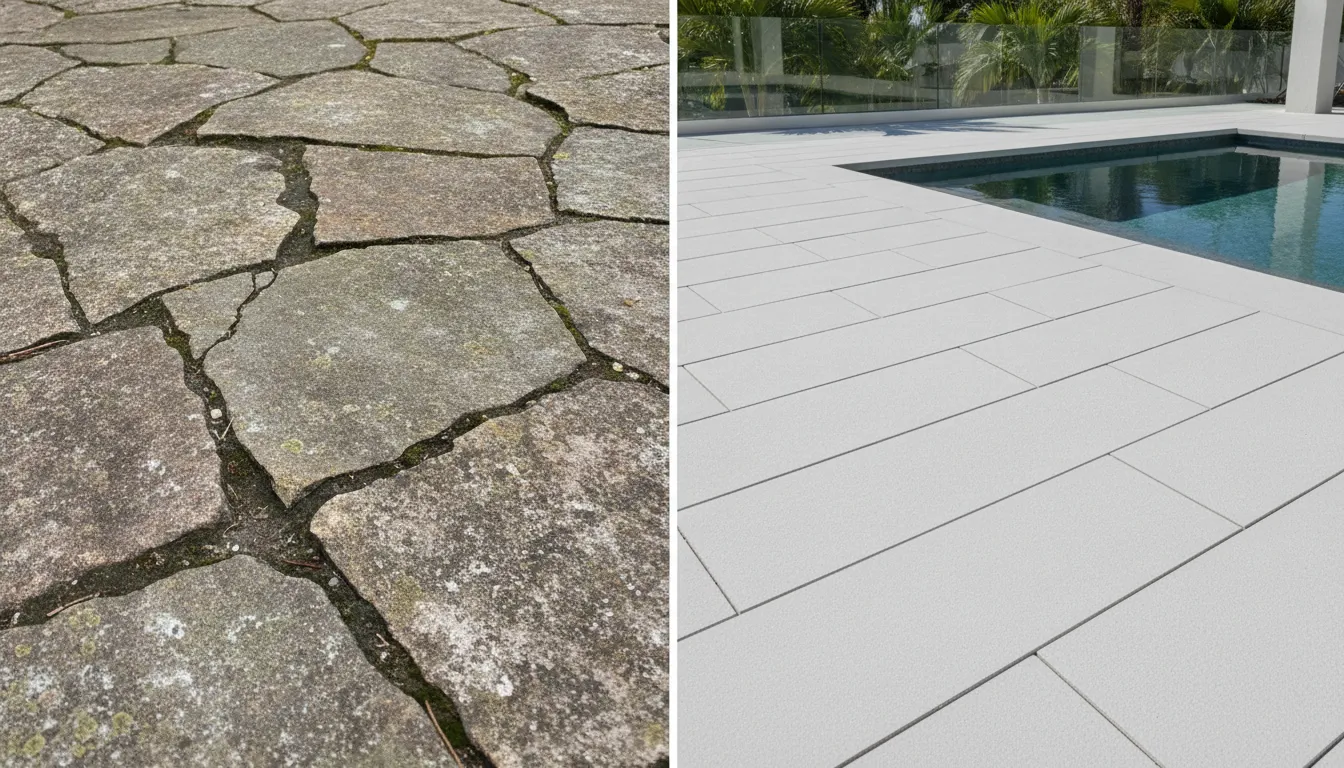
Choosing between porcelain pavers vs natural stone often comes down to how much work you want to do to keep your space looking new. Porcelain pavers are a better choice for homeowners because they are solid and require no sealing, unlike natural stone, which sucks up water and stains easily. As shown by the National Tile Authority, porcelain must have a water soak rate of 0.5 percent or less to be called impervious. This trait means porcelain stays strong under heavy weight, while stone can fail from the same pressure. Because porcelain is a made product, it offers more strength and the same size for a perfect fit. This material helps you build a patio that stays safe for many years.
Choosing between porcelain pavers and natural stone starts with how they are made. One material comes from the earth. The other is a result of modern making methods and high heat. Both options offer a unique look for your outdoor space. But their real builds are not the same. Hardscape.com provides premium porcelain paver collections in 2CM, 3CM, and 5CM depths. These choices help you find the right fit for your yard or driveway.
Porcelain begins as a mix of clay, sand, and minerals. Makers press these items into molds and fire them in a kiln. The heat reaches 1,200 to 1,400 degrees Fahrenheit. This intense heat causes a process called vitrification. It turns the raw clay into a dense, glass-like state. This bond makes the material very hard and strong. The high heat also burns off any live items. This leaves behind a slab that is very pure and tough.
Because these pavers are factory-made, they have a set size and depth. This even size is a huge plus for workers. It means the pieces fit together well with less need for extra cuts. You can rely on each tile to be the same as the last. This even size helps you plan your layout with fewer issues. It also makes a sand-set build much faster. You do not have to spend time sorting through pieces to find the right depth.
Natural stone comes from quarries around the world. Workers cut large blocks of rock like granite or marble from the ground. They then slice these blocks into slabs for use. Natural stones have been used for building since ancient times. Because stone forms in nature, it has many changes. Each piece may have unique veins, pits, or colors. No two stones are exactly the same. This gives stone a look that many people love. But it also means you must plan for more waste during the build.
The most vital gap between these materials is how they handle water. Porcelain is a very dense material. It has a water absorption rate of 0.5 percent or less. This very low rate stops moisture from soaking into the tile. This is a key reason why it lasts so long. It does not swell or shrink when it gets wet. This keeps the material strong for decades.
In contrast, many natural stones have absorption rates between 2 and 10 percent. This porous nature can lead to deep stains. It can also cause cracks in cold weather. When water inside the stone freezes, it grows. This growth can break the stone from the inside. Porcelain avoids this risk because the water stays on the surface. It is a much better choice for pool decks and patios in rainy areas.
Making differences include:
When you choose a material for your outdoor project, you need it to last for a long time. High-performance premium porcelain paver collections offer a level of strength that natural stone cannot match. While stone depends on how it was formed in the earth, porcelain is made using exact science. This process ensures each piece is as strong as the last.
Modern porcelain pavers are built to handle extreme weight. A 3CM thick porcelain paver has a breaking strength of about 29,672N. This high rating means it can support vehicles weighing over 55,000 lbs. Natural stone has a much wider range of strengths. Some stones are very hard, but others can have hidden weak spots or cracks that make them fail under pressure. You can see more about how these classes work on the National Tile Authority website.
The secret to this strength is pressing the material at high force. In this process, raw materials are pressed at a very high force before they are fired. This creates a dense body with no air gaps. Natural stone has a cleavage plane. This is a natural line of weakness where the stone can split. Porcelain has no such lines. It is solid all the way through. This makes it much harder to break or chip during normal use.
Florida weather puts hard materials to the test. Intense sun, heavy rain, and salt air can wear down stone quickly. Porcelain moves heat well and stays stable even in the sun. It also has a water absorption rate of 0.5 percent or less. This makes it "impervious" to moisture. You can read more about these water absorption ratings to see why this matters for outdoor use.
In cold areas, this low absorption rate prevents damage from freeze and thaw cycles. When water gets into the pores of a stone and freezes, it expands. This expansion causes the stone to crack or flake over time. Because porcelain does not let water in, it stays safe from this type of damage. Natural stone often needs a sealer every year to keep water out. Porcelain needs no such sealer to stay strong.
Natural stone faces several common issues as it ages. One of the biggest problems is when salt leaves a white crust on the surface. Since porcelain is so dense, salts cannot pass through it easily. This keeps your patio looking clean for years without the need for harsh chemicals.
Other risks include when the surface of a stone starts to peel or flake off. This is very common near the coast or around saltwater pools. Porcelain resists these issues because it works well with acids and does not react with pool salt. By comparing porcelain pavers vs natural stone, you can see that porcelain is the clear winner for long-term value. It even comes with a 15-year residential warranty. Most natural stone has no standard warranty at all.
Choosing between porcelain and natural stone often comes down to how each material handles water. In Florida, high humidity and rain make water absorption a top concern. When comparing porcelain pavers vs natural stone, density is key to long-term looks and use.
Porcelain pavers are non-porous and resist deep stains from oil, wine, or dirt. Because they are fired at high heat, they form a dense core that keeps liquids out. This makes them great for outdoor kitchens and pool decks. You can find these perks across the premium porcelain paver collections built for wet areas.
Natural stone is much more porous and absorbs liquids fast. Without a strong seal, common spills can leave deep marks on stone. This also lets mold and mildew grow inside the material. Homeowners often need harsh soaps to clean stone, which can wear down the face of the paver over time.
Care needs vary a lot between these two picks. Porcelain needs only a quick wash with soap and water to stay fresh. It does not need a seal to keep its look or strength. This saves time and cash over the life of the patio or drive. It is a smart choice for busy people who want a nice yard without the hard work.
Natural stone needs regular care to stop damage. Most stone types need a new coat of seal every one to two years. This step is a must to stop water from soaking in and causing cracks. If you skip this task, the stone may flake or change color. Many people find the ongoing cost and work of stone care to be a big downside.
| Feature | Porcelain Pavers | Natural Stone |
|---|---|---|
| Water Absorption | Less than 0.5% (Impervious) | 2.0% to 10.0% (Porous) |
| Sealing Required | Never | Every 1-2 Years |
| Stain Resistance | High (Resists oil and wine) | Low (Prone to etching) |
| Chemical Resistance | Resists salt and chlorine | Damaged by acids |
| UV Stability | Color will not fade | May fade over time |
Tests show how these pavers act under stress. Per the National Tile Authority, porcelain is impervious since it takes in so little water. This low rate stops the freeze-thaw damage that ruins many stone yards. It also helps the tiles stay cool in the sun by holding less heat than porous stone.
The sand-set method is the best way to lay down your new patio. This system uses a base of crushed rock and a thin bed of sand. It lets rain flow through the cracks and back into the earth. This drainage keeps water from sitting on your pool deck or path. When you look at porcelain pavers vs natural stone, this easy way to build stands out. It works well in wet areas like Florida, where rain is common.
A good sand-set build allows for natural shifts in the soil. This prevents the hard floor from cracking when the ground moves. Unlike stone that may break, porcelain tiles stay strong and level. The lack of grout means you do not have to worry about mortar joints failing later. This makes the project much easier to maintain over its long life.
One major plus of porcelain is how the factory makes it. Each paver has the same size, shape, and thickness. This is known as being rectified or having high-dimensional stability. Natural stone is not like this and often has varied sizes. Workers often spend a lot of time sorting through stone to find pieces that fit well together. Porcelain stops this chore and makes the job move much faster.
Hardscape.com pavers also have a built-in spacer bar system. These bars make sure you have the same gap between each tile every time. You do not need to buy or place loose spacers by hand. This feature can cut work time by about 30 percent for most crews. It ensures a pro look even if the team is small. .
Laying these pavers follows a clear path. You start with a firm base, so the ground does not shift later. This keeps your patio flat for many years and prevents tripping hazards. Each step is vital for a floor that lasts.
Porcelain stays the same size even as the heat changes. It does not grow or shrink as much as natural stone does in the sun. This trait keeps the joints from failing or popping out over time. Porcelain is also very dense and does not soak up much water from the ground. The Environmental Protection Agency shows that dense materials are good at moving heat. This helps keep the floor cool on hot days in places like Jupiter or Boca Raton.
Natural stone is often more porous and can trap water inside. This can lead to stains or mold in damp climates. Porcelain avoids these issues because it is nearly waterproof. You can see our premium porcelain paver collections to find the right look for your home. These tiles offer the beauty of stone without the hard work of caring for it. They provide a high-end look that lasts for decades with very little effort.
Choosing between porcelain pavers vs natural stone often comes down to budget. You should look at both the first cost and the cost over time. Porcelain often costs more to buy than some stones. But the long-term value is much higher. You need to think about how much you will spend to keep your yard looking good. Buying a patio is a big step, so you want a material that lasts without costing too much to fix.
The price for porcelain reflects its high quality. These pavers are made in a factory to stay strong and look the same. This can lead to a higher price tag than some types of natural stone. But natural stone has high resale value and a classic look. A study from the National Institutes of Health shows that picking stones should be based on their service life and value. You must also think about the cost of work. Since porcelain is the same size every time, it is easy to use for sand-set jobs. This helps you save on the work needed to build your outdoor space.
The real savings with porcelain come after the work is done. Natural stone needs a lot of care. You must seal it every year to stop stains and water damage. In the hot Florida sun, stone can also fade or grow mold. This can cost a lot of money and take a lot of time to fix. Porcelain pavers require no sealing. They do not soak up oil or wine. This means you do not need to buy costly cleaners or hire pros. Over a 50+ year lifespan, the money you save on care can pay for the pavers. We want to help you plan your space. Hardscape.com provides a free 3D project design consultation to show you the best options for your budget.
Prices for natural stone are going up fast. This is because many stone sites are running low. As the stone gets harder to find, the cost to get it rises. Porcelain does not have this problem. It is made from clay that is easy to find. This keeps the price more stable for buyers. Hardscape.com also makes its own products from start to finish. This helps us offer fair prices on our premium porcelain paver collections. When you pick porcelain, you buy a product that will last for decades. You will not have to pay to replace it in a few years due to cracks or sun damage.
Porcelain pavers stay cooler and keep their look better than many natural stones. These pavers are good at moving heat, which helps them stay at a safe temperature. According to Hardscape.com, porcelain also keeps its color in the bright sun. Natural stone can fade or get very hot over time. Porcelain is a great way to keep your pool deck or patio comfortable and bright even in the hot Florida sun.
Porcelain pavers are a top choice for areas with a lot of foot traffic or heavy cars. They have a very high breaking strength of nearly 30,000 Newtons. In fact, 3CM porcelain pavers can support trucks that weigh more than 55,000 pounds. Natural stone is more likely to crack under stress because it has tiny holes. For a long-lasting driveway, porcelain provides the strength needed to last for 50 years or more.
No, porcelain pavers do not need sealing. They have a water soak rate of 0.5 percent or less, which makes them very hard for moisture to enter. Natural stone has tiny holes and usually needs a new coat of sealer every year to stop stains. According to the National Tile Authority, this low soak rate also makes porcelain safe from chemicals and oils. This saves you time and money on care for many years.
Yes, porcelain pavers are often easier to install because they are made to have the same size and shape. This match allows for a fast and clean sand-set installation. Natural stone has natural changes that can make the work take much longer. According to Hardscape.com, using the sand-set method also gives better drainage and steadier ground. This makes porcelain a smart and fast choice for both home and business yard projects.
Picking the wrong stone for your pool deck or patio can lead to high costs and a lot of extra work later on. Waiting to make this choice often means you will have to fix stains or cracks that come with older stone types quite soon. By starting your project now, you can set up a plan that keeps your yard looking great for many years to come. This quick step also helps you enjoy your new outdoor space much sooner than if you wait until next year without a plan. You can see our latest designs to help you get started on your home project right now.
Ready to request a free project design consultation? Call 561-998-5000 to talk to an expert about your home today.