14 Aug
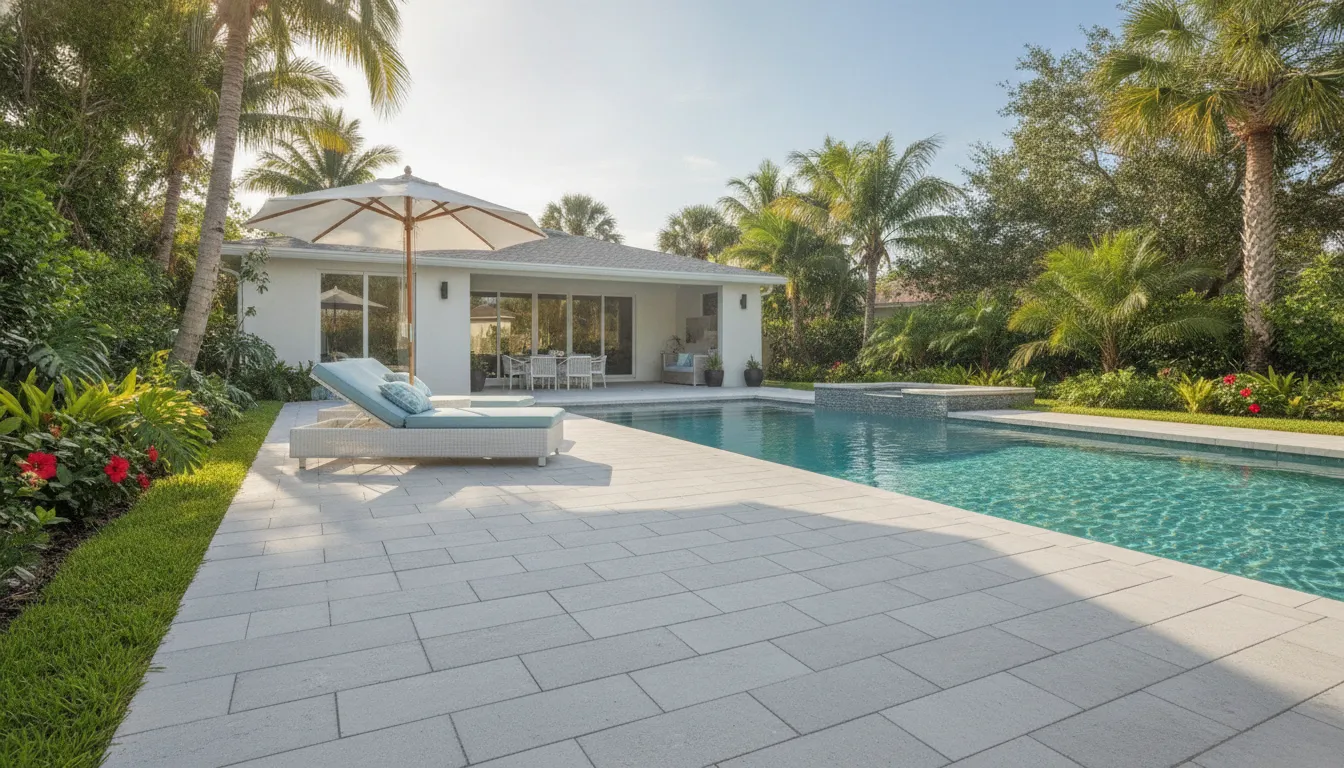
A Florida pool deck has to handle more than a few wet footprints. Intense sun heats the surface through much of the year, swimmers bring water and pool chemicals onto the paving. And daily barefoot traffic puts every joint and walking area to work. In communities such as Jupiter, Boca Raton, and Fort Myers, the right deck material should support comfortable movement and straightforward upkeep without making the space feel overbuilt.
For Florida homeowners, porcelain pavers for pool deck projects offer a practical combination of slip resistance, lower heat retention, and low maintenance. A carefully selected paver can provide a more secure walking surface around wet areas, feel cooler under direct sun, and resist routine exposure to water, chlorine, and salt. With sand-set installation, the system also allows water to drain through the joints and gives the surface flexibility as site conditions change.
That combination matters because pool-deck performance is measured every day, not only when the space is newly installed. A deck should remain inviting after repeated splashing, bright afternoons, and regular cleaning. Porcelain's dense composition supports stain resistance and helps reduce the maintenance associated with sealing. While the sand-set approach keeps drainage and long-term serviceability part of the design conversation from the start.
The best choice still depends on the specific pool environment, including sun exposure, drainage patterns, circulation areas, and the look you want beside the water. Understanding how these considerations align with Florida pool life makes it easier to evaluate formats and installation details with confidence. The first step is seeing why this material is such a natural fit for the demands of local outdoor living.
Florida pool decks face a demanding combination of intense sun, frequent splashing, chlorine, salt, and year-round outdoor use. A surface that looks attractive on installation day must also remain comfortable under bare feet and dependable through changing weather. Porcelain pavers are valued for their strength, durability, and low-maintenance performance in residential and commercial outdoor spaces. Making them a practical fit for pool areas in Jupiter, Boca Raton, Fort Myers, and throughout Florida.
Pool decks are used barefoot, so surface comfort matters as much as appearance. Hardscape.com product information identifies porcelain pavers as cool to the touch with lower heat retention, while their thermal reflectance helps limit the heat absorbed during direct Florida sun. That does not mean every surface will feel identical at every hour of the day. But it does give homeowners a more comfortable material choice for the areas around the waterline, lounge chairs, and outdoor entertaining spaces.
The dense, durable construction also supports a clean design across high-use areas. Large-format pieces can reduce the number of joints and create a more unified visual field, while coordinated coping. Stepping stones, and accessories allow the pool surround to connect naturally with the rest of the landscape.
Pool environments expose paving materials to more than water. Chlorine, salt, sunscreen, food, and organic debris can all reach the deck during normal use. The Hardscape.com knowledge base describes its porcelain pavers as chemically inert to chlorine and salt, stain-resistant without sealing, UV and fade resistant, and frost resistant. Those properties help the surface remain dependable as Florida weather shifts and as the pool is used regularly.
Porcelain's low water absorption and break strength further support demanding outdoor applications. Hardscape.com product specifications list water absorption at no more than 0.5% and a breaking strength of 13,000N for 2CM pavers. These figures apply to the specified products and should not be generalized across every format, so product selection should be matched to the project and intended use.
For a deeper look at the material's poolside advantages, read why porcelain pavers suit pool decks. The bottom line: porcelain pavers for pool deck projects combine barefoot comfort, chemical resistance. And durable outdoor performance, giving Florida homeowners a surface designed for real pool life rather than occasional use.
Pool decks need traction because water changes how shoes and bare feet interact with the surface. Splashing, wet towels, rain, and standing water can all create conditions where an otherwise acceptable paving material becomes hazardous. Slip resistance should therefore be treated as a core design requirement, not an afterthought reserved for commercial facilities.
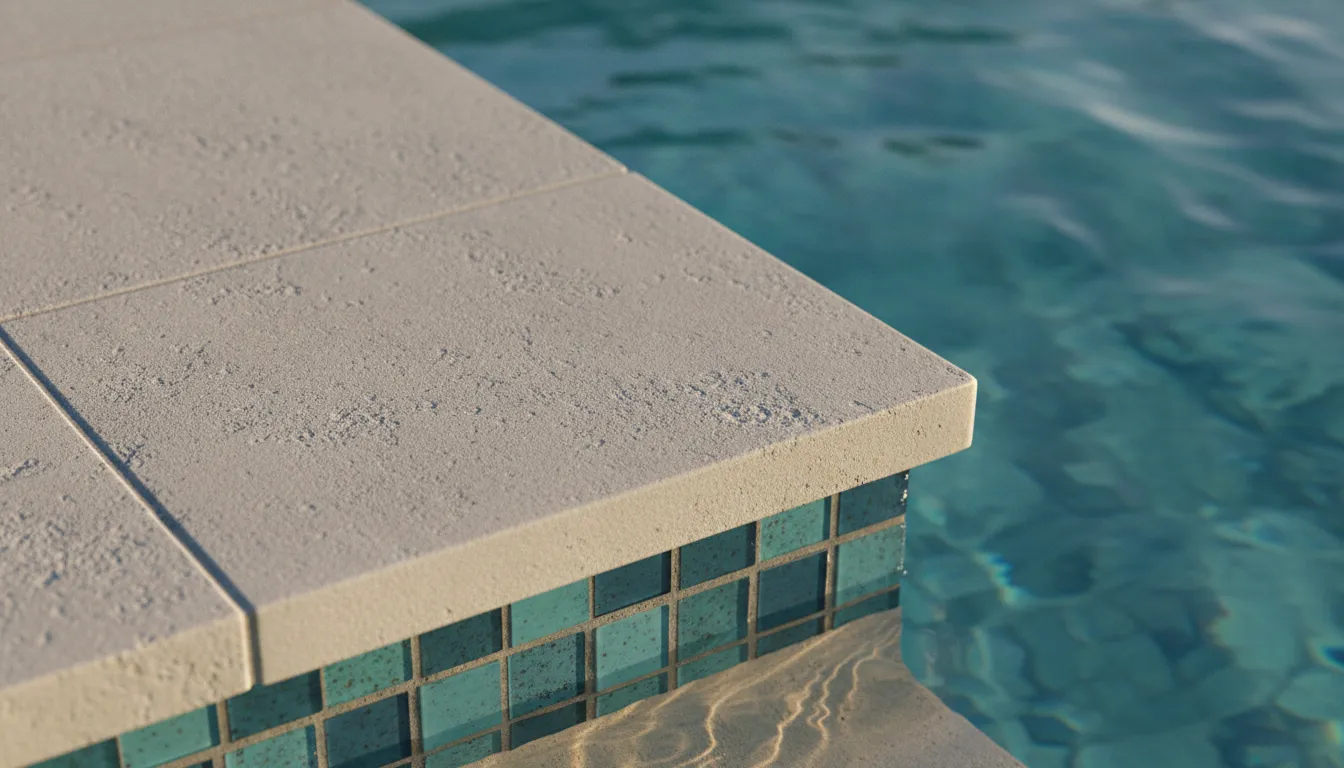
Porcelain pavers intended for pool areas can be produced with an engineered surface texture that helps maintain friction when wet. That texture gives water a place to move across the surface instead of creating one uniformly slick film beneath every step. Product selection still matters: look for a porcelain paver specifically documented for wet-area slip resistance, and review the manufacturer's testing information for the intended installation and use.
The coefficient of friction, or COF, is one traditional way to describe resistance to movement between two surfaces. A higher COF generally indicates greater friction, but the number should be understood in context because testing methods and flooring conditions vary. The NIH overview of slip resistance explains why wet locations and sloped floors deserve particular attention, especially where standing water is common: review the NIH and OSHA guidance on slip-resistant flooring.
Texture is not simply a visual characteristic. At the contact point between footwear and porcelain, small changes in surface topography can influence how effectively the two surfaces engage, particularly when water is present. Recent research on ceramic floor surfaces notes that manufactured topography can affect shoe-floor friction and that simple surface measurements do not always tell the whole story. The study is useful context for asking suppliers about the performance data behind a paver's texture, rather than choosing solely by appearance: read the research on tile topography and shoe-floor friction.
Good pool-deck planning also reduces the amount of water that remains where people walk. Proper slopes, functional drainage, and careful detailing around the pool edge help limit puddles. A textured paver cannot replace sound site design, and no paving surface should be described as completely slip-proof. Regularly remove leaves, sunscreen residue, algae, and other contaminants that can reduce traction over time.
The bottom line: Porcelain pavers can be a strong choice for wet pool areas when the selected product has documented wet slip-resistance performance and an engineered, textured surface. Pair that specification with effective drainage and routine cleaning to support safer movement around the pool.
Yes. Porcelain pavers are designed to reflect more of the sun's energy and retain less heat than many conventional outdoor surfaces. In direct Florida sunlight, that can make the pool deck more comfortable to walk across barefoot, especially during the afternoon when exposed areas have had hours to warm.
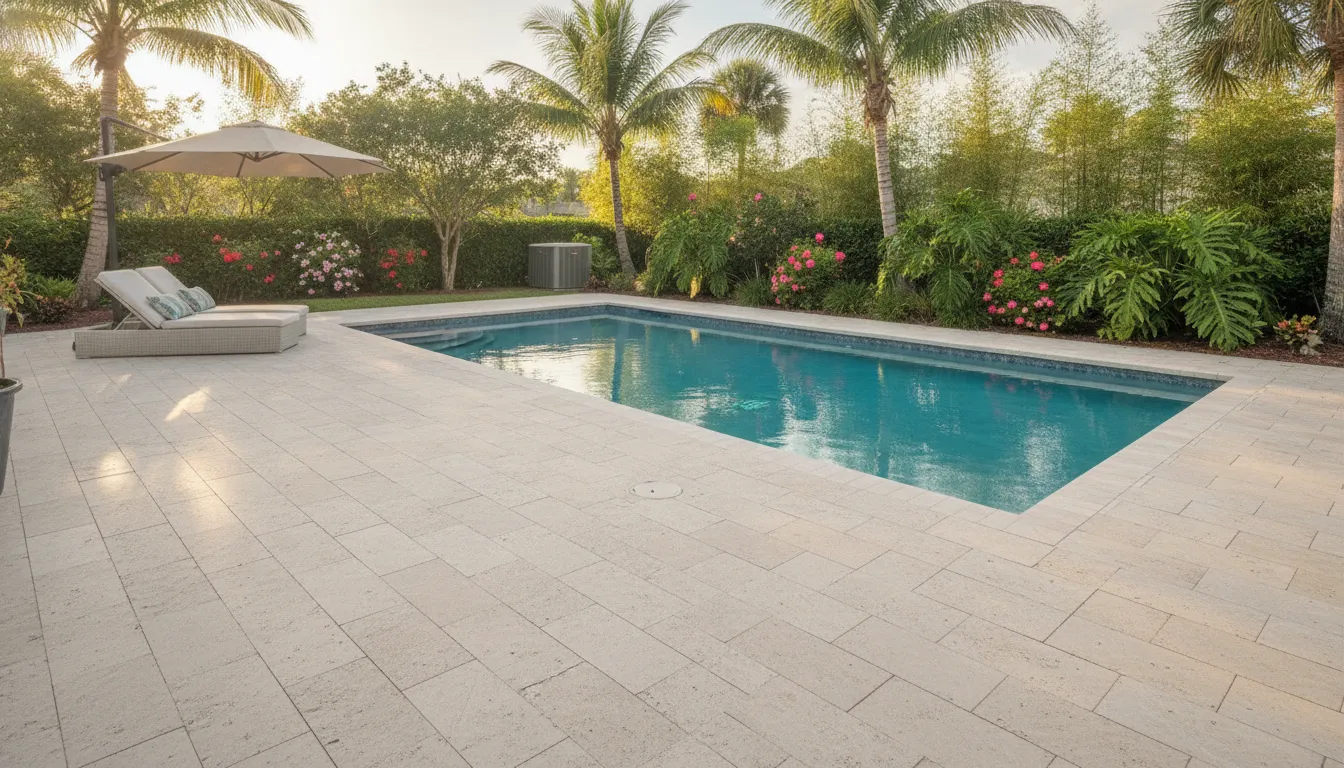
The difference is most noticeable around active pool areas. A deck that feels excessively hot can make it difficult for swimmers to move comfortably between the water, lounge chairs, and outdoor living spaces. Heat-reflective porcelain helps moderate that underfoot experience, while its dense construction supports the durability expected from a residential or commercial pool environment.
Porcelain pavers have lower heat retention than materials that absorb and hold substantial solar heat. Hardscape product specifications describe them as cool to the touch, with lower heat retention for outdoor applications. This does not mean the surface will remain cold in every condition. Any paving material can warm in prolonged, intense sun, but porcelain is a practical choice when barefoot comfort is a priority.
Color also influences the experience. Lighter-colored pavers generally reflect more sunlight than darker colors, so they can feel cooler when both surfaces receive the same exposure. When selecting a pool-deck palette, consider how much of the area is fully exposed. Whether shade changes throughout the day, and how the color will work with the home's architecture and surrounding landscape.
Use cool-to-the-touch performance as one part of the selection process, not as a substitute for thoughtful design. Shade structures, planting, umbrellas, and the orientation of the pool area all affect how the deck feels throughout the day. Requesting physical samples is useful because color and texture are easier to evaluate in the actual light around the project.
For Florida pool decks in Jupiter, Boca Raton, Fort Myers, and elsewhere, porcelain offers a balanced combination of barefoot comfort, low heat retention, and long-term outdoor performance. The right color can further support a cooler feel while creating a bright, cohesive setting around the pool.
The bottom line: Heat-reflective porcelain pavers can stay cooler to the touch than concrete or natural stone in direct Florida sun, and lighter colors typically reflect more heat. Evaluate samples in the project's real sunlight to choose a comfortable, durable pool-deck surface.
Pool decks face a demanding combination of standing water, sunscreen, food and drink spills, humidity, chlorine, and saltwater. Porcelain pavers simplify that maintenance because their dense, non-porous structure absorbs very little water, with water absorption of no more than 0.5% according to Hardscape.com product information. That leaves fewer pathways for stains, moisture, and organic growth to penetrate the paving material.
Want help selecting the right pavers for your pool area? Contact Hardscape.com to discuss your project and request samples.
Natural stone and other porous paving materials may require periodic sealing to help manage water and staining. Porcelain pavers do not require sealing to maintain their intended appearance and functionality. That means one less recurring project around the pool, where furniture, planters, loungers, and pool equipment can make access difficult. The material's density also helps resist stains and mold, an important advantage in humid outdoor environments.
Routine cleaning is straightforward. Start by removing leaves, dirt, and other loose debris, then rinse the surface with water. For marks that need more attention, use a mild detergent and gentle cleaning method rather than relying on aggressive treatments. Regular, simple care helps keep the deck looking consistent without adding a complex maintenance schedule. For a broader material comparison, see this guide to porcelain vs. natural stone.
Pool environments expose paving to more than water. Chlorine and saltwater can contact the surface repeatedly through splashing, wet feet, and routine cleaning. Porcelain is chemically inert and resistant to exposure from both chlorine and saltwater, so those common pool conditions are less likely to compromise the paving material over time.
Porcelain pavers also do not experience efflorescence. Unlike concrete, they do not contain the calcium hydroxide associated with the formation of salt deposits on the surface. This helps prevent the cloudy or powdery deposits that can distract from the deck's appearance and create another cleanup concern.
Choosing the right thickness and application is still important. Explore 2CM porcelain pavers to review an option designed for outdoor paving applications, then confirm the appropriate system and site preparation with a qualified professional.
The bottom line: Porcelain pool deck pavers reduce upkeep because their water absorption is no more than 0.5%. They do not need sealing, and they resist stains, mold, chlorine, saltwater, and efflorescence. With routine rinsing and occasional gentle cleaning, they provide a durable, low-maintenance surface for busy pool areas.
For Florida pool decks, the installation system matters as much as the paver selected. Sand-set installation places porcelain pavers over a properly prepared, compacted aggregate and sand base, with the joints filled with compatible jointing sand. This creates a stable walking surface while allowing water to move through the joints instead of collecting on top.
A successful sand-set system begins below the visible surface. The installation area is excavated and graded, then built with compacted base material that supports the pavers and encourages drainage. A carefully leveled bedding layer helps distribute loads evenly, while properly installed edge restraints help keep the system aligned. Each part of the assembly contributes to a deck that feels firm underfoot and remains orderly through normal use.
Porcelain pavers are then placed with consistent joints and aligned to the planned pattern. Jointing sand fills the spaces between pavers, helping lock the surface together while preserving pathways for water. The result is a precisely installed deck that combines the clean appearance of porcelain with the practical advantages of a permeable surface.
Pool decks regularly encounter splash-out, rainfall, cleaning water, and runoff. When water can filter through the joints and into the prepared base, it is less likely to remain in shallow depressions across the walking surface. That helps minimize puddles around the pool and supports more reliable drainage after Florida's frequent summer storms.
Reducing standing water is an important part of a safer pool environment. The Occupational Safety and Health Administration identifies slip and fall accidents as a major safety concern. And the National Institutes of Health notes that slip resistance is especially important where water is common. A well-drained deck does not replace the need to select an appropriate paver texture. Maintain the area, or address grading concerns, but it reduces one common source of wet-surface risk.
Ground conditions can shift gradually as soil responds to moisture, seasonal changes, and ordinary settlement. A sand-set system can accommodate limited ground movement by allowing individual pavers and joint material to adjust within the prepared assembly. This flexibility helps reduce the likelihood that movement in the ground will create one large, continuous crack across the deck. If a localized area ever needs attention, the affected pavers can be lifted, the base corrected, and the surface reset.
Sand-set installation is the recommended method for porcelain pavers used on pool decks because it combines drainage, stability, and adaptability in one carefully prepared system. Proper grading, compaction, edge restraint, joint filling, and paver selection remain essential. A qualified installer should evaluate the site and match the installation details to its soil, drainage, slope, and intended use.
The bottom line: Sand-set installation gives porcelain pavers for pool deck applications a stable, permeable foundation. Water can drain through the joints, the surface can accommodate ordinary ground movement, and localized repairs remain practical. With proper preparation and edge restraint, the system supports a cleaner, more comfortable, and safer pool-deck environment.
Choosing a pool-deck material means balancing wet-area safety, barefoot comfort, maintenance, and long-term performance. Porcelain, natural stone, and concrete can all be used in outdoor pool settings, but they respond differently to water, heat, pool chemicals, and routine care. The right comparison should focus on the conditions your deck will face, not only its appearance when newly installed.
| Trait | Porcelain pavers | Natural stone | Concrete |
|---|---|---|---|
| Slip resistance | Available with textured surfaces and slip-resistant wet COF characteristics. Surface texture and the specific application should be evaluated together. | Varies substantially by stone type, surface texture, and conditions when wet. The selected material should be assessed for the intended pool-deck use. | Varies with the surface profile and treatment. Smooth or worn areas may provide less texture under wet conditions. |
| Heat retention | Heat-reflective and cool to the touch relative to traditional concrete or natural stone, including in intense Florida sun. | Can retain substantial heat in direct sun, depending on the stone, color, thickness, and surrounding conditions. | Can become hot in direct sun, with color, exposure, and surrounding conditions affecting barefoot comfort. |
| Maintenance and sealing | Non-porous, stain-resistant, and does not require sealing. Routine care generally involves rinsing or gentle cleaning. | May require periodic sealing and more material-specific cleaning to manage absorption and staining. | May require sealing and attention to staining, surface wear, and visible deposits over time. |
| Water absorption | Water absorption is 0.5% or less, supporting performance in a wet pool environment. | Absorption depends on the stone and its porosity. More absorbent materials need careful selection and maintenance. | Concrete is porous to varying degrees, so water behavior depends on its mix, age, surface, and maintenance. |
| Resistance to chlorine and salt | Chemically inert and resistant to exposure from chlorine and salt water. | Resistance depends on the stone's composition and care program. Pool chemicals should be considered during selection. | Performance depends on the concrete composition, surface condition, and exposure over time. |
| Longevity | Dense, durable, UV-resistant, and designed for long-term outdoor use when properly selected and installed. | Can provide long service life, with durability influenced by the stone type, climate, water exposure, and maintenance. | Can provide long service life, although cracking, surface wear, staining, and maintenance needs vary by project. |
For a pool deck, porcelain combines low water absorption, cool-to-touch comfort, chemical resistance, and no sealing requirement in one dense surface. Natural stone and concrete can remain viable material categories, but their performance depends more heavily on the specific material and ongoing care. Compare porcelain vs. natural stone when narrowing the selection for your project.
The bottom line: Porcelain pavers are a strong fit when the priority is a cool, low-maintenance pool deck that resists water, chlorine, and salt exposure. Confirm the appropriate slip-resistant texture and installation design for the site rather than treating any material category as automatically right for every pool.
Start with how the deck will be used, then narrow the choice by thickness, format, texture, color, and edge details. For many residential pool decks, 2CM porcelain pavers provide an appropriate balance of durability and manageable installation. Review the available porcelain paver options for your pool deck to compare sizes, patterns, and coordinating pieces before making a final selection.
Residential pool decks generally call for a pedestrian-rated solution rather than a heavier vehicular application. A 2CM paver is well suited to that use when the site has the properly prepared base required for a sand-set installation. Your installer or design consultant can confirm the right system for the existing conditions, drainage, deck layout, and traffic level.
Next, consider the paver format. Large-format pieces can create a calmer, more unified appearance because they reduce the number of grout lines or joints across the deck. Fewer joints can also mean fewer places for debris to collect, which supports a simpler cleaning routine. Smaller formats may be useful when the deck includes curves, narrow sections, or intricate borders. So the best choice depends on the geometry of the project rather than size alone.
Pool decks are wet environments, so texture should be evaluated for underfoot grip, not selected only for appearance. Porcelain pavers can be manufactured with surface topographies that improve shoe-floor friction, and texture is an important factor in slip resistance. The appropriate level of slip resistance depends on the project and its intended users. Including children, older adults, and guests who may move between the pool and deck with wet feet. Ask for product information and order samples so you can assess the surface in person.
Color affects the visual character of the pool area and the way the deck feels in strong Florida sun. Lighter colors are often a practical choice when barefoot comfort and a brighter, more open appearance are priorities. Darker colors can create contrast around waterline tile, landscaping, or architectural elements. But samples are especially important because surrounding walls, shade, and direct sun can change how a color reads.
The pool edge deserves the same attention as the field pavers. Coordinate the deck with matching or complementary coping, including bullnose or other edge profiles where appropriate. A consistent system creates a finished transition around steps, raised walls, and the waterline while helping the layout look intentional. Confirm dimensions before ordering, since coping depth, overhang, corner conditions, and drainage details affect the installation plan.
Low maintenance should remain a selection priority. Porcelain is dense, resists water absorption and staining, does not require periodic sealing, and is resistant to chlorine and saltwater exposure. Routine care typically involves rinsing or gentle cleaning with mild detergent. For a broader material comparison, review porcelain vs. natural stone before choosing the system that best fits your property.
The bottom line: Choose 2CM porcelain pavers for an appropriately prepared residential pool-deck system, then compare format, textured surface, color, and coordinated coping as one design decision. Order samples and consult with a knowledgeable professional to confirm comfort, drainage, edge details, and long-term maintenance before installation.
Yes. Porcelain pavers combine a dense, low-maintenance surface with slip-resistant texture, heat reflectance, and resistance to pool chemicals. They are well suited to Florida pool areas where the deck must handle sun, splashing, humidity, and regular foot traffic without routine sealing.
They can provide reliable wet-area traction when the selected product has an appropriate textured surface and is installed correctly. Surface topography can improve shoe-floor friction, while the specific slip-resistance needs should be matched to the project and its expected users. Source: peer-reviewed research on tile surface topography.
Porcelain pavers are heat-reflective and generally remain cooler to the touch than many traditional pool-deck materials in intense sun. Actual surface temperature depends on color, exposure, shade, and weather, so reviewing samples in the intended setting is a practical part of product selection.
They should be installed using a sand-set system over a properly prepared, draining base. This approach creates a flexible, permeable surface that helps manage water through the joints and accommodates normal ground movement. Proper edge restraints are also important for keeping the system stable.
No. Their dense, non-porous construction resists water absorption and staining, so routine care generally involves rinsing or occasional gentle cleaning with mild detergent rather than periodic sealing. Porcelain is also resistant to chlorine and saltwater exposure, supporting simpler pool-deck maintenance.
A well-planned porcelain pool deck can bring together slip resistance for wet areas. Cool-to-the-touch comfort in the Florida sun, low-maintenance performance around pool chemicals, and the practical flexibility of sand-set installation. The right paver format and layout depend on your pool, site conditions, and design goals.
Contact Hardscape for porcelain paver guidance, view samples, and request a site-specific quote. You can also reach the team at 561-998-5000 to discuss your Florida pool deck project and identify the best next step.