29 Oct
Plants between pavers look soft in a photo and feel different underfoot. The useful question is not which groundcover is pretty. It is whether a planted joint belongs on that part of the surface at all. A patio, pool deck, or main walk is a walking plane. A garden edge can carry a little green. Mixing those jobs without a plan is how a tidy porcelain surface turns into a weeding project.
Hardscape.com porcelain is a low-maintenance outdoor surface, installed sand-set, for homeowners, designers, and contractors in Jupiter, Boca Raton, and Fort Myers. This guide stays on one decision: where plants sit in relation to the pavers, and what that choice does to traffic, drainage, and care. Joint drainage details, walkway construction, and stepping-stone selection live on their own pages.
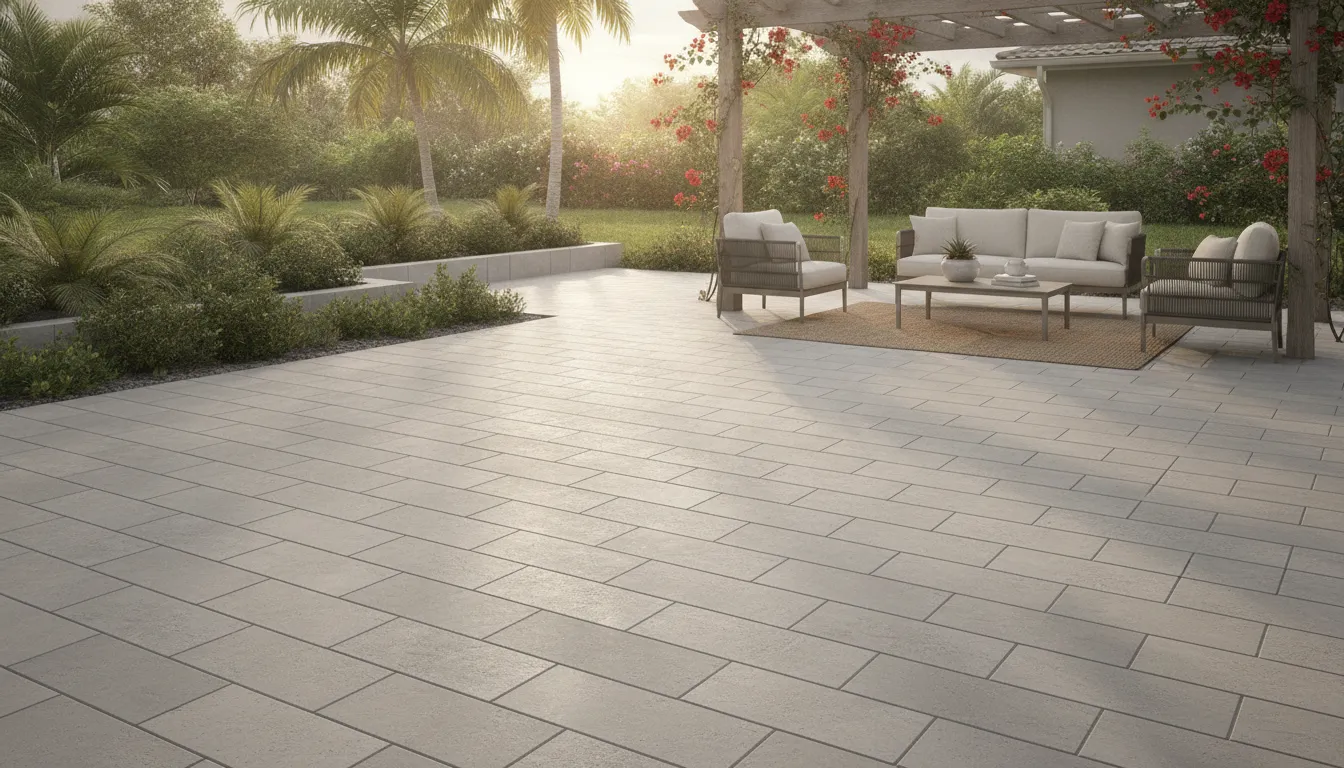
Put plants between pavers only where foot traffic is light and the joint can stay open. On a daily path, a pool deck, or a dining patio, a filled joint is the better default. Porcelain does not need greenery to look finished. A consistent joint and a compatible joint material keep the surface even, easy to sweep, and simple to hose off.
A planted joint asks the surface to do two jobs. It has to carry people, and it has to keep a living plant alive. Those jobs pull in opposite directions. People want a firm, dry, predictable step. A plant wants soil, moisture, and room to spread. When the walking surface wins, the plant thins out. When the plant wins, the joint gets soft, uneven, and harder to keep clear.
Use this split before you fall in love with a photo.
Florida sun and summer rain make the split sharper. A joint that stays damp can invite growth you did not plant. A joint that bakes can kill the groundcover you did. Neither result is a reason to change the porcelain. It is a reason to decide the joint's job first.
The bottom line: plants between pavers belong in a low-traffic joint you planned for, not in the walking surface you use every day.
The zones that can take plants are the ones people treat as garden, not as floor. A wide joint along the outer edge of a patio can hold a low mat if guests rarely step there. A break between two paved areas, where the layout already changes, can do the same. A stepping layout is different again: the planting sits in the bed around the units, not in a narrow joint you are expected to walk.
Read those as layout choices, not plant lists. If the green has to survive being stepped on, it is in the wrong place. If it only has to be seen from the patio, it can live in a border and the porcelain can stay a clean plane. Porcelain stepping stones are the right product when the goal is discrete pads in a planted bed. Porcelain paver walkways are the right reference when the goal is a continuous path.
Match the format to the zone before you choose a plant list.
| Zone | What the surface has to do | Planting decision | Porcelain format that fits |
|---|---|---|---|
| Main patio or pool deck | Bare feet, furniture, daily traffic | No plants in the joints. Keep a consistent filled joint. | Large-format 2CM porcelain for a residential walking surface |
| Door-to-gate walk | A reliable path in shoes or with a cart | Keep joints filled. Put green in a side bed. | 2CM or 3CM porcelain, sized to the path width |
| Visual patio edge | Looks planted, rarely gets stepped on | A wide planned joint or a separate border can hold a low mat. | 2CM field pavers, stopped cleanly before the bed |
| Garden crossing | An occasional step through planting | Use pads in a bed, not plants forced into a paved joint. | Porcelain stepping stones |
| Drive or heavy apron | Vehicle loads and turning | No planting in joints. The surface has to stay stable. | 3CM or 5CM porcelain specified for the load |
Thickness is not a style choice. 2CM porcelain pavers suit many residential patios and walks. 3CM porcelain and 5CM porcelain are the conversation when the surface carries vehicles or a heavier commercial load. A planted joint does not make a thinner paver appropriate for a drive, and a thicker paver does not make a planted joint a good idea under tires.
The bottom line: plants work beside the walking surface, or in a bed around stepping stones, not in the joints people actually use.
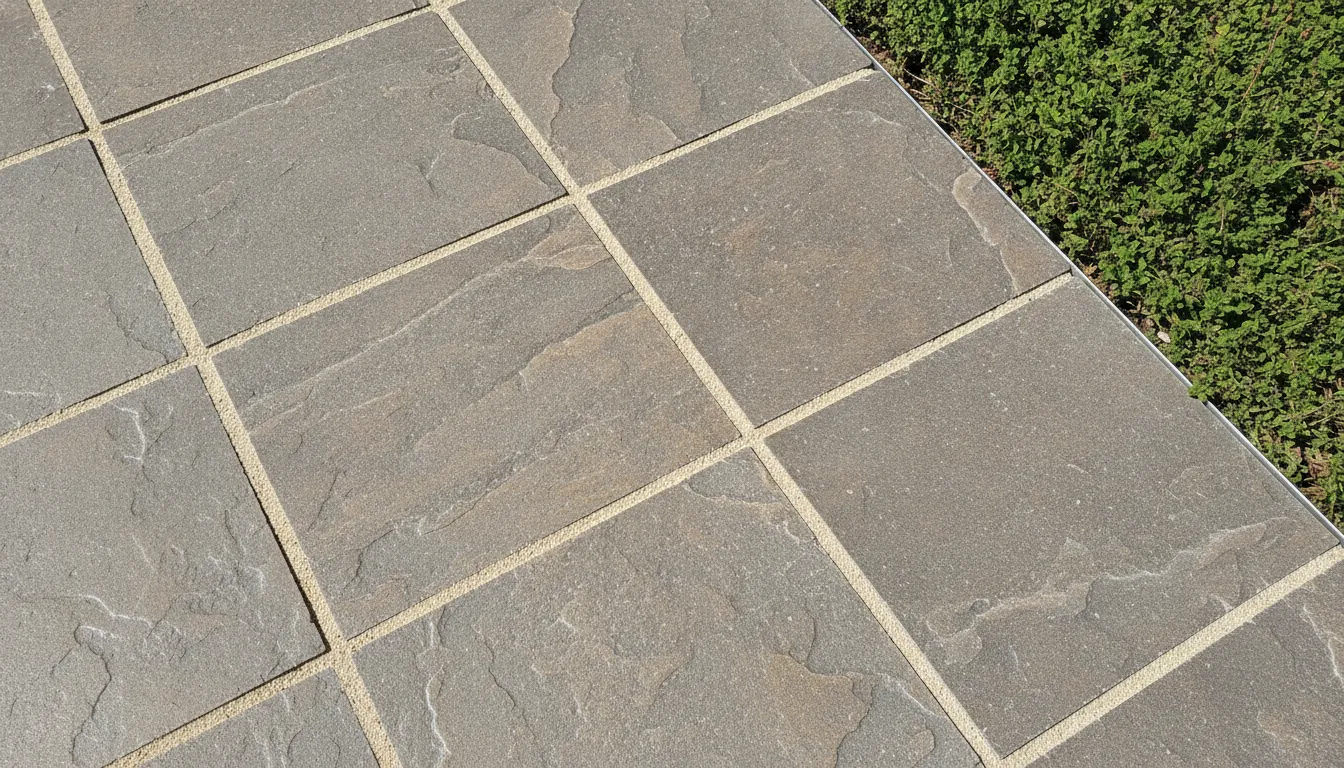
A plant needs an open joint. A sand-set porcelain surface is usually detailed with a narrow, consistent joint and a compatible joint material. Those are different details. You cannot have both in the same gap. Choosing plants means choosing a wider opening, soil instead of a joint fill, and a different expectation for how that line looks and feels after a season.
Spacers exist to hold a repeatable gap while the pavers go down. Porcelain paver spacers are a layout tool, not a planter. If the design needs a planted line, that width has to be drawn before anyone sets the field. Widening a joint after the pavers are down means relaying the work.
Filled joints have their own materials. They are chosen to stabilize the gap, not to grow anything.
Drainage still has to work. In a sand-set system, water leaves across the surface and through the joints into the base. A planted joint changes how that opening behaves, because soil and roots are now in the gap. It does not replace a drainage plan. Slope, base, edges, and outlets are a separate conversation, covered in the porcelain paver drainage and joint planning checklist. Tell the installer which joints stay open so the rest of the system can be detailed around that choice.
The bottom line: a planted joint is a designed opening with soil in it. It is not a standard spacer gap with a plant added later.
Decide the surface first, then the planting. The paver layout, the joint job, and the bed edges should be settled before a single plant goes in the ground. Retrofitting greenery into a finished field cuts the layout apart.
Color and texture still matter, because the planted edge is what people see next to the porcelain. Order samples and look at them in the sun you actually have, including the strong Florida afternoon light. A pale field next to a dark green border reads differently from a stone-look field next to the same border. Hardscape.com porcelain pavers include 2CM, 3CM, and 5CM options, plus cobblestone and stepping stones when the edge or the garden crossing needs a smaller unit.
Porcelain cobblestone borders are one way to draw a clean line between the field and a bed. A border that stops the pavers is easier to maintain than a joint that tries to be both walkway and garden.
The bottom line: draw the walking plane, the beds, and the joint type before installation. Planting is a layout decision, not a last step.
A filled joint stays clearer when nothing invites a plant to take it over. Loose sand, accumulated soil, and constant irrigation are invitations. A stabilized joint and a rinsable porcelain surface are the counter. Porcelain's very low water absorption and stain resistance are why this surface is easy to hose off. They do not stop a seed from sprouting in debris that was allowed to sit in an open gap.
Day to day, the care is ordinary and local.
Seasonal care belongs on a schedule, especially after Florida's wet months, when growth is fast. The porcelain paver maintenance schedule covers the broader rhythm of cleaning and inspection. Use it for the field. Use this page for the narrower question of what is allowed to grow where.
Edges deserve a look a few times a year. Soil from a border bed creeps onto the first course of pavers. Edging that holds the bed back, and a cobblestone or paver border that gives you a clean line to sweep to, keeps that creep from becoming a planted joint you never approved.
The bottom line: keep debris, soil, and irrigation out of filled joints, and pull anything that sprouts there before it looks intentional.
A cohesive outdoor surface is one where every material has a job you can point to. The porcelain is the floor. The bed is the garden. A stepping stone is a pad in that garden. A cobblestone line is the edge between them. When each of those is doing only its own job, the project looks considered. When plants spill through every gap, the floor and the garden become the same thing, and neither one works as well.
You can still have a lush yard. Put the lush part where it can be watered, pruned, and replaced without lifting pavers. A border along the patio gives you the planted view from the table. A stepping path through a bed gives you the garden walk. The patio itself stays a surface you can set furniture on, rinse after a storm, and cross barefoot without hunting for a clear spot.
Small yards need this discipline more, not less. Every square foot of a compact lot is doing work. Giving a joint over to plants shrinks the usable floor. Keeping the floor intact and planting the perimeter keeps both the open space and the green. Layout ideas for tight yards are collected in small backyard paver ideas, which is about the floor plan, not about what grows in the gaps.
If the project is still at the choosing stage, start with the material and the use, then place the planting around that. The porcelain paver planning guide walks the broader project questions. Bring this page's rule into that conversation: the walking plane stays clear, and the plants get a bed or a stepping layout of their own.
The bottom line: cohesion comes from giving porcelain, beds, and stepping stones separate jobs, not from planting every gap.
Loose sand can hold a seed, which is not the same as being a good place to plant. A filled joint that uses polymeric sand is there to stabilize the gap and resist weeds, not to grow a groundcover. If you want a plant, give it a bed or a joint you designed as soil. Do not expect a sand-filled walking joint to become a garden.
Keep soil and debris out of the joints, use the joint fill the installation specified, and pull seedlings while they are small. Irrigation overspray and dirt washing off a bed are the usual sources. A filled joint on a sand-set porcelain surface is easier to keep clear than an open gap that collects dust.
Only if the plan already left a wide opening for them. Scraping joint fill out of a finished field to make room for plants undoes the joint and can disturb the pavers. If the patio is done, add a border bed or a separate stepping path instead of cutting into the walking surface.
Not in the deck people walk. Bare feet, wet skin, and a soft or uneven joint are a poor mix, and irrigation aimed at the deck works against drainage. Keep the pool surround as a clean porcelain plane and put planting in beds beyond the coping.
Change the layout, not the joint. Stepping stones set in a planted bed give you green under and around each step without asking a patio joint to be a planter. A continuous porcelain field is the choice when you want floor space. Use the product that matches the goal.
Plants between pavers are a choice about the joint, not a garnish you add at the end. Keep daily walking surfaces as a clean sand-set porcelain plane. Give greenery a border bed or a stepping-stone crossing. Decide that on paper, with the right thickness for the load, before anyone sets a spacer.
Hardscape.com can help you match 2CM, 3CM, or 5CM porcelain, cobblestone, and stepping stones to the layout you actually need. Call 561-998-5000 or start with the showroom closest to the project. Bring the site plan, and ask which joints should stay filled.