
30 Jun
A damp porcelain patio is more than just a slip hazard in the Florida rain. Proper porcelain paver drainage relies on a sand-set system that coordinates surface runoff, joints, and the supporting base. Planning for runoff helps your pool deck stay clean and functional.
View Hardscape.com's porcelain paver installation guide before planning your sand-set project.
Porcelain paver drainage starts with a site-specific plan for where water comes from and where it should go. A sand-set system coordinates surface slope, consistent joints, compatible joint material, the supporting base, edges, and outlets. The correct arrangement depends on the site, approved plans, product instructions, and applicable requirements, so involve a qualified professional before installation.
Planning for water runoff before installation helps the finished surface perform as intended. Understanding how each part of the sand-set system works makes it easier to ask useful questions before the project begins.
A sand-set system moves water through two main paths. First, water flows across the top of the pavers to a drain. Second, it sinks through the small gaps between the pavers. This mix of surface flow and deep drainage keeps your patio dry and safe. Proper porcelain paver drainage starts with how you lay the base and the units.
Water needs a planned route off the paver surface so it does not collect in unintended areas. The required slope and destination depend on the site's layout, thresholds, structures, soil, rainfall, and approved project requirements. A qualified professional can coordinate the grade with suitable drainage points.
Standing water can create slip risks and signal that the surface-flow plan needs attention. The grade must work with the rest of the landscape rather than sending runoff toward a building, pool, or neighboring property. Review the route with a professional and follow approved plans for your sand-set installation method.
In a sand-set system, the joints between pavers play an important role. Consistent spacing supports an orderly layout and helps compatible joint material perform as intended. Select spacers and joint materials that match the paver system, manufacturer instructions, and project plan.
These open joints make the system more permeable. According to the Environmental Protection Agency (EPA), these systems allow stormwater to sink into the soil. This helps stop water from building up on the surface during heavy rain. Using the right spacers helps you get the best drainage capabilities for your new patio or pool deck. This path for water reduces the load on local storm drains and helps recharge the ground below.
The layers below the pavers handle the water once it leaves the surface. A sand-set system uses a bed of sand over a stone base. This aggregate layer acts like a tank for water. It holds the water for a short time before it sinks into the earth. This process keeps the top layer stable and dry even after a storm.
A well-built base prevents the pavers from shifting or sinking. The stone layers provide a strong foundation while still letting water pass. This dual purpose is why the sand-set method is the standard for porcelain projects. By moving water away from the surface and into the base, you protect your investment. Always check with a local pro to make sure your specific site plan meets all local codes and needs.
Planning for proper porcelain paver drainage starts long before the first paver is set. Observe how the site handles rain and runoff, then give surface water an intentional route. The route should account for existing grades, nearby features, and the complete sand-set assembly.
Walk through your yard after a heavy rain to see where water stays. Look for roof gutters that dump water near your future patio. You also need to find the high and low points of your land. If the ground tilts toward your house, change the grade. Moving water away is the key.
Soil conditions influence how a site responds to water, and buried utilities can affect the available layout. Have a qualified professional evaluate the subgrade and determine the base design and excavation limits required for the specific project.
Follow these steps to check your space before you start the layout and build.
A smart plan coordinates the surface grade with joints, the base, and a suitable outlet. In a sand-set installation method, every layer has a role. Confirm whether the proposed assembly is intended to manage water through the joints, across the surface, or through a combination of paths.
The slope of a patio or walkway is a key design choice that sets how water moves across the surface. When you plan a project, match the grade with thresholds, walls, and drain points. Proper porcelain paver drainage depends on a clear path for runoff to follow within a coordinated sand-set installation method.
Surface flow is the way water travels over your pavers during a rain storm. Designers must look at the layout of walls and pools to ensure water does not get trapped. If a patio sits next to a pool, the slope should guide water away from the edge. This keeps debris and waste out of the pool. This plan must also account for garden beds, which act as natural spots for runoff. A slight grade ensures the surface dries fast and keeps the look of the porcelain pavers.
The Environmental Protection Agency (EPA) says that permeable systems help manage storm water by letting it move through joints. In a sand-set system, the gaps between the pavers play a big role in this process. By aligning the slope with these open joints, you can help stop water from pooling. This choice protects your outdoor space from the effects of standing water and helps move runoff to the right drain spots.
It is vital to follow approved plans and local rules for any paving project. Every site has unique needs based on soil types and rain levels. You should always work with qualified pros who know how to set the right grade for your specific area. They ensure the slope meets safety standards for a lasting patio. Following a pro plan prevents drainage issues that could harm your home or yard over time. Experts can spot risks that a home owner might miss.
A pro design will also mark the spot of drains and pipes. These outlets must be at the lowest points of the slope to collect water well. If the slope does not match the outlet height, water will sit in the wrong spots. This can lead to slip risks or damage to the pavers. By checking the plans before the work starts, you can make sure every design part works together. This step is a key part of any successful outdoor project.
The spots where your indoor space meets the outdoors are very important. The slope must start below these points to keep water from entering your home. Walls and other structures also act as blocks that change the way water flows. Designers must account for these parts when they set the final grade. Using the right drainage capabilities of spacers and sand helps create a smooth exit for water. This makes the entire system safe and strong.
When you use porcelain pavers, you have a strong material that does not soak up water. Rain must either dry up or run off via the slope. Matching the slope with the rest of the yard ensures the water reaches your lawn or a drain pipe. This keeps your patio clean and safe for use all year. A smart design blends these technical needs with the beauty of your outdoor living area. It creates a space that lasts for many years.
A great outdoor space starts with a plan for the whole system. Joints and spacers are not just small parts of the build. They work with the base and the pavers to keep the surface level. When you use the right spacing, you help the system handle water and movement. This makes your patio or pool deck last longer and look better for years.
Even gaps between pavers are key for a firm surface. If the gaps vary, the pavers can shift or tilt over time. Hardscape.com has spacer bar tools like Tirolo Quartz and Porfido to keep joints even. These tools help professionals maintain a consistent gap selected for the specific paver system and approved project plan. This small space gives the system the room it needs to stay firm while letting water flow through.
Proper spacing also helps with the layout of patterns and cuts. When joints are straight, the full design looks clean and sharp. Spacers ensure that every cut fits well against the edge of your project. This level of detail is what sets a DIY job apart from a pro plan. Using the right tools makes the work faster and much more sturdy.
One of the main jobs of a joint is to manage water. Proper drainage capabilities prevent water from sitting on the surface. In a sand-set system, open joints allow rain to pass through to the sub-base. According to the Environmental Protection Agency (EPA), these systems allow storm water to sink into the ground below. This reduces the risk of large puddles or runoff issues on your land.
The health of your sub-base depends on how well the joints work. Water that passes through the gaps enters a crushed stone bedding layer. This layer can hold water for a short time as it drains away. To keep water moving, you must also set the base on a slight slope. Guidance from Oregon State University reinforces the need to establish drainage away from nearby structures; the approved project plan should define the grade for the site. This slope ensures that water does not pool and damage the patio over time.
Porcelain pavers need to move slightly as the ground shifts or the weather changes. A sand-set system gives the pavers the room they need. Filling the joints with polymeric sand helps lock the pavers in place while still allowing for small shifts. This prevents the pavers from cracking or chipping when the earth settles. It also keeps weeds and pests from getting into the gaps.
The pattern you choose for your pavers also affects how the joints work. Some patterns spread weight better than others. A pro can help you pick a layout that suits your site and your needs. They will plan for cuts at the edges to make sure the system stays strong. By thinking about joints and spacers from the start, you build a surface that can stand up to heavy use and wet weather.
Proper joint planning is the core of drainage capabilities in sand-set projects. When you plan a patio, you must pick the right parts to move water. Each part has a specific job. If you skip one or use the wrong type, water will pool on top. You need a full setup that works from the surface down to the soil. A coordinated grade specified in the approved project plan helps water flow toward intended drain points. This slight tilt stops water from pooling on your patio and keeps the area dry.
Spacers keep each paver in place. They make sure you have the right gap for water to pass through. The joint width should be consistent and compatible with the selected pavers, spacers, joint material, and approved plan. Spacers also stop the tiles from touching. This stops chips on the edges of your pavers. Hardscape.com offers pavers with built-in bars to make this easy. These bars keep the lines straight across the whole area. They help you keep a level look while still letting water find its path to the base.
Polymeric sand fills the gaps between your pavers. It helps keep the units from moving or shifting over time. But do not think that sand alone solves all your water issues. While sand helps with stormwater control, it must work with a sloped base. The sand lets some water soak in to reach the sub-base. Most water should still run off the top to a drain or a soil bed. You can find high-quality polymeric sand that is made for the low soak rate of porcelain.
Edge restraints keep the whole system tight. They stop the sand and pavers from moving to the side under a load. Without them, the joints would open up. This would ruin the path for water flow. You also need clear outlet points where the water can go. This might be a surface drain or a low spot in your yard. Every part must fit together to keep the site dry. Always follow what the maker says to do. Using the wrong parts can lead to water traps and cause issues with your project over time.
| Component | Main Job | Drainage Role |
|---|---|---|
| Joint Spacers | Keep even gaps | Create paths for water to flow through |
| Polymeric Sand | Lock pavers in place | Allow slow soak and stop wash-outs |
| Edge Restraint | Hold the base tight | Keep joint widths from changing over time |
| Drainage Outlets | Remove excess water | Give runoff a clear place to go |
| Aggregate Base | Support the pavers | Act as a temporary tank for rain water |
For the best results, always use parts that are made to work together. Using the right spacers with the correct sand ensures your 3CM porcelain pavers stay stable. If you ignore the maker's guide, you may face sinking or shifting. A good plan includes checking that each part fits the load of your site. This is vital for driveways or high-traffic paths where water and weight both put stress on the system. Following these steps helps your project last for years without big repairs.
Water must flow away from your home to keep your walls dry. When you plan your porcelain paver drainage, you must look at the slope near your doors and walls. The grade should follow the approved project plan and direct water away from doors and walls. This grade helps rain move toward your yard or a drain. If the land is flat, you may need a channel drain at the door. This tool catches water before it can enter your house. A sand-set installation method helps the base soak up some water while the rest flows to a safe spot.
Pool areas need more care since water is always there. You should use porcelain coping to link the pool edge to the rest of the deck. The joints between the pavers must stay open to let water pass to the stone base below. The EPA shows that permeable joints let water move through the surface to the ground. This keeps the pool deck safe and stops slips. Planters also need a clear way to drain. If a planter sits on your patio, it must have a path for water to leave. This keeps the soil from getting too wet and heavy. Wet soil can shift your pavers over time.
Roof water can cause big issues for a new patio. Downspouts should not dump water right onto your pavers. Instead, you should pipe this water under the patio to a dry well or a lawn emitter. This stops heavy rain from washing out the sand in your joints. When your patio meets a grass lawn, the edge must stay firm. A small drop helps water move from the hard pavers to the soft soil. This keeps the drainage flow of your project high for many years.
Talk to your pro about the plan before they start the work. Ask how they will set the slope near the pool or your home. Find out where the channel drains will fit. You should also check whether they will use spacers compatible with the selected paver system to keep joints consistent. Proper joint size is vital for a sand-set system. Ask if the base layers are deep enough to hold storm water for a short time. You want to know if the stone under the pavers will drain well. These steps help your patio stay level and look great.
You must plan your drainage before you lay the first paver. It is hard to fix a bad slope once the sand and stone are in place. You should map out all pipes and drains first. This ensures every part of your yard works as one system. Porcelain is strong and easy to clean, but it needs a smart start to last. A good plan avoids puddles and keeps your outdoor space dry.
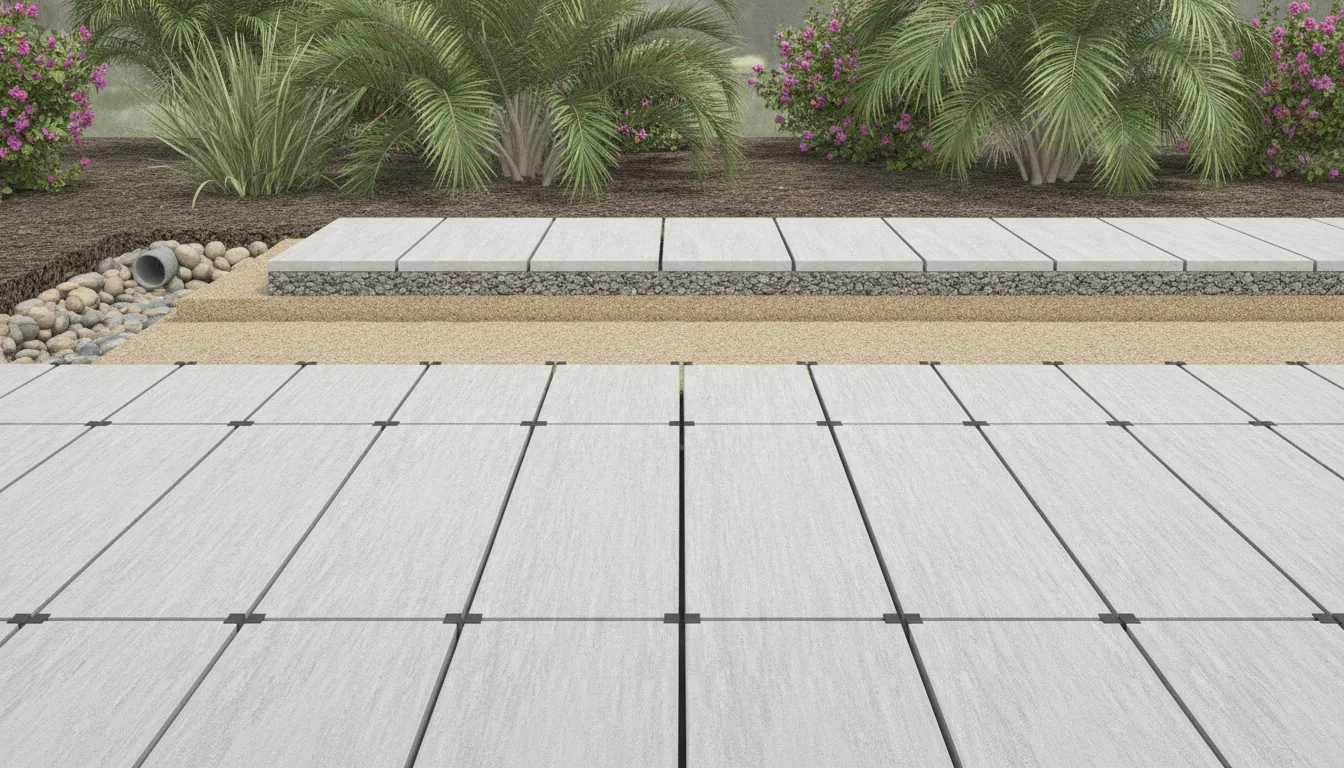
Good porcelain paver projects start long before the first tile hits the ground. Proper planning makes sure your patio or pool deck stays dry and stable for many years. A big part of this work is to plan porcelain paver drainage. If water cannot move away from the surface, it will pool and cause damage over time. Following a clear checklist helps you avoid common mistakes and leads to a great result.
Yes, good drainage is vital for any porcelain patio to stop water from pooling. Porcelain pavers soak up almost no water, so it must flow off the top. As noted by Oregon State University, a slight slope guides water toward drains or soil. This slope keeps the area safe and dry.
For a sand-set job, you start with a firm base and a layer of crushed stone. This base stays strong while letting water pass through. As the EPA states, porous systems use these stone layers to filter rain into the ground. A final layer of sand is then used to level the pavers before you fill the gaps with sand too.
Start by grading the site to create a small slope away from your house. You should clear an area a distance beyond the patio that the qualified professional specifies for safe runoff. Use spacers to maintain the consistent joint width specified in the approved plan. These gaps are needed to let water reach the base below. Finally, fill the gaps with sand to keep the system stable and safe.
Yes. A properly planned sand-set system can support drainage for a porcelain paver patio. This sand-set system uses a porous bed and stone base to manage water flow. This method allows rain to move through the system without getting stuck. Good joint planning ensures that water drains fast into the soil below, which keeps your patio strong and stable.
Poor joint planning often leads to standing water and shifting pavers, which can cause costly repairs and trip hazards later on. If you do not act now, moisture can seep into the base and cause the surface to sag or crack over time. Proper drainage layout today prevents these issues before you start to ensure your outdoor space stays dry and safe for years. Avoid the stress of a failing project by setting up your site the right way with our sand-set method. Taking this step now means you enjoy a low-maintenance patio that will look great in any weather. Our team is here to help you get the best results. Learn more about drainage capabilities on our site. We give you the tools and help you need to succeed with your next build.
Ready to plan your project? Call +1 (561) 677-1383 to discuss your sand-set porcelain paver plan and find a qualified professional.