9 Jul
Building a permanent outdoor kitchen begins with choosing a floor that survives spills, heavy grills, and Florida weather. You need a surface that handles high heat and frequent use without losing its look. This decision sets the tone for your entire outdoor dining area and affects how much time you spend maintaining it over the years.
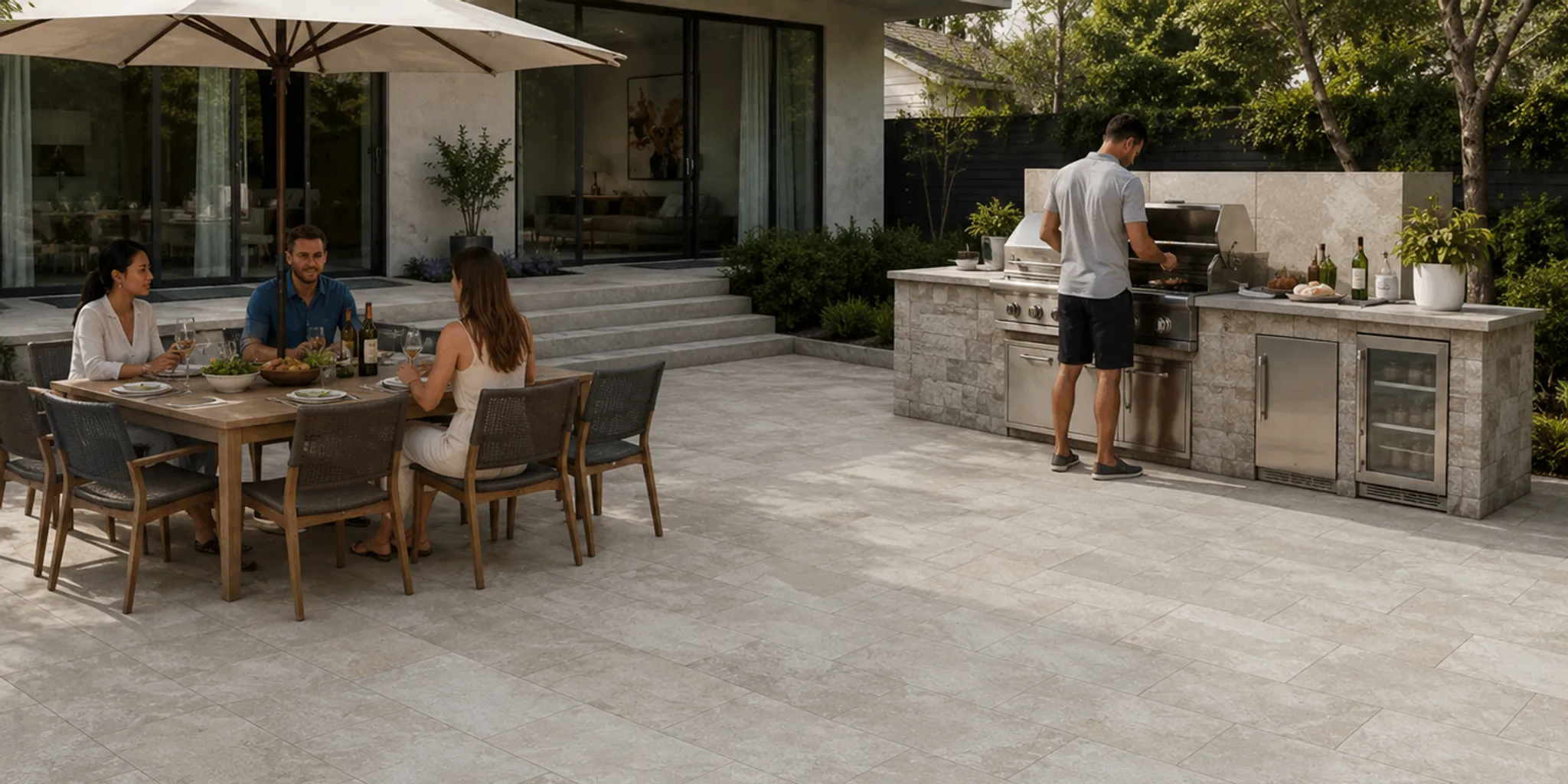
Outdoor kitchen porcelain pavers deliver a durable, low-maintenance foundation for backyard cooking spaces. They absorb zero water, resist grease and wine stains, and support heavy grills and pizza ovens without cracking. Fired at extreme temperatures, they do not fade in the sun or degrade with temperature changes. These slip-resistant pavers last for decades and must be sand-set for proper drainage and stability.
Call 561-998-5000 to discuss your project with a Hardscape.com specialist.
A custom outdoor kitchen starts with a strong base. While grills and cabinets get the attention, the ground beneath them does the heavy lifting. Porcelain pavers stay level and stable for decades, supporting stone islands and appliances without shifting or settling over time.
Modern outdoor kitchens carry serious weight. A full masonry island with a grill, refrigerator, and pizza oven can weigh thousands of pounds. Standard pavers often sink or crack under this pressure. High-density porcelain is different. For example, outdoor kitchen porcelain pavers in 3CM thickness support over 55,000 pounds, more than enough for any residential kitchen layout. This breakage load prevents pavers from snapping under the concentrated weight of kitchen legs or heavy stone bases. Even commercial kitchens with multiple heavy appliances perform well on a dense porcelain floor because the material does not compress or shift once installed.
Porcelain pavers offer breakage loads of up to 2,000 pounds per unit. This strength comes from vitrification, a process where clay and minerals fuse together at very high heat. The result is a dense, solid material that acts as a strong slab once installed. A porcelain floor will not fail under your expensive new equipment. And it provides a stable cooking surface that lasts longer than most of the appliances sitting on top of it.
Kitchens involve heat, spills, and heavy use. Porcelain pavers are fired at extreme temperatures, giving them natural heat resistance that protects the floor near grills, pizza ovens, and smokers. They do not expand or contract much when temperatures change, which stops them from popping loose or developing gaps over time. Since the material is non-porous with zero water absorption, grease, wine, and oil spills cannot soak in and leave permanent marks. A quick wipe is all it takes to keep the floor looking clean after a busy cooking session.
Natural stone needs frequent sealing to block stains and moisture, but porcelain does not require any sealing at any point in its lifespan. The dense surface resists moisture and mildew naturally, a clear advantage for food prep areas where hygiene matters. For a deeper comparison, see our guide on porcelain vs natural stone for outdoor applications. Hardscape.com requires all porcelain to be sand-set for proper drainage and performance in Florida weather, ensuring water moves through the joints instead of pooling on the surface.
The colors and textures you choose define your outdoor cooking space. Porcelain pavers offer a wide range of styles that hold up to the demands of a busy kitchen while looking like natural stone, wood, or concrete. You can match the pavers to your home exterior or create a bold new look that stands out in your backyard.
Porcelain pavers keep their rich colors because vitrification bonds pigment throughout the material, not just on the surface. The color runs through the entire thickness of the paver, so heavy foot traffic and scraping do not reveal a different color underneath. Florida sun will not fade your patio. And the consistent color makes it easy to replace a single paver if one ever gets damaged without worrying about mismatched shades.
Safety matters in outdoor kitchens, especially near pools or wet zones. Porcelain pavers have a naturally high grip that keeps people steady on damp ground. The texture does not compromise the beauty of the design, making it a perfect fit for pool-side kitchens in Boca Raton and Fort Myers. Even when food grease or rain makes the surface wet, the slip-resistant texture provides reliable traction for cooks moving between the grill and countertops.
All porcelain pavers in outdoor kitchens must be sand-set. This allows water to drain through the joints and keeps the floor stable for many years. The sand-set method also makes individual paver replacement simple if damage ever occurs.
The layout pattern changes how people perceive the space. Some layouts make a small area feel open, while others provide the strength needed for heavy grills and constant foot traffic. The right pattern also affects how water drains and how easy the floor is to clean after cooking.
A running bond layout offsets the joints in each row. This draws the eye across the floor, making a narrow kitchen feel wider. It works well with modern and traditional home designs and is one of the most straightforward patterns to install. The basketweave pattern creates a woven look by placing paver pairs at right angles. It adds subtle style without being busy, making it a solid choice for dining areas where people gather around outdoor tables and counters.
In a herringbone pattern, pavers are set at angles to create a V shape. This locked design gives the floor maximum strength, keeping pavers from shifting under heavy grills or busy foot traffic. It creates a sense of flow that can lead guests toward a pizza oven or outdoor bar. Herringbone is one of the strongest patterns available because the interlocking angles distribute weight across multiple pavers instead of concentrating it along straight joint lines. For more inspiration, check out our guide on porcelain paver design ideas for other outdoor spaces. Porcelain pavers can be dry laid onto sand without grout, making installation fast and clean while allowing water to drain through the joints into the base below.
Multi-size or ashlar patterns use pavers of different sizes to create a random, natural look. This style suits large kitchen areas and gives the floor a high-end custom feel. The varied sizes break up large, flat surfaces and add visual interest that guests notice immediately. Whatever pattern you choose, a sand-set base keeps porcelain pavers stable and slip-resistant for years of heavy use. For tips on ensuring proper water management, read our porcelain paver drainage planning guide.
Natural stone has visible pores that absorb oil, wine, and grease, leading to deep stains that are difficult or impossible to remove. Porcelain has virtually no porosity and resists stains without annual sealing. It is the cleaner choice for food prep areas where spills happen regularly.
| Feature | Porcelain Pavers | Natural Stone |
|---|---|---|
| Stain Resistance | Resists all oils and spills | Absorbs stains easily |
| Annual Upkeep | Low, wash only | High, needs sealing |
| Load Capacity | Up to 2,000 lbs per unit | Varies by stone type |
| Water Absorption | Near zero | Porous, holds water |
| Mold Resistance | Naturally resistant | Can grow in wet areas |
| Surface Temperature | Stays cooler underfoot | Can get very hot |
Porcelain also stays cooler in direct sun, a meaningful advantage in Florida where afternoon heat can make stone floors uncomfortable to walk on. Heat-resistant porcelain pavers keep the floor comfortable for bare feet, even on hot afternoons in Tampa or Boca Raton. The lower surface temperature makes outdoor kitchens more usable year-round, especially during the summer months when every degree of comfort matters.
A small outdoor kitchen needs smart design choices to feel open and functional. Light-colored porcelain pavers reflect more light and reduce joint lines, making a compact area feel larger. Large-format pavers create a clean look that tricks the eye into seeing more space because fewer grout lines create a more seamless surface. This is especially effective on smaller patios where every visual trick helps the space feel bigger than it actually is.
A running bond or diagonal layout draws the eye across the longest part of the area, making narrow spaces feel wider. Avoid bulky islands that eat into walking space and choose slim cabinets instead. Keep the most-used tools within arm reach to make cooking easier in a tight footprint, and consider a single-burner grill or compact pizza oven to save counter space. With clear lines and open floors, a small backyard becomes an inviting place to cook and entertain friends and family.
Porcelain pavers are designed for flooring, not countertops. They handle heavy loads and foot traffic well but are not recommended for food preparation surfaces. Hardscape.com offers porcelain slab options that are designed for countertop and vertical applications.
No. Porcelain pavers are fired at extreme temperatures during manufacturing, making them naturally heat resistant. They do not crack, warp, or discolor from the heat of grills, pizza ovens, or smokers. The thermal stability of porcelain ensures the floor stays flat and safe even directly beneath high-heat cooking equipment.
Porcelain pavers are generally competitive with mid-range natural stone and cost less over time because they require no sealing or special cleaning products. The long lifespan and minimal upkeep make them a cost-effective choice for outdoor kitchens over a 20-year period.
Installation typically takes 2 to 4 days depending on the size of the kitchen. Because porcelain pavers can be dry laid onto sand without grout or adhesive, the process is faster and cleaner than poured concrete or mortared stone. Base preparation adds time but is essential for long-term performance.
No. Porcelain pavers must be sand-set over a properly prepared base of compacted aggregate and sand. Installing over a concrete slab prevents proper drainage and can lead to cracking and movement over time. Sand-set installation is required for warranty and long-term performance.
Choosing the right flooring is one of the most important decisions in your outdoor kitchen project. Hardscape.com offers premium porcelain pavers in a wide range of colors, textures, and sizes to match any design vision. Our team serves homeowners and contractors throughout Florida, from Jupiter and Boca Raton to Fort Myers and Tampa.
Call 561-998-5000 to speak with a Hardscape.com specialist. Discuss your project, request samples, and get the guidance you need to create an outdoor kitchen that lasts for decades.