
23 Sep
For a Florida patio, pool deck, or walkway, the contractor's product knowledge matters as much as the proposal. Before comparing bids, ask the installer to explain which porcelain paver the project calls for. Also ask how the sand-set approach fits the site and who will handle material, preparation, and schedule decisions.
Have porcelain paver product questions? Contact Hardscape.com.
A practical way to choose a porcelain paver contractor is to ask for a clear explanation of the exact product and sand-set plan. Get a written scope that assigns responsibilities and request relevant project references. The best fit can discuss site-specific questions plainly and keep communication clear before work begins.
Those checks are especially useful when homeowners, designers, and installers are coordinating the same outdoor project. Start by looking at how a contractor connects the selected product to the proposed sand-set work, rather than relying on broad promises or general paving experience alone.
Porcelain experience is more specific than general hardscape experience. Compare contractors on their ability to connect the paver selected for your project with its intended use and explain how that choice fits a sand-set scope. Patios, walkways, pool areas, and commercial spaces can raise different product and coordination questions, so look beyond a generic promise to install pavers.
Ask the contractor to identify the exact product in the proposal. Hardscape.com offers distinct categories, including 2CM porcelain pavers and 3CM porcelain pavers. These examples are not a recommendation for your site. The contractor should explain how the specified product matches the planned application rather than treating all porcelain pavers as interchangeable.
A knowledgeable installer should be comfortable naming the selected product and checking its current manufacturer instructions and technical information before work is scoped. Ask what documents they use, who reviews them, and how they resolve questions when a detail is unclear. Product-level requirements can vary, so a broad statement about porcelain is not a substitute for confirming the information for the exact paver and project.
Site conditions matter to that conversation, too. Invite the contractor to explain what they need to assess before finalizing the sand-set scope, such as the existing area, edges, transitions, or drainage coordination. You do not need to direct the installation. You do need to understand which site assumptions are included, what remains to be checked, and who will raise a concern if the conditions differ from the proposal.
Ask the contractor to describe the proposed work at a high level and identify what is included in their responsibility. Their explanation should be specific enough to connect the selected paver, the sand-set method, site planning, and project coordination, without relying on vague assurances. Ask how questions about product requirements will be handled and whether they coordinate with the supplier or design professional when needed.
Compare answers alongside the written scope. A precise explanation and willingness to verify details are more useful than unsupported claims. Ask that any assumptions about the product or site be recorded and confirmed before work proceeds.
The bottom line: Choose a contractor who can identify the exact porcelain paver and relate it to the intended application. They should explain how current product requirements and site conditions shape the sand-set scope. Look for clear responsibilities and a process for resolving technical questions. Product familiarity matters, but demonstrate it through specific, verifiable project planning.
A useful conversation goes beyond asking how many patios someone has built. Ask for examples involving porcelain pavers and a sand-set approach, then listen for how the installer connects product selection, site conditions, and project responsibilities. A clear, specific answer is more informative than a broad claim of experience.
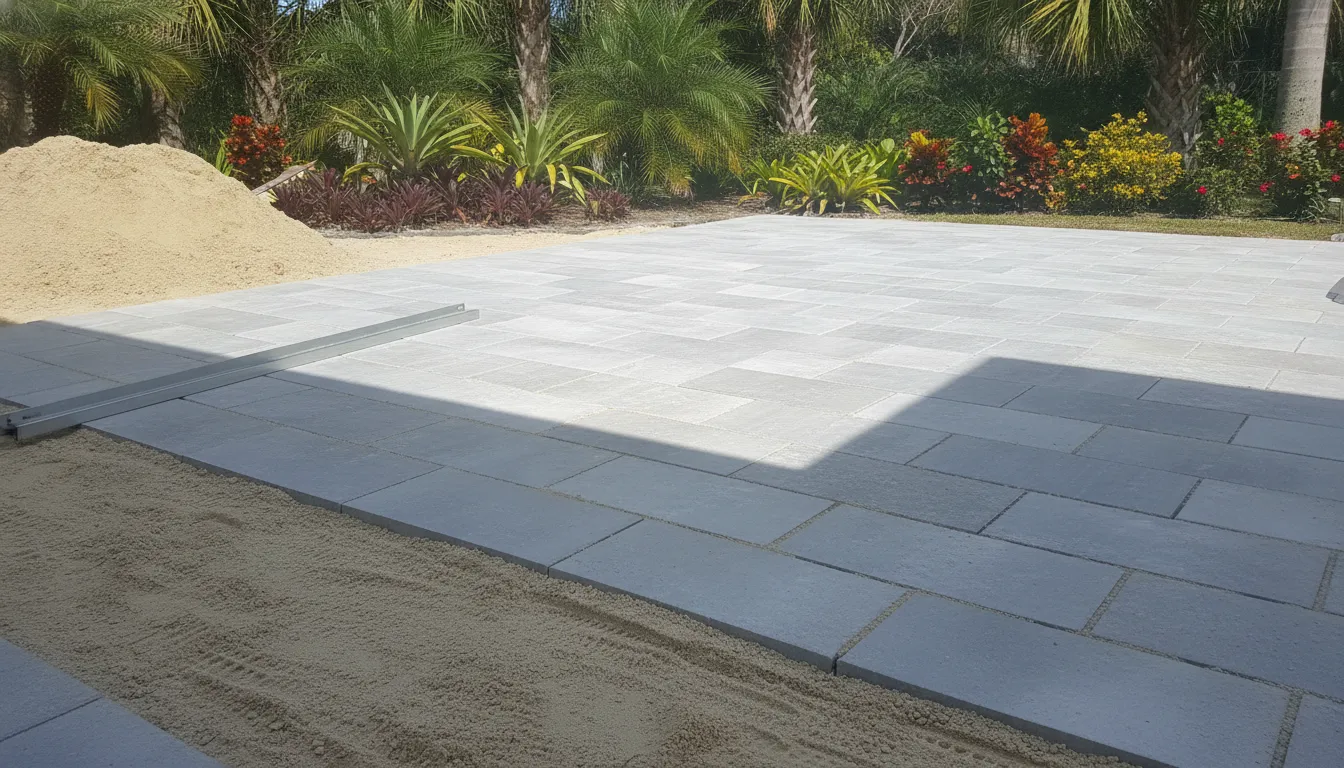
Try questions such as: "Can you describe a comparable porcelain paver project. And what product and application did it involve?" A contractor should be able to explain the type of project and their role without disclosing another customer's private details. Ask how they confirm current requirements for the exact product being proposed. Product-specific information matters because different pavers and applications may call for different technical considerations.
Then ask, "What parts of a sand-set installation do you plan differently for this site?" The answer should make room for the property, not just a standard pitch. You might ask who will check the layout, cuts, edges, and transitions around features such as steps, drains, or pool coping. Also ask how those details will be approved before work proceeds. These prompts support a clear planning conversation, not a test of memorized terminology.
Drainage and joints are another useful subject. Ask how the proposed scope addresses water movement, the direction of runoff, and consistent joints, and who is responsible for decisions when site conditions affect the plan. For background on the issues to discuss, see this porcelain paver drainage planning guide. The contractor should be able to describe how these topics will be coordinated, while confirming project-specific requirements with the relevant product information and qualified professionals.
Finally, find out who answers technical questions once materials are selected. Will the installer communicate directly with the supplier or designer when a product detail needs confirmation? How are questions, changes, and decisions documented? Strong coordination does not mean one person knows every product detail. It means the team has a practical way to identify the right source, resolve uncertainty, and keep the agreed scope clear.
The bottom line: Ask for comparable porcelain project examples, the exact product and application, and a clear explanation of how the sand-set scope addresses this site. Discuss cuts, transitions, drainage, joints, and technical support. Look for specific, coordinated answers, not a particular credential or a rehearsed list of terms.
A useful written scope turns broad expectations into decisions both sides can check before work begins. It should identify the project area, the work included, who is responsible for each material and site task, and how questions or changes will be handled. This makes it easier to compare proposals on the work itself, rather than relying on a short description or assumptions.
Use this checklist when reviewing a proposed scope:
For a fuller way to define project boundaries before reviewing proposals, see this guide to defining a porcelain paver project scope.
The bottom line: A clear scope names the product, sand-set responsibilities, site and drainage details, included work, exclusions, and closeout process. It also explains how decisions and changes are recorded. If an important item remains undecided, identify who will resolve it and when, so each person understands the same plan before work moves forward.
Past work is most useful when it resembles your project. Ask for examples of porcelain paver installations with a similar setting, scale, site context, and intended use. A gallery can show appearance, but a conversation with a former customer may reveal how the contractor handled communication, schedule changes, and questions during the work.
Request references you can contact, with the customers' permission. Ask what work was completed and whether the written scope matched the finished project. Also ask how unexpected issues were discussed and whether the customer would hire the contractor again. If you can visit a completed project, observe the workmanship and ask the owner about their experience. One visual visit does not replace checking scope and references.
Ask the contractor to provide evidence of the insurance coverage applicable to the proposed work. Rather than relying only on a verbal assurance or an old document, confirm the policyholder, coverage dates, and that the document relates to the business performing your project. If anything is unclear, request clarification from the insurance agent or carrier, with the contractor's authorization. Coverage types and terms vary, so avoid assuming a particular policy or limit applies to every job.
Do not assume every paver installation requires the same license or credential. The relevant requirements can depend on the specific scope and locality. Ask the contractor which license or credential, if any, applies to the work, and ask for the name or license number so you can check it. For Florida, the Department of Business and Professional Regulation provides an online license verification portal and instructions for searching by name or license number: Florida DBPR license search and DBPR license verification instructions.
For project-specific local requirements, contact the relevant city or county building department and describe the actual work planned. Ask whether permits, inspections, or particular credentials apply, and keep the response with your project records. This is a practical check, not a substitute for legal advice. If the contractor's answer and the local authority's guidance do not align, pause and clarify the scope before scheduling work.
Compare the information you gather with the written proposal. The business name, responsible parties, scope, and timing should be clear enough to understand who will perform the work and what documentation applies. If subcontractors will be involved, ask who is responsible for their qualifications and insurance records. Resolve unanswered questions in writing before authorizing the project.
The bottom line: Look beyond photos: speak with customers whose projects are genuinely comparable, review current insurance evidence, and identify which credentials or local approvals apply to your specific scope. Verify any applicable Florida license through DBPR, and confirm unresolved locality questions with the appropriate building department before work is scheduled.
A smooth project depends on decisions being confirmed before crews and materials are expected on site. The installer, owner, designer, and supplier each have different information to manage, so name a point person for updates and record decisions in one shared written plan.
Start by matching the order to the approved selection. Confirm the exact porcelain paver product, size, quantity, pattern, edge pieces, and accessories with the designer or owner. Ask the supplier to confirm current availability and the order's status. An estimate or sample does not confirm that an item is reserved or will arrive by a particular date. The installer should identify what must be on site before work begins and flag any items that could affect sequencing.
Site readiness needs its own check. Agree who will clear the work area, confirm access, protect nearby features, and arrange a place for delivery and staging. The owner can share access restrictions or property rules, while the designer can resolve layout questions. The installer can identify practical site conditions to address before treating a start date as firm. Confirm how the delivery vehicle will reach the staging area and who will receive and check the order. For planning checkpoints, see the porcelain paver project timeline.
Before installation, get approval of the layout and the product details in writing. Establish how the team will handle weather delays, a change in site conditions, a shortage or damaged material, or a design revision. Ask who contacts the supplier, who authorizes a change, and how any schedule adjustment will be shared. A brief update at agreed milestones can prevent assumptions from turning into disputes.
At the end, walk the completed area with the installer and compare it with the agreed scope and approved layout. Note any items that need attention, clarify care or handoff information, and agree how outstanding work will be resolved. Keep the final notes with the project documents.
The bottom line: Coordinate around confirmed product details, a site-readiness check, and a written sequence of responsibilities. The supplier can report order status, while the installer, owner, and designer resolve access, layout, and change decisions. A shared update process and final walkthrough help everyone understand what is ready, what has changed, and what remains.
A polished proposal is useful only if it explains what will happen on your site. Be cautious when a contractor pushes you to decide immediately. Will not identify the proposed paver or sand-set approach, or gives a broad total without clarifying the work included. A short pause to clarify an answer is not a problem. Refusal to explain the scope is.
Notice whether the written proposal identifies the material, installation responsibilities, site preparation, edges, joints, drainage coordination, and cleanup. If it leaves important items open, ask for an updated scope rather than relying on a verbal assurance. Unclear exclusions can matter just as much as what the contractor says is included. If the contractor expects the owner or another trade to handle a task, that responsibility should be explicit.
Pay attention to how changes will be managed. Existing grades, access, and site conditions may require a decision once work is underway. Ask how the contractor will explain a proposed change, document its effect on schedule or scope, and receive approval before proceeding. An answer such as "we will figure it out later" leaves both parties without a shared process.
A contractor should be able to discuss porcelain paver experience and explain how the selected product fits a sand-set project. Ask who will answer installation questions. Request comparable project examples and appropriate insurance evidence. If the contractor avoids those requests, gives inconsistent answers, or makes promises that do not appear in the proposal, resolve the gap before signing.
Do not decide on the lowest number alone or assume that a confident presentation answers practical questions. Compare the scope, schedule, responsibilities, and exclusions alongside the estimate. For a broader list of items to settle before comparing project proposals, see this porcelain paver project scope guide.
The bottom line: Slow down when a contractor applies pressure, leaves the product or sand-set responsibilities vague, or avoids reasonable requests for references, insurance evidence, and written clarification. Ask for missing terms and a clear change process before you sign. If important answers remain undocumented, compare other qualified options instead of relying on assumptions.
The Federal Trade Commission recommends getting multiple estimates, reviewing the work and materials described, and asking for an explanation when proposals differ considerably. FTC guidance on home improvement contractors also advises consumers not to select the lowest bid automatically. For a porcelain paver job, compare what each proposal includes, such as preparation, supply coordination, layout decisions, and closeout. If one scope omits a task another includes, ask for clarification before treating the proposals as comparable.
A useful final check is to make sure the agreed work, schedule, material responsibilities, and change process appear in the written documents. If a detail matters to the project, do not leave it as an informal promise. Give each party an opportunity to correct a misunderstanding while there is still time to revise the plan.
| What to compare | Useful question | What a clear answer should establish |
|---|---|---|
| Product knowledge | Which exact paver and application are specified? | The selected material and relevant product information are identified. |
| Sand-set responsibilities | What work is included, and who handles each site task? | Installer, owner, designer, and supplier responsibilities are defined. |
| Coordination | Who confirms layout, delivery readiness, and changes? | Decision owners and the update process are named. |
| Closeout | How will the finished work and open items be reviewed? | The walkthrough and follow-up process are understood. |
Discuss porcelain paver project questions with Hardscape.com.
Ask which exact paver and application the proposed work covers, how the crew plans to follow current product guidance, and what site conditions could affect the scope. Ask for examples of comparable porcelain projects and clarify who will answer product or coordination questions as work progresses.
Sand-set is the method to discuss for this project. Ask the contractor to explain how the proposed sand-set assembly fits the selected paver and site, and to identify the applicable product instructions and system requirements. Details can vary by product and application, so avoid relying on a generic answer.
It should make responsibilities clear: the selected materials, site preparation, layout, paver and edge work, joints and drainage, schedule, cleanup, exclusions, and how changes will be approved. Confirm who sources materials and handles site coordination. Review the terms that apply to your project and locality rather than assuming every estimate or contract follows the same rules.
First determine which credential, if any, applies to the specific work and locality. Florida DBPR's license search portal lets you search by name or license number, and its verification instructions explain how to check a record. Do not assume the same license requirement applies to every paver project.
Clear product questions and well-planned coordination can help you have a more productive conversation with the installer you are evaluating. Hardscape.com can discuss porcelain paver product questions and help you coordinate with a qualified installer. Contact us to talk through your project.