17 Sep
A porcelain paver project budget should help you make decisions, compare complete quotes, and avoid surprises. The most useful plan does not begin with a guessed price per square foot. It begins with the project area, intended use, paver selection, sand-set preparation, accessories, delivery requirements, and the site conditions a professional will need to review.
Start your porcelain paver project budget with Hardscape.com and request project guidance.
That approach works for homeowners planning a patio or pool deck, as well as landscape designers, architects, contractors, and commercial developers preparing an early scope. It also gives everyone reviewing the project the same information. When the scope is clear, a site-specific quote can explain what is included instead of leaving you to compare incomplete totals.
A useful budget worksheet includes every decision that can affect the project, not only the porcelain pavers. Record the area, application, selected collection and size, layout, edge details, sand-set base requirements, joint materials, accessories, delivery, site access, and professional labor. Then mark which items are confirmed and which still need a site review.
Define exactly what the project covers. A pool deck, patio, walkway, outdoor kitchen area, driveway, rooftop, and commercial plaza may require different product and preparation conversations. Draw the boundary around the work area and separate it from adjacent landscaping, walls, steps, pool coping, drainage features, and any areas that will remain unchanged.
A decision is something you can choose now, such as a paver size or whether the design uses a border. An allowance is an item that needs field confirmation, such as the condition of the existing base or the best delivery location. Keeping those categories separate prevents an early worksheet from looking more certain than the site actually is.
The bottom line: A porcelain paver project budget is a scope document before it is a financial document. Define the work area, product decisions, installation approach, accessories, delivery, and open site questions so a professional can build a quote around the same project assumptions.
Measure each area separately instead of combining the entire property into one estimate. Rectangular areas can be recorded by length and width. Irregular areas should be divided into smaller shapes, with curves, steps, borders, and transitions noted separately. The goal is not to replace a field measurement. It is to give the project team a useful starting point.
Create a row for each surface. A simple worksheet can include the area name, approximate length, approximate width, estimated square footage, preferred paver size, layout direction, edge condition, and notes about access. For a pool project, create separate rows for the deck, coping, steps, and any connecting walkway. For a larger property, separate the patio, outdoor kitchen, fire feature area, and paths.
Perimeter conditions matter because they can require additional cuts, transitions, edge restraints, coping pieces, or coordination with other trades. Note walls, doors, drains, planting beds, pool curves, steps, columns, gates, and narrow side yards. Photographing these locations can help the project team understand access and identify questions before a site visit.
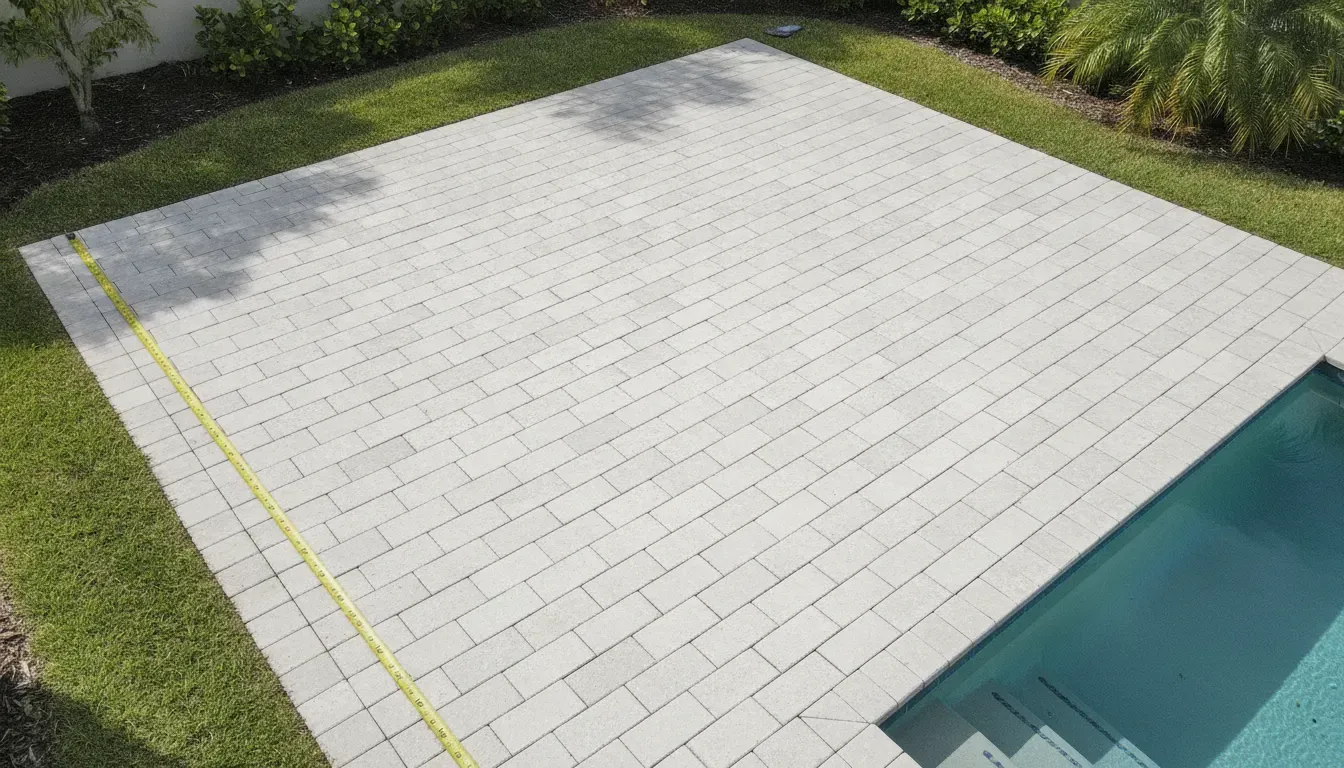
If you cannot confirm the base, grading, drainage, elevation, or access route, label it as an open question. Avoid filling the gap with a guessed allowance. A contractor or design professional can then review the condition and explain how it affects the scope. This is especially important when an existing outdoor area is being updated or when materials must move through a restricted access path.
The bottom line: Measure the project in separate zones and document the perimeter, access, and site questions. A clean area-by-area worksheet gives Hardscape.com and your chosen professional better information without pretending that an online measurement replaces a site-specific review.
Product selection should follow the application and design, not a generic assumption about thickness. Hardscape.com offers porcelain paver collections in 2CM, 3CM, and 5CM options, with different sizes and applications shown on the product pages. Record the product family, collection, size, quantity assumptions, and intended use so the quote reflects the material you are actually considering.
| Planning item | What to record | Why it matters |
|---|---|---|
| Application | Patio, pool deck, walkway, driveway, rooftop, or commercial area | Connects the project use to the appropriate product conversation. |
| Thickness category | 2CM, 3CM, or 5CM under consideration | Helps the project team evaluate the product against the application and site requirements. |
| Size and layout | Selected sizes, pattern, border, and direction | Influences cuts, quantities, visual balance, and installation planning. |
| Color and collection | Preferred collection plus an acceptable alternate | Helps confirm availability and keeps the quote tied to a real product choice. |
| Edge and transition details | Open edges, steps, coping, walls, drains, and doors | Identifies pieces and coordination that may not appear in an area-only calculation. |
Start with Hardscape.com's porcelain paver collection to compare available design directions. If the project is a residential patio or pool deck, review the 2CM porcelain paver options. For an application that calls for a different product conversation, review the 3CM and 5CM porcelain paver collections with the project professional.
Do not treat a product page as a complete quote. Availability, special-order status, project quantities, delivery location, cuts, and installation conditions still need to be confirmed. A strong budget keeps a first-choice collection and an acceptable alternate separate so the team can explain the effect of any substitution.
The bottom line: Put a real product path in the worksheet: application, thickness category, collection, size, layout, edge details, and alternate choice. Hardscape.com product pages can help you narrow the selection, while a project-specific review confirms what belongs in the final quote.
A porcelain paver budget is incomplete when it lists only the paver field. Sand-set installation planning can also involve joint materials, spacers, cutting tools, handling equipment, coping, edge details, drainage coordination, and the preparation needed for the specific site. List each item even if it will be supplied by the installer, because the quote should state who is responsible for it.
Hardscape.com's accessories collection provides a useful starting point for reviewing spacers, polymeric sand, grout, handling equipment, coping, and related supplies. Use the listed accessory names to ask more specific questions when the installation approach is being scoped.
Site preparation should not be reduced to a vague line called "prep." Ask what the quote assumes about the existing area, grading, drainage, base, access, removal, and transitions. The right scope depends on the actual project. If any condition is unknown, label it for confirmation rather than adding an invented amount to make the worksheet look complete.
The bottom line: Accessories and preparation are part of the porcelain paver system, not afterthoughts. List joint materials, spacers, tools, coping, edges, drainage coordination, and site preparation as visible scope items, then ask who supplies and installs each one.
Compare quotes by scope before comparing totals. Two proposals can describe the same square footage while including different products, preparation assumptions, accessory responsibilities, delivery terms, or edge work. Ask every bidder to identify the material, quantities, installation approach, exclusions, and open site conditions in the same order as your worksheet.
Do not choose an estimate simply because it is shorter or appears lower. A clear quote can be easier to evaluate because it exposes the assumptions behind the work. If one proposal leaves out an item that another includes, ask for the difference in scope. That conversation is more useful than trying to force every project into a generic online number.
Want a second set of eyes on your worksheet? Download the Hardscape.com Project Planning Guide for prompts about product features, design, budgeting, and what to expect.
The bottom line: Compare complete scopes, not isolated totals. Matching product, area, preparation, accessories, delivery, exclusions, and site assumptions makes contractor conversations more productive and reduces the chance that an omitted item appears later.
Delivery and staging can shape the project plan even when the paver selection is already made. Record the delivery address, preferred timing, unloading area, travel path from the drop point to the work area, gate widths, stairs, elevators, and any restrictions on vehicles or equipment. For commercial or multifamily work, add property rules and coordination requirements.
These questions are not a substitute for a delivery confirmation. They help the team identify the information needed before the order and installation plan are finalized. If the project is in Jupiter, Boca Raton, Fort Myers, or another served Florida area, include the exact address and site photos when requesting assistance.
The bottom line: Add delivery, staging, access, and property rules to the project budget from the beginning. A complete logistics plan helps the product, installation, and site teams work from the same assumptions.
Once the scope is organized, turn the worksheet into a concise project brief. Include the site address, project type, area-by-area measurements, photos, preferred porcelain paver options, alternate selections, layout notes, accessory questions, access details, and the decisions that still need professional confirmation.
Then use this sequence:
Hardscape.com can help you move from product research to a more informed project conversation through its product pages, planning resources, showrooms, and contact route. Bring the worksheet, photos, and questions rather than asking a project team to infer the entire scope from a single square-footage number.
The bottom line: A budget becomes actionable when it is packaged as a project brief. Define the area, select the product path, detail the installation and logistics questions, obtain professional guidance, and compare quotes only after the scopes are aligned.
There is no responsible universal price for every porcelain paver project. The product collection, thickness category, area, layout, cuts, site preparation, accessories, delivery, and local installation conditions all affect the quote. Use a complete scope worksheet and request a site-specific estimate instead of relying on a generic online number.
A complete quote should identify the product, project zones, quantities, sand-set preparation assumptions, installation labor, accessories, coping or edge work, delivery, staging, cleanup, exclusions, and items that require a site review. Ask the professional to explain anything that is not clearly assigned.
Review site preparation, drainage coordination, cuts, borders, steps, coping, joint materials, spacers, handling, delivery, staging, and any access limitations. The right list depends on the project. Mark unknown items as open questions rather than assigning unsupported amounts.
Start with the intended application, project requirements, design, and site conditions. Hardscape.com provides separate product paths for 2CM, 3CM, and 5CM porcelain pavers. Review those options with a professional who can connect the product choice to the planned use and sand-set installation requirements.
Hardscape.com provides product information, planning resources, samples, showrooms, and a contact route for project questions. Share the project area, photos, intended use, preferred products, and access details so the team can direct you toward the next appropriate step and a site-specific quote conversation.
The bottom line: The safest porcelain paver project budget is transparent about what is known, what is included, and what still needs confirmation. Use a structured worksheet, avoid guessed pricing, and request a quote tied to your actual site and product choices.