27 Jul
Busy public plazas and walkways need a tough paving material that will not crack under heavy daily use. Standard pavers often chip or stain when thousands of people walk on them each day.
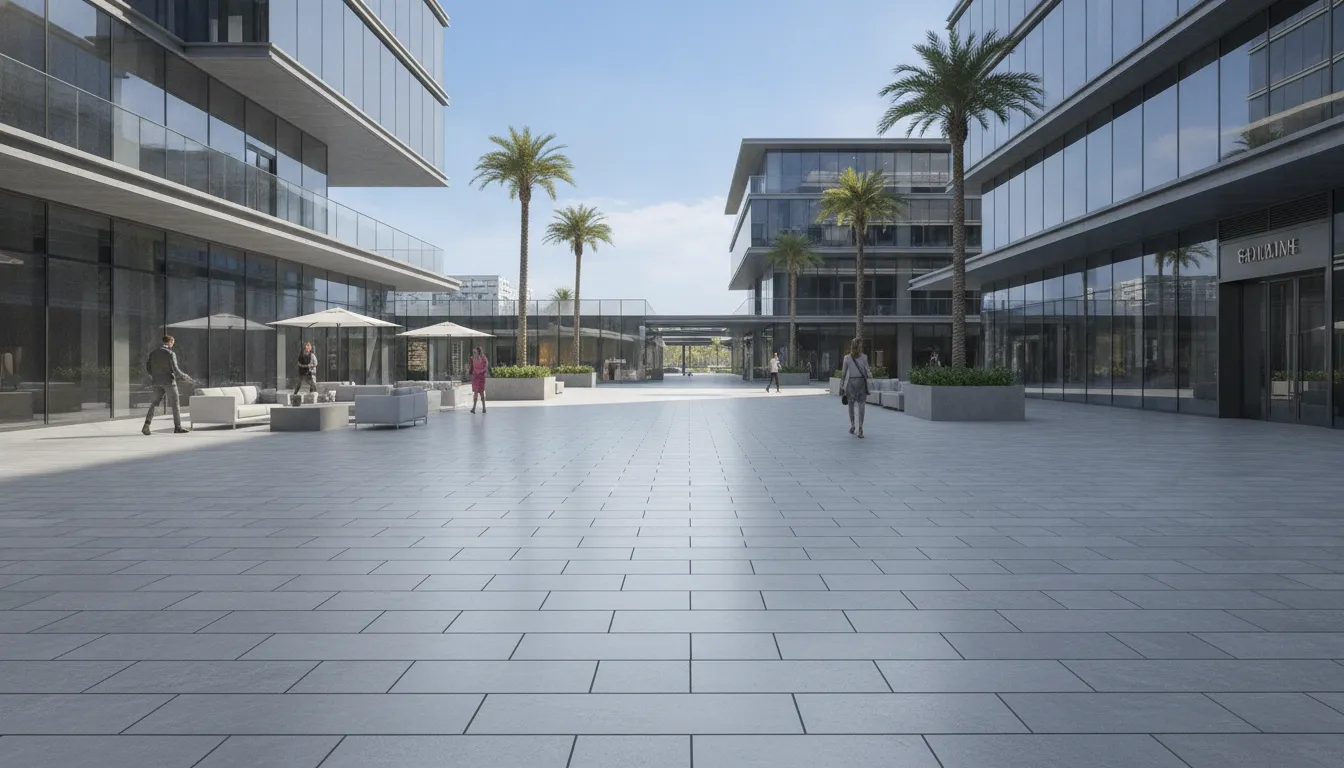
Commercial porcelain pavers are thick outdoor tiles made to support heavy vehicle loads, busy public areas, and raised rooftop plazas. These dense slabs are ideal for busy public walkways and commercial projects where traditional concrete or stone might chip, stain, or crack. Their low water absorption prevents moisture from soaking in to stop winter freeze damage, while their heavy breaking strength easily supports heavy truck traffic. They do not fade under the hot Florida sun, never need sealing, and work well for raised roof decks or sand-set roads. This makes them a perfect option for commercial builders in Jupiter, Boca Raton, and Fort Myers who want a strong, low-maintenance outdoor floor.
If you are planning a large outdoor build, you might wonder how these tiles compare to normal ones. To find the best paving stones, you must ask what makes commercial porcelain pavers different from standard options. Finding the right answer is easy when you compare the key features of each option. The path begins with
Commercial outdoor spaces face heavy foot traffic, vehicles, and harsh weather. Under these conditions, standard options like concrete and stone often fall short. Choosing the right product is vital for long-term safety and performance. This is why many builders now choose 3cm porcelain pavers for their projects.
Business walkways must support heavy loads without cracking. Standard concrete pavers have a breaking strength of about 3,000 to 8,000 Newtons. But commercial porcelain pavers can support up to 29,672 Newtons. This high strength keeps the pavers from breaking under heavy trucks. It also makes them last much longer than standard options in busy areas.
This heavy-duty design is ideal for high-traffic public plazas and business driveways. While concrete blocks shift and sink under pressure, porcelain remains perfectly flat. This strength prevents tripping hazards and keeps your walkways safe for years.
Water is the main enemy of outdoor pavements. When water gets into porous products, it can freeze and expand. This process causes concrete and stone to crack and crumble. Concrete has a water absorption rate of 5% to 8%. Natural stone can absorb up to 10% of its weight in water. Porcelain has a water absorption rate of less than 0.5%, making it almost fully waterproof.
As shown by the U.S. Environmental Protection Agency, durable pavements must resist harsh weather. Low water absorption prevents cracking during rapid weather changes.
In cold areas, standard pavers often suffer from freeze-thaw damage. The water trapped inside concrete or natural stone expands as it freezes. This leads to small cracks that grow wider over time. Because porcelain absorbs almost no water, it is fully safe from this type of damage. You can install these pavers in any climate zone without worrying about winter damage.
Safety is a top goal for any business walkway. These pavers have high slip safety that keeps them safe even when wet. Concrete and stone need sealing every year or two to keep their grip and protect against stains. But porcelain never needs to be sealed. Its non-porous surface naturally resists stains from oil, chemicals, and grease. This means businesses can save money on upkeep while keeping their outdoor areas looking clean and professional.
Wet pool decks and plazas can become slippery and dangerous. Porcelain pavers are made with a textured surface that provides excellent slip safety. This traction is lasting and will not wear down over years of heavy traffic. It provides peace of mind for business owners and managers who must keep people safe.
Natural stone requires annual sealing with chemical coatings. Concrete needs similar sealing every two years to prevent oil and salt damage. This ongoing upkeep is expensive and hurts daily business. Porcelain offers full stain safety without any chemicals or coatings. You can easily clean up spills with simple water washing, saving thousands of dollars in work costs.
| Feature | Hardscape Porcelain Pavers | Concrete Pavers | Natural Stone |
|---|---|---|---|
| Water absorption | Less than 0.5% | 5% to 8% | 2% to 10% |
| Breaking strength | Up to 29,672 N | 3,000 N to 8,000 N | Variable |
| Sealing needed | None | Every 2 years | Every year |
| Slip resistance | High and consistent | Fades over time | Variable when wet |
| Stain resistance | Complete immunity | Poor to moderate | Poor |
Commercial property owners need outdoor floors that look professional and last for decades under constant use. Finding the right paver for busy zones can be a challenge. Modern commercial porcelain pavers offer a strong, dense option that handles heavy foot traffic and bad weather without wearing down. These pavers can be set in sand, making them easy to install and swap if a layout changes.
High-traffic walkways and retail shops see thousands of walkers daily. These busy paths need thick, tough tiles to prevent cracks and uneven ground. Standard 3CM pavers work well for foot paths and light vehicle zones. They stay flat and level over a sand base, keeping paths safe for everyone. The near-zero water absorption of these tiles prevents mold growth and salt damage in coastal climates like Jupiter. Because they absorb less than 0.5% of water, they do not crack during sudden temperature drops.
Rooftop decks and high terraces present unique load challenges for commercial builders. Heavy concrete slabs can overload a building frame. Standard concrete can weigh up to 24 pounds per square foot, which limits design choices. In contrast, commercial porcelain pavers used on pedestal systems weigh only 9 pounds per square foot. This weight savings of 15 pounds per square foot lets architects design beautiful, safe sky decks without structural stress. Raised pedestal systems also hide pipes and wires while letting rainwater drain quickly to the roof deck below.
Outdoor dining zones and hotel pool decks must balance safety with style. Food spills, grease, and heavy pool chairs can quickly ruin natural stone or concrete. Porcelain resists stains from grease, wine, and oil without needing any sealers. Resort pool decks and plazas in Fort Myers and Boca Raton also need surfaces that are highly slip-resistant to prevent slips and falls when wet. Lighter paver colors reflect heat from the sun, keeping the ground cool for bare feet in warm climates.
Large public plazas and city squares must support heavy service trucks and constant crowds. For these busy, heavy-duty areas, patented 5cm porcelain pavers provide the best answer. These ultra-thick tiles handle extreme loads without cracking or sinking into the sand bed. A sand-set setup lets the pavers flex slightly under weight, stopping the joint cracks common with rigid bases. This flexible base also makes it easy to lift and replace single pieces for pipe or wire work beneath the plaza.
Choosing the right paver thickness is key to the success of your outdoor design. Designers must match the product depth to the likely weight and traffic of the site. Picking the wrong size can lead to cracks and breaks over time. For light home use, a standard 2CM tile works well on patios and paths. These thinner slabs handle foot traffic and look great on pool decks or home yards.
For high-traffic or public areas, you need stronger options like 3CM and 5CM pavers. These thick pavers spread weight across the sand-set base to prevent shifting. Structural designers must check site loads before they choose a paver depth. Proper planning ensures the paved surface lasts for decades under constant use. You must select a product that can stand up to both weather and weight in busy public squares.
State highway boards set guidelines for pavement design to handle tough traffic loads. You can read about these standards in the Massachusetts pavement design guide which covers how loads spread. These rules apply to stone and tile layouts as well. They help planners build strong paths that do not sink or break over time under heavy public use.
Our 3CM commercial porcelain pavers are ideal for plazas, walkways, and commercial pedestrian zones. These units easily support light delivery trucks and work vehicles. They can handle weights of over 55,000 lbs when set on a sand bed. In contrast, standard concrete paving options often top out at a load capacity of just 3,000 lbs before they crack. This makes porcelain a much safer choice for city projects that need great strength.
For areas with heavy trucks or buses, you need a stronger option. Our patented 5CM porcelain pavers are built for extreme vehicular loads. These thick slabs can withstand constant heavy traffic on roads and fire lanes. The sand-set installation method helps the system absorb heavy stress without damage to the single units. This prevents costly repairs and keeps the roadway open for public use all year long.
| Paver Thickness | Best Application | Load Capacity | Installation Type |
|---|---|---|---|
| 2CM Pavers | Patios and walkways | Residential foot traffic | Sand-set on soil |
| 3CM Pavers | Plazas and light vehicles | Up to 55,000 lbs | Sand-set over gravel |
| 5CM Pavers | Heavy commercial traffic | Extreme truck loads | Sand-set patented system |
The bottom line: Choose 3CM commercial porcelain pavers for high-traffic pedestrian areas and light vehicular paths up to 55,000 lbs. For roads or fire lanes with heavy trucks, use patented 5CM pavers. Both options use a sand-set base to ensure long life without cracks.
Laying commercial porcelain pavers is a clean, fast process that does not need wet mortar or curing time. Builders use two main methods to lay these strong tiles.
For ground-level busy areas, a sand-set system is the best choice. For flat roofs, plazas, and terraces, raised pedestal systems create a level deck. Both options offer a stable, long-lasting surface that can support heavy weight.
Commercial roofs and terraces use raised pedestal systems to lay pavers. This method avoids adding heavy weight to the building structure. The system uses adjustable jacks that sit directly on the roof membrane.
These pedestals hold each corner of the paver to create a flat, level deck. The gap under the pavers hides wires and pipes from sight. Rainwater flows quickly through the open joints and drains underneath. This dry-lay method allows workers to reach pipes for quick repairs without damaging the floor.
For ground-level commercial projects, a sand-set installation offers a durable solution with excellent drainage. Sand-set systems allow rainwater to filter freely through the joint sand. This reduces stormwater runoff in urban areas, a benefit highlighted by the United States Environmental Protection Agency.
This method keeps the ground flexible and prevents pavers from shifting under heavy foot traffic. This sand-set method needs a stable base but prevents the cracking problems seen in older systems. Builders can complete this process in six main steps.
Dry installation methods give commercial builders major time and cost savings. Because these systems use no wet cement, there is no curing time. Foot traffic can use the new walkway as soon as the last paver is set.
Porcelain does not need sealing to resist stains or water, which cuts future maintenance costs. They hold up well to heavy foot traffic, harsh sunlight, and freeze-thaw cycles. This makes them ideal for walkways, plazas, and outdoor retail spaces. These benefits, paired with a ten-year commercial warranty, make commercial porcelain pavers a smart, lasting choice for any business space.
Choosing the right outdoor tiles is key for any large work site. You must weigh cost, weight, and strength before you buy. If you look at pavement materials, you will see how each option holds up over time. Many builders now choose commercial porcelain pavers because they last long and need very little care.
Weight is key. Commercial porcelain pavers are very light and weigh only nine pounds per square foot. By contrast, natural stone weighs fifteen pounds, and concrete weighs twenty-four pounds. Yet, these thin, tough slabs can hold heavy trucks with a sand-set layout.
A lighter block means you can ship more material at a lower price. This makes the work fast. Laying heavy concrete blocks drains energy and slows down the project. Switching to porcelain saves on labor costs and protects your budget from start to finish.
Wet weather can ruin outdoor paving. Soaking up water leads to cracks and mold when the ground freezes. Porcelain absorbs less than 0.05% water, so you do not need to seal it. Concrete and natural stone soak up far more water and need sealers every year.
Sunlight and spills can fade or stain older paving blocks. Concrete and stone lose their color under UV rays and catch oil stains easily. Commercial porcelain pavers do not fade, resist spills, and can last fifty years or more without losing their look. Concrete lasts only twenty years, and natural stone may crack after thirty years.
Safety is vital. Commercial porcelain pavers offer excellent wet slip resistance to prevent dangerous falls. By contrast, concrete and polished natural stone get slick when wet. Choosing porcelain keeps your guests safe in any storm.
To help you choose, we have put the key facts in a simple table. This chart shows how each material works for a commercial project.
| Feature | Commercial Porcelain Pavers | Concrete Pavers | Natural Stone |
|---|---|---|---|
| Weight (per sq. ft.) | 9 pounds | 24 pounds | 15 pounds |
| Lifespan | 50+ years | 20 to 30 years | 30 to 50 years |
| Water Absorption | Less than 0.05% | 5% or more | 1% to 5% |
| Sealing & Maintenance | None required | Annual sealing needed | Annual sealing needed |
| UV & Stain Resistance | Extremely high | Low (fades and stains) | Moderate (stains easily) |
| Breaking Strength | Up to 2,000+ pounds | Moderate | Varies by stone type |
Yes, commercial porcelain pavers are highly scratch resistant. Their extreme hardness protects them from heavy patio chairs, commercial carts, and constant foot traffic. They stay neat and clean even in busy public areas. You do not need to apply any sealers to keep them safe from scratches or daily wear.
No, you should not lay commercial porcelain pavers straight on soil or grass. If you do, the ground will shift over time. This makes the pavers sink and become unsafe to walk on. For best results, you must dig out the soil first. Then, lay a flat bed of gravel and sand before you set the pavers. This sand-set method keeps the walk flat and dry.
Light-colored commercial porcelain pavers reflect heat from the sun very well. Any stone or tile will get warm under direct sunlight. However, choosing light colors keeps the pavement cool enough for bare feet. This makes them a great option for hotel pool decks and public plazas in hot areas like Florida.
Commercial porcelain pavers come in several standard sizes for business projects. The most common sizes are 24 by 24 inches and 24 by 48 inches. These large formats are great for public plazas and rooftop decks. If you need strong pavers, you can check our 3cm porcelain pavers which come in these large sizes. Using larger sizes means you will have fewer joint lines, making the floor look neat and clean.
Postponing your commercial exterior paver design can lead to rising material costs and unexpected logistics delays that will disrupt your entire business opening schedule. Sourcing premium sand-set porcelain pavers today ensures you get your durable materials delivered to your job site exactly when your building crew is ready. Our expert team will help you select the best paving sizes, thicknesses, and layouts to make your plazas, rooftops, and walkways safe and durable.
Ready to design? Call 561-998-5000 to contact Hardscape.com for a commercial project consultation. Our professional team is ready to answer your technical questions and provide layout details. We will help you select the best sand-set porcelain pavers for your plazas, walkways, rooftops, or other commercial spaces.