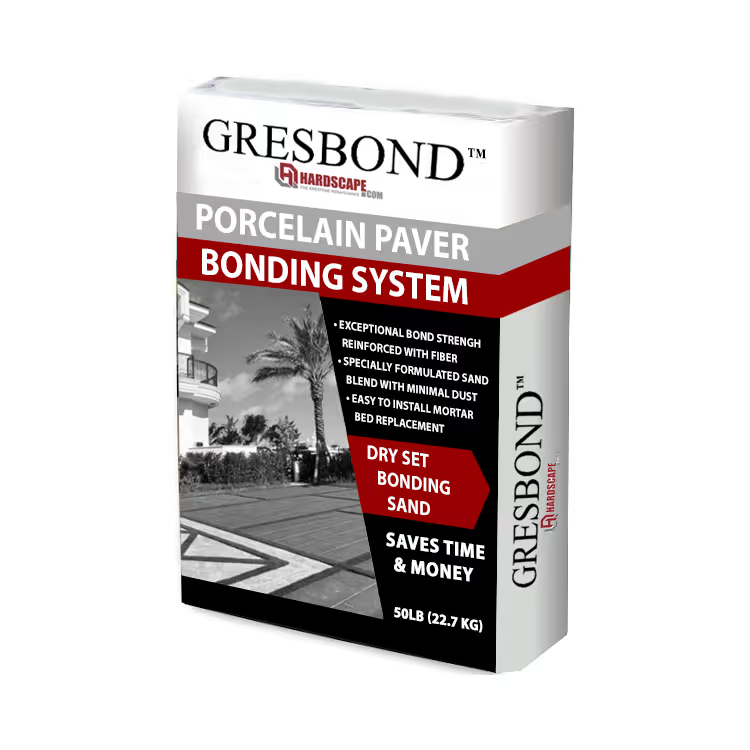
PORCELAIN PAVERS BONDING SYSTEM
Gresbond is designed for residential & and commercial concrete overlays of porcelain. Suitable projects include walkways, patios, pool decks, courtyards, and driveways with light-duty/residential vehicular traffic.
SAVES TIME & MONEY
- EXCEPTIONAL BOND STRENGTH REINFORCED WITH FIBER
- SPECIALLY FORMULATED SAND BLEND WITH MINIMAL DUST
- EASY TO INSTALL MORTAR BED REPLACEMENT
COD: GS1001-S
Category: Accessories
INSTALLATION INSTRUCTIONS
SUITABLE SURFACES:
Suitable for new or existing horizontal concrete surfaces in good condition. On existing concrete, repair any surface defects such as major cracks, voids, and any transition issues before installing Gresbond.
APPLICATIONS:
Gresbond is designed for residential & commercial concrete overlays of porcelain. Suitable projects include walkways, patios, pool decks, courtyards, and driveways with light-duty/residential vehicular traffic.
APPROXIMATE YIELD PER 50 LB. BAG:
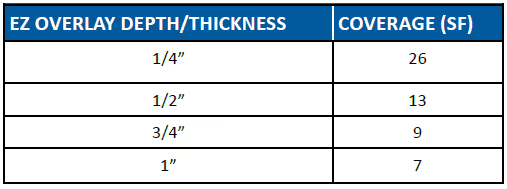
Coverage is based on a concrete surface in good condition with limited loss of Gresbond into cracks, joints and other voids. Actual coverage may vary based on condition of surface.
INSTALLATION REQUIREMENTS FOR OPTIMAL PERFORMANCE
INSTALLATION CONDITIONS:
SURFACE PREPARATION:
INSTALLATION INSTRUCTIONS:
Step 1: Clean the bottom of paving units for optimal adhesion.
Step 2: Pre-wet existing concrete with water without pooling or ponding.
Step 3: Distribute Gresbond onto the surface and spread evenly using a gauge rake to the required depth for a level surface. Gresbond can be installed at a
depth of 1/4” up to 2” to level uneven surfaces or low spots. Maximum depth variance should not exceed 3/4”. Use a steel trowel to level tight areas.
Step 4: Lay paving units on top of Gresbond without disturbing or walking on it.
Step 5: Border and edge treatment for smaller paving units: Create a small batch of mortar by mixing 1 bag of Gresbond with 1 gallon of water. Mix to a consistency of a runny pancake batter. Let it sit for 5 minutes to allow batch ingredients to properly wet out. Then re-mix the batch to temper the mortar.
If necessary, add additional water and mix to a creamy, workable consistency. Mortar should remain workable for approximately 20-30 minutes. Place mortar on the bottom of paving units or on top of base and evenly distribute with a 1/2” notched trowel. Lay paving units and tap them into place. Immediately remove excess mortar within 30 minutes of the original batching by adding additional water and re-mixing. Ensure laying units are completed within 30 minutes.
Step 6: Carefully remove excess Gresbond from the surface with a broom or leaf blower. Remove any wet Gresbond from the surface using a damp rag or
wet brush before it dries.
Step 7: After field paving units are laid, thoroughly wet the surface using a spray nozzle on a shower set to activate Gresbond. The watering time will
vary based on temperature, humidity, and rainfall. Please refer to the complete guidelines on www.grebond.com/resources
Step 8: Verify Gresbond activation by lightly tapping with a rubber mallet on several paving units throughout the project. Gresbond is not fully activated if
it sounds hollow, and it will require additional wetting. Grout can be installed 24 hours after Gresbond activation per manufacturer’s directions.
CLEAN UP: Remove any wet Gresbond from surfaces with a damp rag or wet brush before it dries. Clean tools with water and brush.
CURING: Open to foot traffic after 24 hours and vehicular traffic after 7 days. Full cure is 28 days.
PRECAUTIONARY INFORMATION:
DANGER!
PRECAUTIONARY STATEMENTS: KEEP OUT OF REACH OF CHILDREN
• Do not handle until all safety precautions have been read and understood
• Wear impervious gloves, such as nitrile
• Wear eye protection and protective clothing
• Do not eat, drink or smoke when using this product
• Wash thoroughly after handling
• Use only in a well-ventilated area
• Do not breathe dust
EMERGENCY & FIRST AID MEASURES:
IF SWALLOWED: Rinse mouth. Do NOT induce vomiting.
IF INHALED: Remove person to fresh air and keep comfortable for breathing. IF IN EYES: Rinse cautiously with water for several minutes. Remove contact lenses, if present, and easy to do. Continue rinsing.
IF ON SKIN (OR HAIR): Remove immediately all contaminated clothing and
wash before reuse. Rinse skin or hair with water.
IF SIGNIFICANT SKIN IRRITATION OR RASH OCCURS: Get medical advice or attention. Immediately seek medical advice or attention if symptoms are significant or persist.
STORAGE: Store indoors in a dry place. Keep the bag sealed in good condition.
SHELF LIFE: 12 months
DISPOSAL: Dispose of in accordance with all applicable laws and regulations.
CONTAINS: Sand, Silica, Quartz CAS # 14808-60-7, Portland Cement CAS # 65997-15-1
ADDITIONAL INFORMATION (PLEASE READ): The Portland cement in this product can cause serious, potentially irreversible damage to skin, eye, respiratory and digestive tracts due to caustic burns. Burns from Portland cement may not cause immediate pain or discomfort. You cannot rely on pain to alert you to cement burns. Therefore, precautions must be taken to prevent all contact with Portland cement. Cement burns can become worse even after contact has ended. If there is contact with this product, immediately remove all product from body and thoroughly rinse with water. If you experience or suspect a cement burn or inflammation, you should immediately see a health care professional. Skin burns and irritation may be caused by even brief exposure. Interaction of Portland cement with water or sweat releases a caustic solution which produces burns or irritation. Any extended exposure should be treated as though a burn has occurred until determined otherwise. Skin contact with Portland cement can also cause an inflammation of the skin called dermatitis. Signs and symptoms can include itching, redness, swelling, blisters, scaling, and other changes in the normal condition of the skin. Signs and symptoms of burns include the above and whitening, yellowing, blackening, peeling or cracking of skin. The Portland cement in this product may cause allergic contact dermatitis in sensitized individuals. This overreaction of the immune system can lead to severe inflammation. Sensitization may result from a single exposure to the low levels of Cr (VI) in Portland cement or repeated exposures over months or years. Sensitization is long lasting, and after sensitization, even very small quantities can trigger dermatitis. Sensitization is uncommon. Individuals who experience skin problems, including seemingly minor ones, are advised to seek medical attention. Respirable Crystalline Silica (RCS) may cause cancer. Sand and gravel contain varying quantities of quartz (Crystalline Silica). Sand and gravel may be subjected to various natural or mechanical forces that produce small particles (dust) which may contain Respirable Crystalline Silica (particles less than 10 micrometers in aerodynamic diameter). Repeated inhalation of Respirable Crystalline Silica (quartz) may cause lung cancer according to IARC and NTP; ACGIH states that it is a suspected cause of cancer.
WARNING: Cancer and Reproductive Harm – www.P65Warnings.ca.gov