8 Sep
Florida backyards often need to support several kinds of living at once: pool access, outdoor dining, circulation, pets, and relaxed lawn-like space. Choosing between a structured surface and a planted-looking groundcover is less about declaring a universal winner and more about matching each area to how it will be used.
Contact Hardscape.com about samples and project fit.
Porcelain pavers vs synthetic turf comes down to function. Porcelain creates a defined surface for walking, furnishings, entertaining, and pool areas. Synthetic turf may better suit lawn-like or play-oriented zones. Florida heat, rainfall, drainage design, pets, shade, and accessibility should shape the decision.
Understanding what each material is designed to do makes the comparison clearer. Start with the fundamental difference between a hardscape system and a manufactured grass-like surface, then evaluate how that distinction affects everyday use.
Porcelain pavers and synthetic turf are designed for different roles in an outdoor plan. Porcelain pavers are rigid, manufactured paving units that create a defined walking and gathering surface. Synthetic turf is a manufactured surface made with synthetic fibers that mimic natural grass, typically attached to a reinforced backing. The choice is not about naming an overall winner. It is about matching the material to how a Florida backyard will be used.
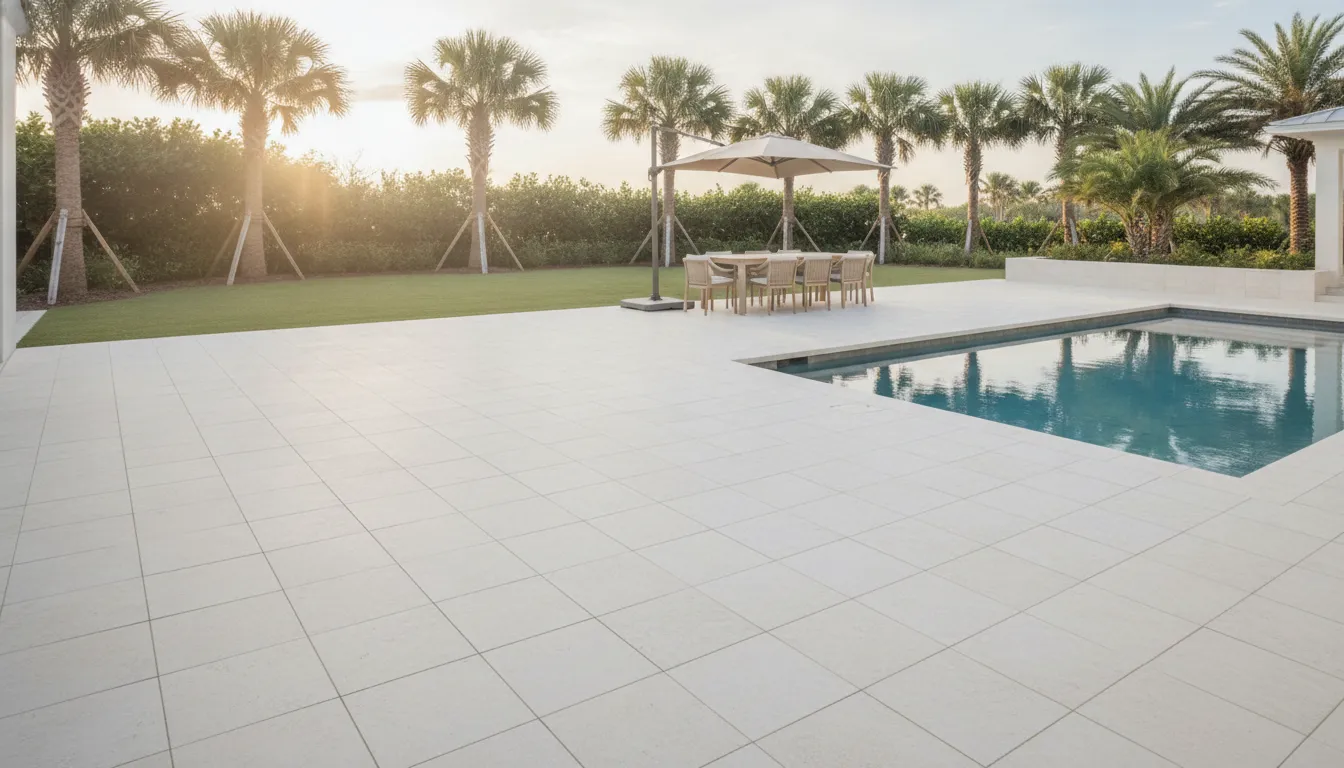
Porcelain is well suited to areas where people walk, dine, arrange furniture, or move between the home and pool. A sand-set porcelain paver installation can establish clear circulation routes and create a firm base for outdoor rooms. Hardscape.com offers 2CM, 3CM, and 5CM porcelain paver categories, along with coping, stepping stones, cobblestones, and installation accessories. Its 2CM product information identifies patios, pool decks, walkways, and other outdoor spaces as residential applications.
That range gives a project team room to evaluate the demands of each zone rather than treating every surface the same way. A residential patio or pool-area design may begin with the 2CM porcelain pavers for patios and pool areas. Another part of a larger project may require a different category based on its intended use and loading. Product documentation should guide the final selection.
Synthetic turf serves a different visual and functional purpose. Its grass-like appearance can help preserve a planted, lawn-oriented character in portions of a yard where a softer-looking surface is preferred. It may be considered for lawn-like or play-oriented zones, subject to the site's drainage, shade, heat exposure, pets, and intended activity. It is not a substitute for a hard surface wherever stable footing for dining furniture, frequent circulation, or a clean transition to a pool is the primary need.
Florida conditions make the surrounding design important for both materials. Rainfall, runoff, sun exposure, shade, and the relationship between surfaces should be evaluated during planning. UF/IFAS Florida-Friendly Landscaping principles include conserving water, reducing waste and pollution, and preventing runoff and erosion. So the surface decision should be considered alongside grading and drainage rather than made in isolation. Read the UF/IFAS guidance on Florida landscape planning for broader site considerations.
The bottom line: Porcelain pavers provide a firm, organized surface for paths, patios, pool areas, dining, and outdoor furnishings. Synthetic turf creates a lawn-like zone for a different kind of use. In a Florida backyard, choose according to circulation, activities, drainage, exposure, and the character you want each area to have.
Florida outdoor surfaces contend with rain, humidity, fallen leaves, pollen, food spills, and organic debris. The maintenance difference between porcelain pavers and synthetic turf begins with the type of surface each material creates. Porcelain is a hard, defined walking and entertaining surface that can be swept and washed. Synthetic turf is a lawn-like surface that requires routine attention to keep fibers standing, debris removed, and the area suitable for its intended use.
Porcelain pavers generally fit a straightforward cleaning routine. Sweep or blow away leaves and sand, then address spills before they sit. For heavier buildup, use water and an appropriate surface cleaner according to the product documentation. Hardscape's 2CM product information describes its porcelain as easy to clean and stain-resistant without sealing. That description should guide expectations, but product-specific care instructions still matter.
Synthetic turf also needs regular debris removal. Leaves, twigs, and other organic material can collect between the fibers, particularly beneath trees or in shaded corners. Light brushing may help maintain an even appearance when the surface requires it, while spot cleaning addresses spills and pet-related messes. The correct routine depends on the turf system, backing, infill, drainage design, and the manufacturer's care recommendations. Avoid assuming that a lawn-like appearance means no upkeep.
On either surface, quick action is more practical than allowing a spill or organic residue to remain. Porcelain's low-maintenance appeal is strongest when the surface is selected for the application and cleaned with compatible products. Turf requires attention to the spaces where debris, moisture, or residue may remain around fibers. Good site planning also matters. Florida-Friendly Landscaping principles from UF/IFAS emphasize conserving water, reducing waste and pollution, and preventing runoff and erosion. Those principles support planning cleaning methods and drainage together, rather than treating maintenance as an afterthought.
Replacement planning should focus on the condition of the installed system, not an assumed lifespan. For porcelain, review individual pavers, joints, edges, and the sand-set installation if a repair becomes necessary. Keep product information and installation details for future reference, and select materials appropriate to traffic and furnishings. For synthetic turf, evaluate the visible surface, seams, infill, backing, and the prepared base as a complete system. Local exposure, drainage, shade, use, and installation quality can all affect future maintenance decisions.
The bottom line: Porcelain pavers offer a defined surface with simple sweeping, washing, and spot-cleaning needs, while synthetic turf requires lawn-like surface care and debris management. Neither option eliminates planning. Florida homeowners should compare cleaning routines, organic-debris exposure, drainage, intended use, and repair access before choosing a surface.
Florida heat and heavy rainfall make surface selection a site-planning decision, not simply a style preference. The more useful comparison considers sun exposure, shade, finished grades, soil conditions, roof runoff, surrounding planting, and how people will use the space. Porcelain pavers create a defined surface for walking, dining, poolside circulation, and furnishings. Synthetic turf creates a lawn-like zone that may feel more appropriate for play or planted-looking areas.
Heat performance also deserves careful language. UF/IFAS notes that living natural turfgrass can help cool the environment. While a systematic review of 23 studies found that synthetic grass surfaces were 9.4 to 33.7 degrees C hotter than natural grass in the included comparisons. The review also found air temperatures were 0.5 to 1.2 degrees C higher on synthetic grass, but stated that the effect on an individual's heat-stress risk remains uncertain. These findings do not mean every turf installation will feel the same, and they do not make porcelain automatically cool in every condition. Direct sun, surrounding materials, airflow, irrigation, and shade all influence comfort.
| Planning factor | Porcelain pavers | Synthetic turf |
|---|---|---|
| Heat and shade | Can become hot in prolonged direct sun, so shade structures, trees, orientation, and the intended use area matter. Product documentation may describe certain porcelain as cool to the touch, but that is not a temperature guarantee. | Surface temperatures can be higher than natural grass in reviewed studies. Shade, airflow, irrigation practices, fiber selection, and infill affect the on-site experience. |
| Rainfall and runoff | Requires a planned sand-set assembly, appropriate grading, and a drainage strategy suited to the site. Raised pedestal systems are an application-specific option where drainage requirements call for them. | Water movement depends on the turf system, backing, base preparation, soil, slopes, and outlets. Do not assume a turf surface is universally permeable. |
| Comfort and use | Provides a firm, organized plane for dining sets, loungers, paths, and pool transitions. Shade and layout can make the space more comfortable during peak sun. | Provides a softer, lawn-like visual and may suit play-oriented or informal areas. Comfort varies with heat, moisture, shade, and the complete installation system. |
Drainage should be evaluated beyond the surface itself. UF/IFAS Florida-Friendly Landscaping principles emphasize conserving water, reducing waste and pollution, and preventing runoff and erosion. In practice, that means mapping where roof and paved-area water travels, protecting adjacent planting beds, confirming finished elevations, and coordinating collection or dispersal points before installation. A surface that appears permeable can still perform poorly if the base, soil, or outlet is not designed for local rainfall.
Transitions deserve equal attention. At a pool, patio, or outdoor room, keep walking routes legible and avoid creating low points where water can collect. In a Florida backyard, the best choice in a comparison of porcelain pavers vs synthetic turf is often the surface. Or combination of surfaces, that matches the use zone and works with the drainage plan.
The bottom line: Neither surface is always cooler or universally better for drainage. Synthetic turf may suit lawn-like zones, while porcelain pavers provide a firm plane for circulation and entertaining. Evaluate sun, shade, grading, rainfall, soil, runoff, and transitions together so the selected surface fits the whole backyard.
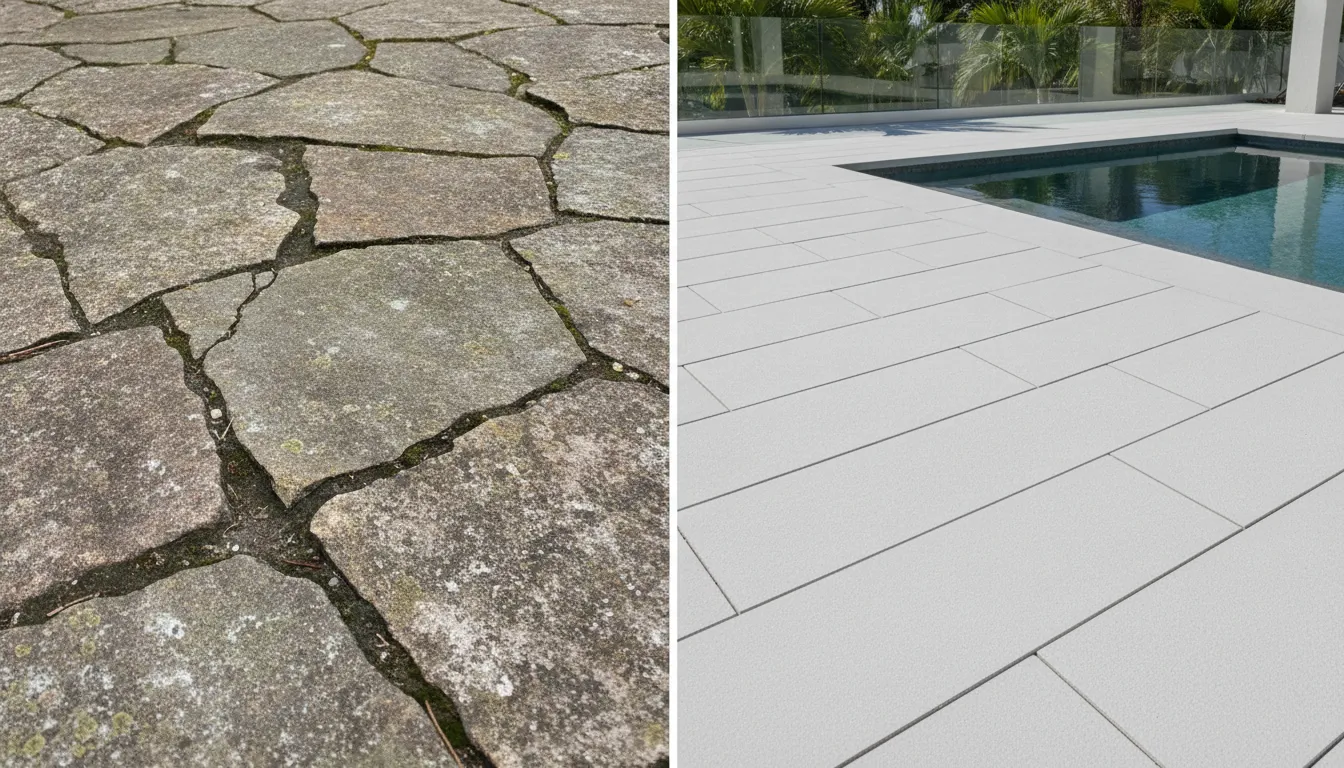
Pets and guests reveal whether an outdoor surface works in daily life, not just how it looks in a sample. Map the places where paws, shoes, food, furniture, and pool traffic will meet. A porcelain-paver zone generally creates a defined hard surface for dining, circulation, and outdoor furnishings. While synthetic turf creates a lawn-like area that may better suit play or informal lounging.
Plan the route from the yard, side gate, and pool to the home before choosing materials. A dog moving from turf or planting beds onto a dining area can carry soil, grass clippings, and moisture. Porcelain can make the cleaning zone more predictable, but joints, edges, and nearby landscaping still need thoughtful detailing. Keep bowls, beds, and high-use pet areas where they can be reached without forcing traffic through the main entertaining path.
Hardscape product information describes relevant porcelain options as easy to clean and stain-resistant without sealing. Treat that as documented product guidance, not as a promise that every spill disappears without attention. Promptly remove food, organic debris, and muddy residue, and follow the care recommendations for the specific paver selected. Samples and technical documentation can help designers and homeowners evaluate color, texture, and maintenance expectations together.
Dining tables, grills, loungers, and umbrellas need a firm, carefully planned footprint. Allow enough room to pull out chairs and move around them without repeatedly stepping into planting areas or turf. Consider where furniture legs sit, how rainwater moves around the footprint, and whether movable pieces will cross between surfaces. A clear porcelain transition can visually define an outdoor room, while turf can soften the perimeter or create a separate recreation zone.
Pool transitions deserve more than a material preference. Identify wet-foot traffic, shower locations, gates, towel storage, and the path back to the house. Hardscape offers custom edge profiles, including full-round bullnose options for pool applications, but the appropriate detail depends on the project and installation plan. Do not treat a material choice as a guarantee of safety or accessibility compliance. Review slopes, step-free routes where desired, changes in level, lighting, and clear widths with a qualified professional.
For a project with frequent gatherings, keep the primary circulation route simple and legible. Avoid narrow pinch points between furniture, pool coping, walls, and turf edges. In coastal Florida settings, also account for shade, intense sun, heavy rain, and the way wet surfaces affect how people use the space throughout the day.
The bottom line: Choose the surface by activity zone. Use porcelain where pets, dining, furniture, pool traffic, and clear circulation demand a structured outdoor room. Reserve synthetic turf for lawn-like or play-oriented areas when that fits the household. Coordinate transitions, drainage, slopes, and maintenance expectations before installation.
Yes. Combining the two materials can create a backyard that feels structured without losing a lawn-like zone. The strongest designs assign each surface a clear job instead of scattering small patches throughout the yard. Porcelain pavers can define patios, dining areas, pool circulation, and outdoor rooms, while synthetic turf can create a visually softer area for lounging or play.
Map the activities first. Place porcelain where people will walk frequently, move between doors and the pool, arrange dining furniture, or need a stable surface for chairs and tables. Reserve turf for areas where a planted appearance or softer visual transition supports the way the space is used. This zoning also helps the backyard read as one design rather than as two unrelated materials.
The transition between surfaces deserves the same attention as the materials themselves. Keep edges straight or use a purposeful curve, then establish a clear border so turf does not creep into the paver field. A narrow planting strip, contrasting paver detail, or clean edging can make the change feel intentional. Avoid creating a low pocket where leaves, soil, or stormwater can collect at the seam.
Drainage must be planned for the complete surface system. Review grading, runoff paths, downspouts, pool splash, and the relationship between the paver base and turf installation before construction begins. A raised pedestal system may be an application-specific option where drainage requirements call for it, but it is not a universal solution. The goal is coordinated water movement, not simply placing two materials side by side.
Heavy dining sets, umbrellas, grills, and other furnishings generally need a firm, level landing area. Use porcelain beneath the primary furniture group, and keep turf at the edges or in a separate zone where furniture will not create awkward rocking or concentrated wear. If a design requires furniture to cross both surfaces, plan dedicated paver pads or a continuous circulation route.
Visual hierarchy matters as much as function. Select a primary surface, repeat its color or geometry in smaller details, and use turf as a supporting field rather than a competing pattern. Samples viewed beside the home's exterior, pool coping, planting, and furnishings can reveal whether the transition feels cohesive in Florida's strong daylight.
The bottom line: A successful combination uses porcelain pavers for stable circulation, entertaining, and defined outdoor rooms, while synthetic turf serves a distinct lawn-like zone. Coordinate edges, grading, drainage, furniture pads, and the overall visual hierarchy before installation so each material contributes to a deliberate, unified backyard plan.
Use the project itself as the decision filter. A surface that works beautifully beside a pool may be less appropriate for a play area. While a lawn-like zone may not provide the firm base needed for dining furniture or frequent foot traffic.
The comparison of porcelain pavers vs synthetic turf becomes clearer when every zone has a defined job. Choose structured pavers for circulation, furnishings, and outdoor rooms; consider turf for lawn-oriented areas; then coordinate heat, drainage, transitions, pets, and maintenance with the full landscape plan.
The bottom line: There is no universal winner for Florida properties. Start with use, circulation, furniture, sun exposure, drainage, pets, accessibility, and upkeep. Then select the material that supports the way each zone will actually function, using product documentation and site-specific planning to guide the final decision.
There is no universal lower-cost option. The project scope depends on area preparation, drainage, edges, transitions, access, and the intended use. Compare complete installation plans rather than material labels alone, and evaluate maintenance, replacement planning, comfort, and usability alongside the initial project budget.
Porcelain pavers require deliberate planning for the base, layout, drainage, edges, and transitions. They create a structured surface suited to circulation, dining, furnishings, and pool areas, but they are not a substitute for lawn in every backyard. Confirm the selected product and installation approach fit the site and daily use.
Artificial grass may not suit homeowners who want living landscape benefits, a different thermal experience, or a hard surface for dining and outdoor furnishings. UF/IFAS notes that synthetic turf does not provide the ecosystem benefits of a natural turf system. Heat exposure, drainage, pets, shade, and intended use should all be reviewed before choosing it. Source: https://ask.ifas.ufl.edu/publication/EP612
Moisture management is the key planning concern. Synthetic turf is made with fibers attached to reinforced backing, so the system needs appropriate site preparation, water flow, grading, and maintenance. Ask how rain, organic debris, pet use, and shaded areas will be managed. Do not assume a turf surface is automatically mold-proof or automatically prone to mold.
The right backyard surface depends on how you plan to move, gather, relax, and manage water around the property. A project conversation can help you compare porcelain pavers and synthetic turf against your priorities, then identify the materials and layout that fit the space. Contact Hardscape.com to discuss your options and request porcelain paver samples. You can also reach the team at 561-998-5000.