20 Aug
Outdoor spaces here face intense sun, high humidity, frequent rainfall, and salt-laden coastal air. A paver selected for this environment should do more than look attractive on installation day. It should support comfortable, durable outdoor living with practical maintenance requirements for homeowners, designers, and contractors in Jupiter, Boca Raton, and Fort Myers.
Porcelain pavers south florida projects can be a strong fit because dense porcelain is engineered to resist high heat, intense UV exposure, and moisture absorption. Its non-porous structure helps limit the effects of humid conditions and coastal air, while a properly planned sand-set installation can support drainage and long-term stability. Project-specific product selection and installation details still matter.
Talk with Hardscape.com about samples and product guidance for your South Florida project.
The right material choice begins with understanding how climate affects an outdoor surface, then connecting those conditions to drainage, paver selection, and everyday care. That makes the climate performance of porcelain a useful place to start.
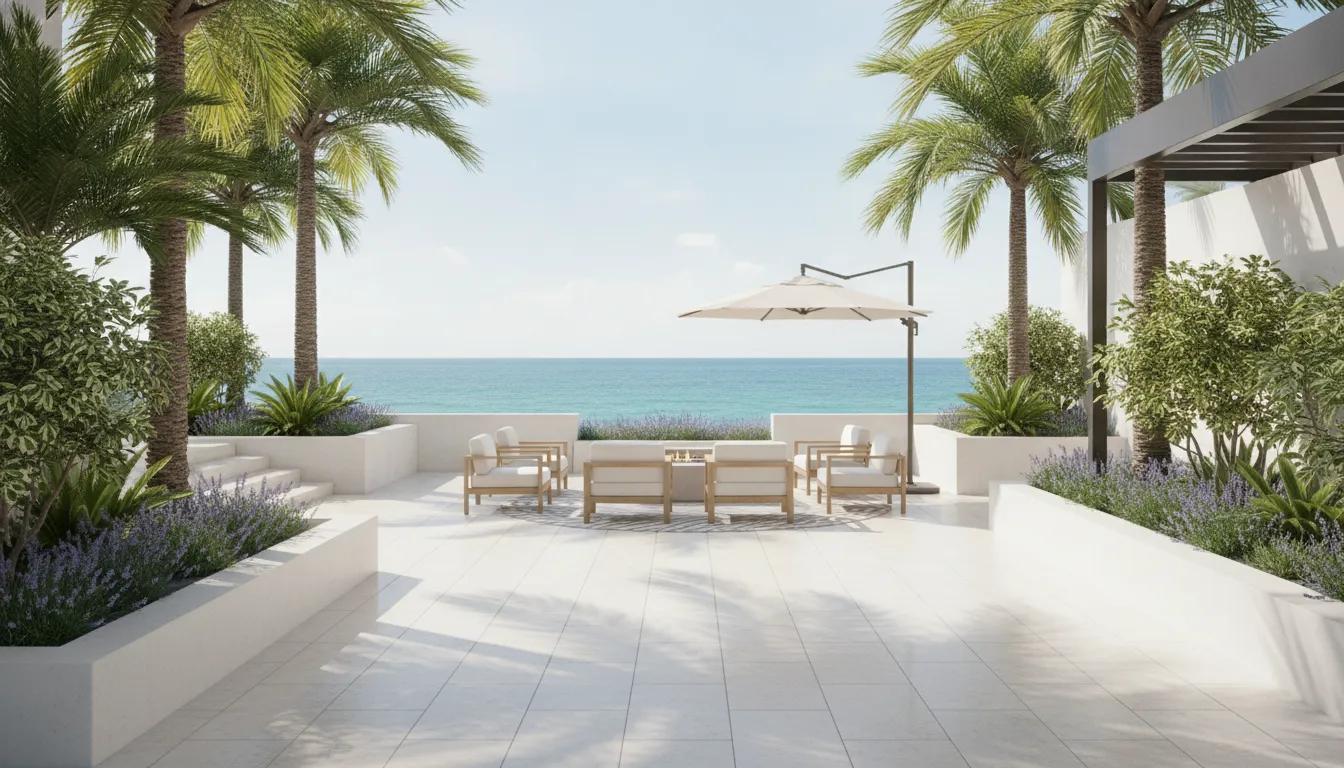
South Florida outdoor spaces face a demanding combination of intense sun, high temperatures, humidity, heavy rain, and salt-laden coastal air. A paving material must do more than look attractive on installation day. It should remain practical through long periods of exposure while requiring a manageable care routine. Porcelain pavers are designed for this type of environment, making them a strong option for patios. Pool areas, walkways, and commercial landscapes in Jupiter, Boca Raton, Fort Myers, and nearby communities.
Sun exposure is one of the most important considerations when planning a South Florida project. Dark or poorly suited materials can become uncomfortable underfoot, while repeated temperature changes place stress on outdoor surfaces. The research supporting porcelain paver performance identifies high resistance to heat and intense ultraviolet radiation. In practical terms, that makes porcelain a sensible material to evaluate for bright, open spaces that receive direct sun for much of the day. Product selection, site design, and proper sand-set installation still matter, but the material is well matched to the region's sunny conditions.
For homeowners and designers, this means the paver choice can be made around the way a space will be used rather than around fear of ordinary sun exposure. Shade structures, planting, and thoughtful layout can improve comfort, while porcelain provides a durable surface foundation for the overall design.
Humidity creates a persistent moisture challenge, particularly near the coast. Porcelain's dense, non-porous structure absorbs very little moisture, which helps it resist the effects associated with humid conditions and salt-laden air. These characteristics are especially relevant for properties near the water, where outdoor materials may be exposed to airborne salt even when they are not directly splashed by seawater. The supporting research describes porcelain's non-porous structure as a reason for its resistance to moisture absorption and coastal exposure.
Low maintenance does not mean no maintenance. Regular sweeping, prompt removal of organic debris, and periodic attention to joints and drainage help keep an outdoor area performing well. A non-porous paver can also make routine care simpler by reducing the conditions that encourage moisture-related buildup. Always confirm cleaning recommendations for the selected product and project conditions rather than applying a one-size-fits-all treatment.
The climate benefits are most valuable when they support the way people actually use an outdoor space. A durable, low-maintenance surface can help homeowners spend more time enjoying a patio or pool setting and less time managing it. For designers, architects, and developers, porcelain offers a material aligned with demanding outdoor applications and a broad range of project styles.
The bottom line: South Florida's heat, UV exposure, humidity, and coastal air call for careful material selection. Porcelain pavers offer a dense, low-maintenance surface that is well suited to these conditions when the product, layout, drainage plan, and sand-set installation are matched to the project.
South Florida projects face a demanding combination of intense sun, high humidity, frequent rain, and salt-laden coastal air. The right paver selection should account for how those conditions affect long-term appearance, daily comfort, cleaning, and maintenance. For homeowners and designers in Jupiter, Boca Raton, and Fort Myers. Porcelain pavers can be a practical option when the product and installation system are matched to the site.
Outdoor paving in South Florida is exposed to strong heat and UV radiation for much of the year. Porcelain pavers are engineered for high resistance to heat and intense UV exposure, which helps them remain stable in sunny outdoor applications. A research source describes porcelain surfaces as resistant to warping, cracking, and fading under intense sun exposure. But product-specific performance should still be confirmed through the manufacturer's technical information rather than assumed for every paver.
That distinction matters when comparing samples. Look at the actual product in the light where it will be installed. And consider how its color and pattern work beside the home, pool, planting, or outdoor kitchen. Designers should also review the intended application and thickness with the supplier before specifying a surface for a high-traffic or commercial project. Read the supporting research on porcelain's heat and UV resistance.
Humidity can make outdoor spaces feel persistently damp, while coastal air introduces salt that can settle on exposed surfaces and nearby components. Porcelain has a dense, non-porous structure, so it absorbs very little moisture. That characteristic can help the paver resist moisture-related problems associated with humid environments and coastal exposure. It does not eliminate the need to clean salt residue, remove organic debris, or inspect joints and drainage after severe weather.
In practice, plan for routine rinsing and simple surface cleaning, particularly in locations close to the water. Pay attention to the full assembly, not only the paver itself. Drainage, joint material, edges, coping, and surrounding metals can respond differently to moisture and salt. A qualified professional can help coordinate those details for the specific property and use case. Review the research on porcelain's moisture and coastal-air resistance.
The bottom line: For South Florida conditions, porcelain pavers offer a climate-conscious starting point because their dense structure and heat resistance address two major environmental stresses. Choose the product for the application, verify its technical documentation, and plan cleaning, drainage, and surrounding materials as part of the complete outdoor design.
South Florida projects need a drainage plan that accounts for intense rain, surrounding grades, landscape beds, pool areas, and the way water leaves the property. A beautiful paver layout can still perform poorly if water has nowhere to go. Sand-set installation supports a practical, serviceable approach, but the base, slope, joints, and site conditions must be coordinated before materials are placed.
Permeable pavement systems can help manage stormwater runoff in Florida while supporting pedestrian and light-traffic areas, according to the University of Florida Institute of Food and Agricultural Sciences. The best solution depends on the specific site, including soil, existing drainage, elevations, and local requirements. Treat permeability as part of an integrated design rather than as a substitute for proper grading or drainage infrastructure. Learn more about permeable pavement and stormwater management.
Whether you are planning porcelain pavers in South Florida for a walkway, patio, pool surround, or commercial area, drainage and installation should be designed as one system. The bottom line: sand-set construction, deliberate joint spacing, sound site preparation. And qualified installation help water move as intended while keeping the finished outdoor space stable, functional, and easier to maintain.
Thickness is one part of a larger project decision. The right option depends on how the space will be used, the expected load, the layout, the selected product format, and the conditions of the installation area. A residential pool deck in Boca Raton may have different requirements from a driveway, commercial plaza, or high-traffic walkway in Jupiter or Fort Myers.
Hardscape.com offers 2CM, 3CM, and 5CM porcelain pavers. The ranges below provide a starting point, not a universal prescription. Product specifications can vary by collection, so review the selected product details and coordinate with a qualified installer before finalizing the design.
| Option | Starting point |
|---|---|
| 2CM | Residential outdoor living. |
| 3CM | Commercial or selected vehicle use. |
| 5CM | Heavy-duty or high-traffic use. |
A thicker paver is not automatically the best choice for every South Florida application. A successful design considers the complete system. That includes the prepared base, joint layout, drainage, edges, transitions, and the way people or vehicles will use the space. Large-format residential pavers may suit a relaxed entertaining area. A driveway or commercial setting calls for a more detailed load and layout review.
Color, size, pattern, coping, stepping stones, and accessories also affect the finished plan. Bringing the product collection and site conditions into the discussion early helps prevent mismatched transitions or an unsuitable format. For a closer look at the available porcelain pavers for outdoor spaces, compare the product information with your installer's recommendations.
The bottom line: Choose among 2CM, 3CM, and 5CM based on use, load, layout, drainage, and the complete installation system. Treat category guidance as a starting point, then confirm the selected product's specifications and application with Hardscape.com and a qualified installer before ordering materials.
Local conditions should shape the planning conversation before a homeowner selects a color, pattern, or layout. A pool terrace in Jupiter may have a different relationship to coastal air and sun exposure than a shaded garden path in Boca Raton or a large outdoor living area in Fort Myers. Start by mapping how the space will be used, how water moves through it, and how the selected porcelain pavers will coordinate with the home and landscape.
Begin by noting the direction of the strongest sunlight, nearby vegetation, drainage paths, and the property's proximity to the coast. These observations help clarify where people will walk, gather, dine, or move between a pool and the house. They also help a qualified installer plan a sand-set system with appropriate preparation and spacing for the specific site, rather than treating every South Florida project as identical.
For pool and patio projects, consider transitions around steps, coping, doors, outdoor kitchens, and planting beds. A coordinated material plan can make separate areas feel like one outdoor room while preserving clear walking routes. In Jupiter and Boca Raton, homeowners may want samples viewed in the changing light of a coastal property. In Fort Myers, the same sample review can help assess how the paver relates to a broader pool deck, lanai, or garden setting.
Order physical samples and view them next to the home's exterior, pool coping, roofline, furnishings, and landscape materials. Check the color at morning, midday, and evening, and look at the surface after it has been cleaned. A sample also makes it easier to discuss format, thickness, edge details, transitions, and accessory requirements with the installer before materials are ordered.
Homeowners should coordinate early with a qualified installer who can evaluate the existing site. Confirm the intended use, and explain the preparation and drainage details for a sand-set installation. Product guidance should come from current manufacturer materials and the specific project conditions. For additional planning context, review buying porcelain pavers for Florida pool areas before finalizing a pool or patio design.
The bottom line: Planning porcelain pavers in South Florida starts with the property, not a generic location label. Study sun, coastal exposure, rainfall paths, pool and patio transitions, and daily use. Then review samples with a qualified installer so the material, layout, drainage approach, and accessories suit the actual conditions in Jupiter, Boca Raton, or Fort Myers.
A coastal outdoor space benefits from a simple, consistent care routine. Sweep patios, pool surrounds, walkways, and garden paths regularly to remove sand, leaves, flower petals, and other abrasive debris before it is tracked across the surface. In Jupiter, Boca Raton, and Fort Myers, routine attention is especially useful after windy weather, heavy rain, or landscaping work.
Rinse the area with clean water when salt spray, dust, or pollen accumulates. A soft-bristle broom and a suitable neutral cleaner can address ordinary soil without relying on aggressive chemicals. For food, oil, algae, or other specific marks, identify the stain first and use a cleaning product intended for porcelain pavers. Hardscape.com offers dedicated cleaning products, but product directions should always take precedence over a generalized maintenance schedule.
Leaves and other organic material can hold moisture and encourage staining or biological growth on surrounding surfaces, even when the pavers themselves are low maintenance. Clear debris from corners, beneath furniture, around planters, and along pool edges. Trim vegetation that repeatedly drops material onto the paving, and check that irrigation is not constantly spraying the area. These small steps help the space dry between weather events and reduce the need for intensive cleaning.
Maintenance is also an opportunity to inspect how the area is performing. Look for displaced joint material, debris collecting between pavers, or water lingering after rain. In a sand-set system, open joints and a clean drainage path help water move through the designed assembly. Landscape pavers should have adequate spacing to allow water to flow between them, and permeable paving systems can help manage stormwater runoff when designed for the site. If water continues to pool, consult the project installer rather than trying to correct the grade by adding random materials.
Do not assume that every cleaner, treatment, or maintenance method is appropriate for every product or joint system. Review the current care guidance for the selected paver, joint material, coping, and accessories before using a pressure washer, acidic cleaner, alkaline cleaner, or any protective treatment. Sealing requirements should be determined by the specific product and application, not by a blanket rule. When in doubt, ask Hardscape.com or the qualified installer for product-specific direction.
The bottom line: Coastal porcelain paver spaces generally stay manageable with regular sweeping, occasional rinsing, prompt debris removal, and periodic checks of joints and drainage. Use cleaners and treatments only as directed for the selected products, and address persistent standing water or joint movement with qualified project support.
The right supplier should do more than show attractive product photos. For a project in Jupiter, Boca Raton, Fort Myers, or another South Florida community. Look for a source that can help you match the paver system to the application, coordinate supporting products, and answer practical questions before materials arrive.
Start with samples you can see in natural light and compare beside your home, pool area, landscape, or architectural finishes. A sample review helps you evaluate color, scale, texture, and how different formats work together. Ask whether the supplier can provide samples of the specific collection and thickness under consideration, rather than a generic example.
Ask for current product information and confirm which thickness is appropriate for the intended use. Hardscape.com offers 2CM, 3CM, and 5CM porcelain pavers, but the correct selection depends on the project design, expected loads, base preparation, and installation plan. A knowledgeable supplier should explain those distinctions clearly without presenting one specification as universal.
Review the durable porcelain pavers for outdoor spaces available for your project, then request clarification on dimensions, recommended applications, coordinating pieces, and availability before finalizing a design.
A coordinated system can simplify the details around pools, steps, transitions, and outdoor rooms. Ask whether the supplier offers coping, stepping stones, and installation accessories that work with the selected pavers. Confirm what guidance is available for layout, drainage, joint spacing, and sand-set installation, and whether the team can coordinate with your landscape designer or qualified installer.
South Florida projects can involve intense sun, humidity, heavy rainfall, salt air, and different patterns of daily use. Your supplier should ask about the setting instead of making a recommendation from a product name alone. Share the intended application, surrounding structures, drainage conditions, access requirements, and design goals. For help reviewing options, contact Hardscape.com and discuss the details with its team.
The bottom line: Choose a South Florida porcelain paver supplier that offers physical samples, current specifications, application-based thickness guidance, coordinated coping and accessories, and responsive project support. A consultative review before ordering can help align the material, installation plan, drainage strategy, and design with the conditions of your specific site.
Porcelain pavers can warm in direct sun, like any hard outdoor surface, but their performance is well suited to intense heat and UV exposure. For a more comfortable space, plan shade, use furnishings thoughtfully, and request samples so you can evaluate colors and placement at your property.
The material's dense, non-porous structure limits moisture absorption, which supports reliable use in humid settings. Hardscape.com materials are selected for resistance to heat, UV exposure, and moisture, but the complete project still depends on proper product selection, drainage planning, and sand-set installation.
Porcelain itself does not absorb moisture the way a porous material can, making it a practical option for coastal locations such as Jupiter, Boca Raton, and Fort Myers. Salt exposure can still affect nearby metal, fasteners, furniture, or planting materials, so the entire outdoor environment should be planned for coastal conditions.
Porcelain pavers require careful selection and installation. The appropriate thickness, layout, base preparation, joint spacing, and drainage plan depend on the application and site conditions. Samples are also important because color and texture can look different in South Florida's strong daylight than they do on a screen.
Project cost varies with the selected product, thickness, area, site preparation, access, drainage requirements, and installation details. Rather than relying on a generic range, request a site-specific recommendation and quote from Hardscape.com based on your project goals.
Every property has different exposure, drainage needs, and design goals. A conversation with Hardscape.com can help you compare suitable porcelain pavers, request samples. And narrow product choices for a project in Jupiter, Boca Raton, Fort Myers, or another South Florida community. To get started, contact Hardscape.com and share your project details with the team.