
27 Aug
A fire pit can anchor an outdoor room, but the pavers around it should be selected after the fire feature, site, and circulation plan are understood. Porcelain pavers around a fire pit can create a cohesive, low-maintenance setting. Treat the surround as one part of a larger project, not as a substitute for fire-feature design or local safety review.
Yes, porcelain pavers can be considered for the surrounding surface of a properly planned, contained outdoor fire feature. The pavers do not establish fire safety by themselves. Confirm the unit's instructions, fuel requirements, clearances, ventilation, local rules, drainage, and installation system before construction.
The most useful planning question is not simply whether a paver is near a flame. It is whether the fire feature and surrounding hardscape work together. A homeowner or designer should resolve the fire pit's operating requirements first. Then coordinate the paver selection, finished elevations, joint layout, seating, service access, and water management around those requirements.
Porcelain pavers can form the surrounding patio surface for some contained outdoor fire-feature designs when the specific application is approved by the responsible professionals. They can define seating and circulation, but they are not the firebox, burner assembly, or a universal fire-rated solution. The fire system and paver surround require separate reviews.
Hardscape.com's product materials describe porcelain pavers for outdoor applications and note product properties such as low water absorption and stain resistance. Read the 2CM porcelain paver guide when comparing product information for a residential project. Those properties can inform material selection, but they do not certify a fire-pit assembly. Product documentation should be reviewed for the selected paver, while the fire-feature manufacturer or qualified installer should address the feature itself. The related outdoor paver heat-performance guide offers adjacent context, not a substitute for unit-specific instructions.
The surround is the walking and seating surface around the fire pit. The fire feature includes the bowl, burner, fuel connections, controls, enclosure, ventilation provisions, and other components that produce or contain the flame. Each element has a different function and may have separate requirements. Keeping those roles distinct prevents a paver selection from being treated as a complete safety decision.
Do not place combustible furniture, decorations, planting, or structures inside the clearance zone identified for the specific unit. Do not assume that a larger paver ring solves a clearance issue. Instead, use the manufacturer's current instructions and the applicable local authority's guidance to establish the approved location. Then have the paver layout follow that confirmed footprint.
The bottom line: Porcelain pavers can form the surrounding hardscape for an appropriate contained fire feature, but they are not the firebox or burner system. Confirm the selected product's documentation separately from the fire pit's instructions, clearance requirements, ventilation needs, and local approval before finalizing the design.
Choose the fire feature before locking the paver pattern. A manufactured fire pit, fire bowl, and custom-built feature may have different installation instructions, fuel requirements, access needs, and clearance conditions. The paver installer needs those facts early so the finished surface does not obstruct controls, service panels, connections, ventilation paths, or required separation from surrounding elements.
| Planning question | Why it matters |
|---|---|
| Which fire feature and fuel are planned? | The model and fuel type determine the instructions that must guide the surrounding layout. |
| Where can the unit be located? | Structures, trees, overhangs, furniture, and property conditions affect the approved footprint. |
| How will the feature be serviced? | Shutoffs, controls, connections, inspection points, and access panels must remain reachable. |
| What local review is needed? | Rules can vary by jurisdiction, property, fuel type, and feature design. |
Start with the current instructions for the exact fire pit or burner. Look for the required clearances, approved surfaces, installation orientation, ventilation provisions, and maintenance instructions. If the instructions are incomplete, pause the paver design and ask the manufacturer or qualified fire-feature professional for clarification. A generic online recommendation is not a substitute for documentation tied to the selected unit.
Fuel is another early decision. Wood-burning, propane, and natural-gas features may involve different storage, connection, shutoff, ventilation, and operating considerations. Confirm where a tank, line, valve, or control will be located. The paver layout should leave the service route practical after furniture and landscaping are added, not only when the patio is empty.
Local requirements also deserve a project-specific check. Ask the appropriate authority or permitting professional about placement, dimensions, fuel, and clearance rules for the property. A design that works in one Florida community may not meet the requirements of another. Record the source of each decision so a paver layout question is not confused with a code determination.
The bottom line: Verify the fire-feature model, fuel, clearances, ventilation, service access, and local requirements before choosing the paver pattern. The paver installer can then coordinate the surround around an approved fire-feature footprint instead of trying to correct an unsafe or impractical layout after installation.
A fire pit surround must support movement, furniture, weather, and access to the feature. It also needs finished elevations and drainage that work with the existing patio and grade. Hardscape.com presents porcelain pavers for outdoor applications, and this article addresses sand-set planning. A qualified installer should plan the base and surface for the selected system.
Establish the finished elevation of the fire pit, surrounding pavers, adjacent patio, thresholds, steps, seat walls, and drainage points before construction begins. A raised edge can become a trip point. A low area can collect water. A mismatch around a circular bowl can also make service access and furniture placement harder than expected.
The base should be properly prepared and level for the selected sand-set system. The installer should determine the appropriate slope, edge restraint, joint layout, and transitions for the site. Water should move away from the gathering area and be managed without being directed toward the home, service components, or the fire feature. These are site decisions, not assumptions based on paver appearance alone.
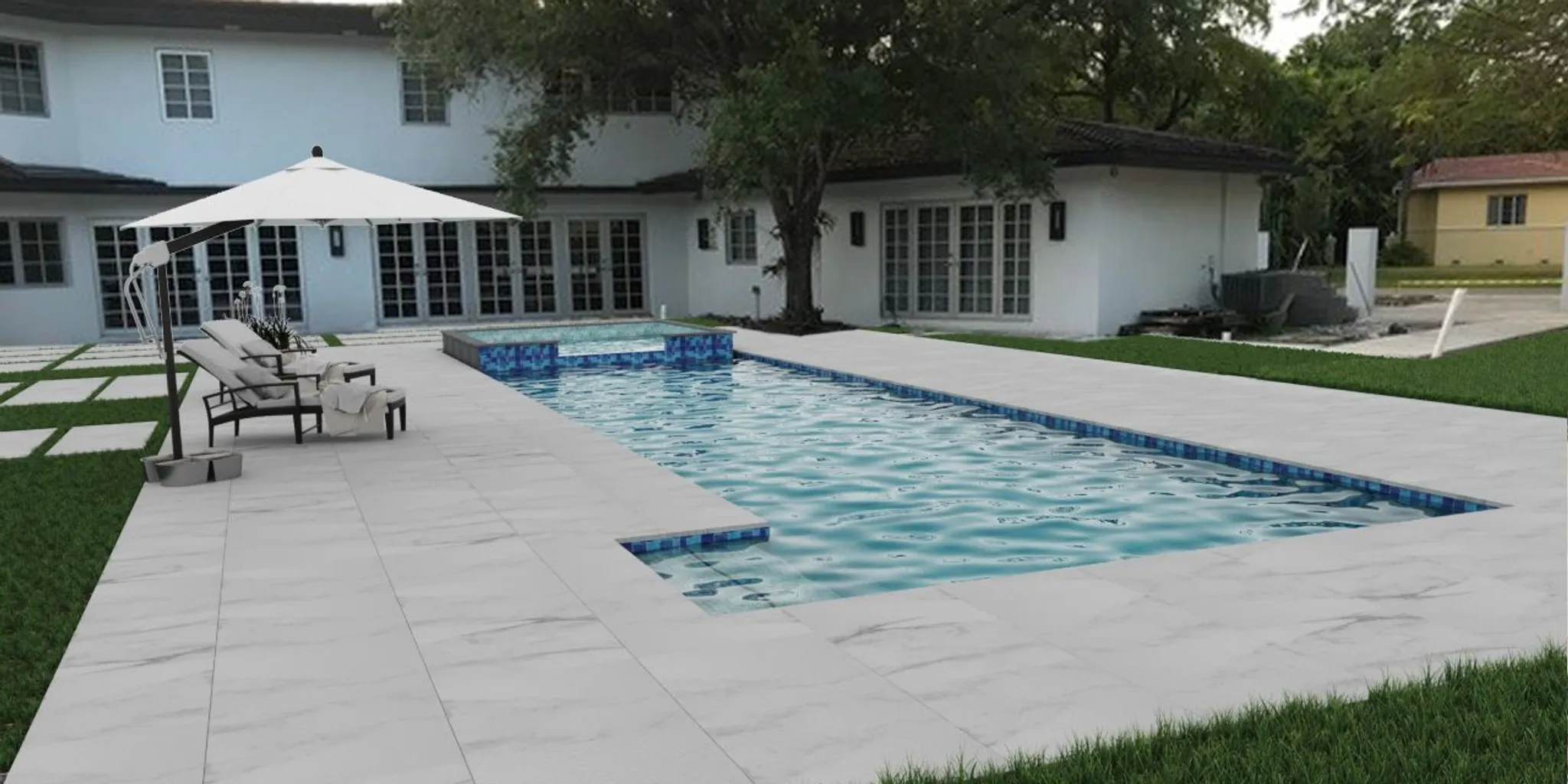
Joint spacing should follow the product and installation requirements. Consistent joints help the pattern read clearly around a circular or custom-shaped feature and allow the installer to coordinate the surface with drainage details. Avoid estimating joints by eye, especially where curved cuts, access covers, vents, or changes in elevation make small errors more visible.
Service access belongs in the elevation plan. Leave a practical route to shutoffs, controls, connections, and inspection points. If the fire-feature professional requires an access panel or ventilation opening, identify it before pavers are cut. The paver plan should frame those components without covering them or making future maintenance unnecessarily disruptive.
The bottom line: A successful sand-set surround begins with coordinated elevations, a properly prepared base, correct joints, edge details, service access, and drainage. Plan the fire feature and paver area together so water management and maintenance access remain practical after seating, landscaping, and other outdoor-room elements are added.
People use a fire pit area by approaching it, sitting near it, carrying food and drinks, and leaving it while other guests remain seated. Map those movements before selecting a ring size or pattern. Keep the primary route clear, provide enough space behind chairs, and avoid forcing guests to pass between the fire pit and furniture.
Use the fire pit's outside dimensions, not just the burner opening, when drawing the layout. Include the bowl, surround, controls, access panels, chairs, side tables, serving carts, umbrellas, and the path to the larger patio. A narrow ring may look efficient on a plan and feel crowded when people occupy the space. A comfortable layout needs room for ordinary use.
Sightlines matter as well. Guests should be able to see the feature and one another without a tall planter, screen, or seat wall blocking the main view. The feature should remain visible from the route into the patio. Keep combustible items outside the clearance zone identified by the responsible professional, even when those items would make the room look more finished.
Porcelain pavers can help distinguish the fire-pit zone from the rest of the patio through color, scale, or pattern. A contrasting band can create a visual boundary. A radial layout can respond to a round feature. Large-format units can create a calmer field, while smaller units may help with curved edges. These are design choices that should follow the approved footprint and installation requirements.
For product selection, compare the intended use, paver thickness, traffic, drainage, joint plan, and transition details instead of choosing only by color. Hardscape.com's porcelain paver collection provides a starting point for reviewing available options. A qualified installer can then confirm which product and system fit the site conditions.
The bottom line: Design the fire pit area for movement before designing it for appearance. Account for the entire fire feature, real furniture, clear circulation, sightlines, service access, and clearance zones. Use porcelain paver color and pattern to define the setting only after the functional footprint has been confirmed.
A fire pit area may collect ash, food, drinks, leaves, and rainwater. Porcelain paver care can be straightforward, but low maintenance does not mean no maintenance. The surface and the fire feature need separate routines. Follow the selected product's care directions for the pavers, and follow the fire-feature manufacturer's instructions for the bowl, burner, fuel system, screens, controls, and connections.
Wait until the fire feature has cooled completely before cleaning nearby surfaces. Remove loose ash with a soft broom or suitable outdoor vacuum. Avoid sweeping concentrated ash into joints or planting beds. Address food, oil, and drink spills promptly with water and a product approved for the selected paver. Test a cleaning method in an inconspicuous area when the product instructions recommend it.
Use a soft brush or mop for routine washing. Avoid abrasive tools and unapproved chemicals that could affect the paver, joint material, or adjacent components. Direct runoff thoughtfully so ash and residue do not move toward the home, drains, planting beds, or the fire feature's service area. Hardscape.com's porcelain paver cleaning resources can help with product-appropriate care questions.
After heavy storms, inspect for standing water, displaced joint material, debris, movement, and blocked access covers. Seasonal checks also make sense after landscaping changes, drainage work, furniture changes, or adjustments to the fire feature. Unusual movement or persistent drainage should be reviewed by a qualified paver installer rather than corrected with an improvised patch.
Keep the paver maintenance plan separate from fire-system maintenance. A clean surround does not confirm that a burner, shutoff, connection, screen, vent, or control is operating correctly. Those components should be inspected according to the fire-feature manufacturer's instructions and by the professional responsible for that system.
The bottom line: Maintain the porcelain surround by removing ash and spills promptly, using approved cleaning methods, and checking joints, drainage, and access after storms or site changes. Maintain the fire feature separately. The two routines work together, but neither one replaces the other.
Use this checklist during the design meeting with the homeowner, landscape designer, paver installer, fire-feature professional, and permitting authority. It is planning guidance, not a code review, fire-system design, engineering certification, or approval for a specific product. Its purpose is to reveal missing decisions before the paver layout is committed.
The bottom line: Before installing porcelain pavers around a fire pit, document the fire feature, fuel, clearances, ventilation, local requirements, elevations, drainage, product selection, circulation, and ownership of each decision. A coordinated plan helps the paver installer build the surround without implying that the pavers themselves certify the fire system.
Porcelain pavers can form the surrounding surface for some contained fire features, but the specific unit and installation must be reviewed first. Follow the fire pit manufacturer's instructions, confirm clearances and ventilation, check local requirements, and coordinate the sand-set paver layout with the professional responsible for the fire feature.
There is no universal answer for every fire pit, product, exposure, or installation. Do not treat porcelain pavers as fireproof or as a firebox component. Review the selected paver's documentation and the fire feature's instructions, then have the responsible professionals confirm that the surrounding application, clearances, and installation are appropriate.
Local requirements may address the fire pit's location, dimensions, fuel, clearances, and inspection. They vary by property and jurisdiction, so ask the appropriate local authority or permitting professional before construction. A paver surround does not replace a local review or approval required for the fire feature.
Plan the surround as a sand-set system with a properly prepared base, coordinated finished elevations, appropriate joints, edge details, drainage, and service access. The fire-feature professional should establish the fire system requirements first. The paver installer should then coordinate the surface around the approved footprint.
Porcelain pavers can simplify routine cleanup when ash and spills are removed promptly with product-appropriate methods. Use the selected product's care directions, avoid abrasive or unapproved chemicals, and inspect joints, drainage, and access after storms. Cleanliness of the pavers does not replace maintenance of the fire feature.
Connect with Hardscape.com to review porcelain paver choices for a coordinated fire pit setting.
A successful fire pit setting begins with coordination. Confirm the fire feature and its instructions, review local requirements, map clearances and circulation. Plan the sand-set base and drainage, and then select porcelain pavers that fit the intended outdoor use. Hardscape.com can help you review porcelain paver options and organize product questions before installation begins.
Contact Hardscape.com to discuss your porcelain paver project and next planning steps. You can also call 561-998-5000. Share the fire feature type, fuel, planned location, surrounding patio, and project goals so the material discussion starts with the right context.
The bottom line: Porcelain pavers can provide a polished surrounding surface for a properly planned fire pit area. The strongest result comes from separating paver selection from fire-system certification, then coordinating both with local review, clearances, ventilation, drainage, access, and real-world outdoor living.