14 Sep
Choosing pool bullnose coping is not only a question of whether you prefer a rounded edge. The coping profile affects how the pool perimeter meets the deck, how corners are detailed, how a renovation aligns with an existing surface, and how the edge feels when someone sits or steps beside the water. Comparing the profile to the project conditions first makes the product decision much clearer.
Talk with Hardscape.com about your pool coping project and the profile that fits your plan.
Hardscape.com offers several porcelain coping routes, including a full-round bullnose, an eased edge, and a remodel edge. The right choice depends on the pool geometry, the deck layout, the visible edge you want, and the details your installer needs to confirm before ordering. This guide focuses on that comparison rather than repeating a general explanation of pool coping.
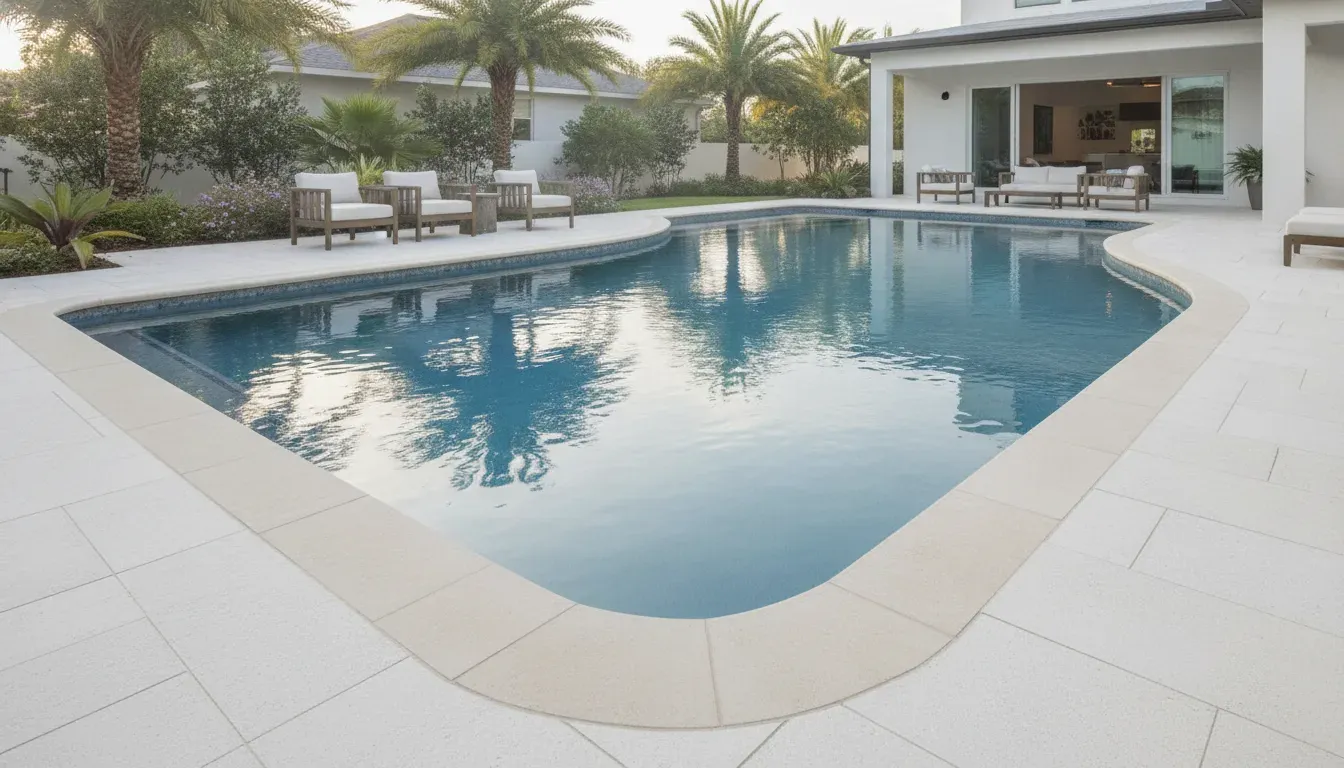
Pool bullnose coping has a rounded front edge that creates a softer visual and tactile transition at the waterline. It is one of several profile decisions available for a porcelain pool perimeter. An eased edge keeps a more linear appearance while softening the corner, and a remodel edge is designed for renovation conditions where the new coping must relate to an existing pool deck or edge.
The best profile is the one that matches the physical transition and the design intent at the same time. A profile that looks right in a product photograph may not be the right choice for a curved pool, an irregular corner, a raised edge, or a renovation with limited room to adjust the surrounding deck.
| Profile | Visual character | Best starting question | Project condition to confirm |
|---|---|---|---|
| Full-round bullnose | Rounded edge with a softer perimeter line | Do you want a clearly rounded pool edge? | Radius, corners, returns, and how the edge meets the deck |
| Eased edge | Clean, linear appearance with a softened edge | Do you want a contemporary line without a full round? | Visible edge alignment and the transition to adjoining pavers |
| Remodel edge | Profile intended to help coordinate a renovation edge | Are you replacing coping while retaining part of the existing layout? | Existing elevation, deck thickness, shell condition, and measurements |
Bottom line: Full-round bullnose, eased edge, and remodel edge are not interchangeable labels. Compare the shape you want with the pool geometry, deck transition, and installation conditions. Start with the profile that solves the project detail, then confirm the exact product, thickness, corners, and quantity with the project team.
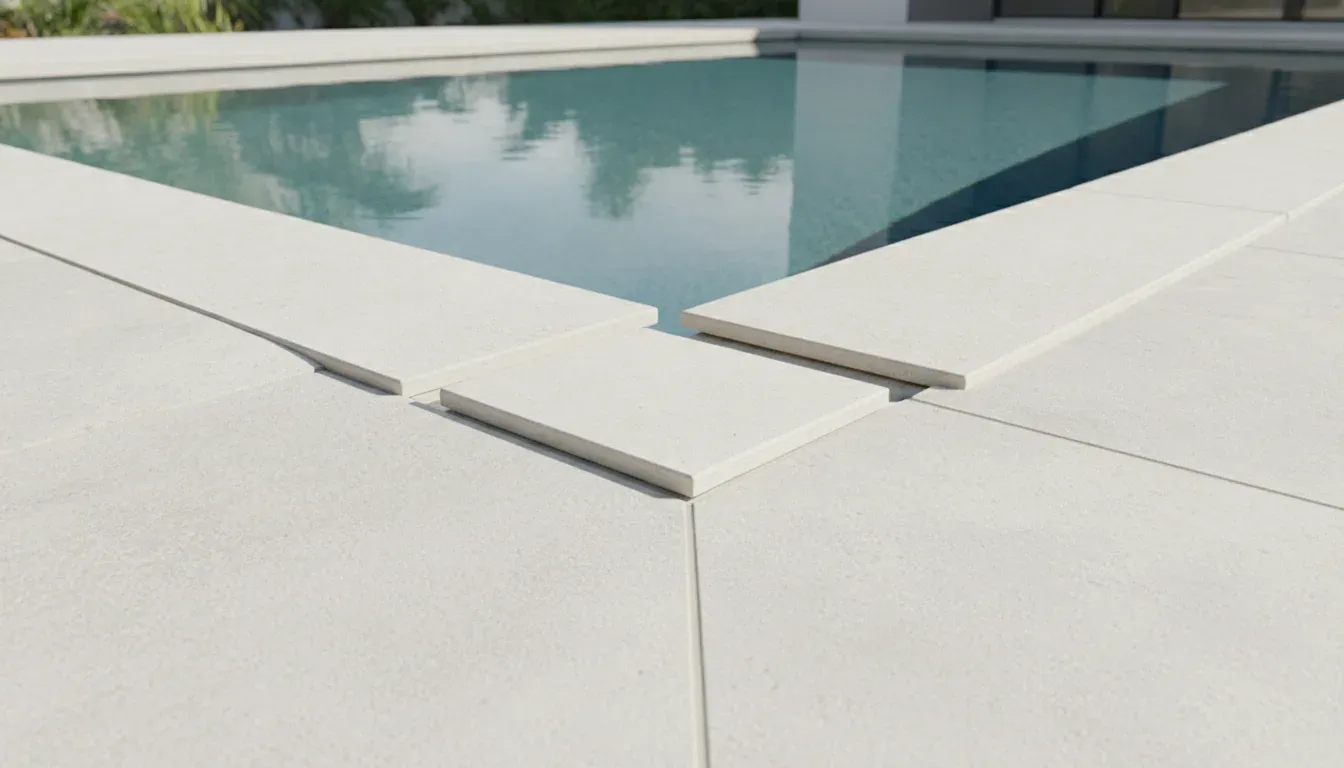
A new pool project gives the design team more control over the pool shell, coping width, deck field, corners, and planned elevations from the beginning. A renovation starts with conditions that already exist. The coping may need to meet an established deck, an enclosure, a raised bond beam, or a transition that cannot move without expanding the scope.
For new construction, compare the profile during the layout stage, before the pool perimeter and deck dimensions are finalized. Confirm the coping projection, the relationship between coping and the first paver course, the location of joints, and the way inside and outside corners will be handled. A full-round bullnose can reinforce a softer perimeter, while an eased edge may suit a more linear layout.
For renovation work, measure first and choose second. Record the existing deck elevation, the width available at the pool edge, the condition of the supporting surface, and whether the replacement coping will change the relationship between the waterline and the deck. A remodel edge may be the logical starting point when the project must coordinate with an existing condition, but the installer should confirm fit from field measurements.
Do not assume that a replacement piece will match the old layout simply because the nominal dimensions look similar. Existing corners, transitions, and adjacent pavers may require a different sequence or additional cuts. A sample or dry layout can help the homeowner and installer see how the profile will read before the final order.
Bottom line: New construction lets the coping, deck, and pool geometry be coordinated as one plan. Renovation requires measured transitions and a realistic view of what can remain. In both cases, the profile should be selected after confirming elevations, available width, corners, and the relationship between the coping and surrounding porcelain pavers.
Most pool edges look simple in a straight photograph. The decision becomes more technical at corners, steps, curves, raised sections, and places where the coping meets another surface. These are the areas to review with the installer or designer before selecting a profile.
A full-size sample, mock-up, or dry layout is especially useful when the project includes several directions or a strong contrast between the coping and the deck. It gives the homeowner a chance to evaluate the edge from standing height, the water, and the seating areas rather than choosing from a small image alone.
Bottom line: The most important comparison often happens at the corner, not in the product name. Review straight runs, curves, returns, steps, joints, drainage direction, and deck alignment before ordering. A clear detail drawing or field mock-up can prevent a profile that looks correct in isolation from creating a difficult transition on site.
Coping should look intentional beside the surrounding porcelain pavers. Coordination does not require every element to be identical, but the edge profile, color direction, scale, joint rhythm, and visible thickness should work together. Start by considering the pool as a complete perimeter rather than choosing coping and deck products in separate conversations.
Hardscape.com provides a dedicated porcelain coping collection with several profile and thickness routes. The collection identifies the PC2002 eased edge, PC2003 full-round bullnose, and PC2001 remodel edge as distinct options, along with 5CM porcelain coping pavers. Product selection should still be confirmed against the project dimensions and the intended deck assembly.
For the deck field, review the available porcelain paver collection alongside the coping sample. Look at the pieces in daylight, beside the water, and next to any existing materials that will remain. A small sample can hide scale differences, so a larger layout or showroom comparison is useful when the coping is a prominent line around the pool.
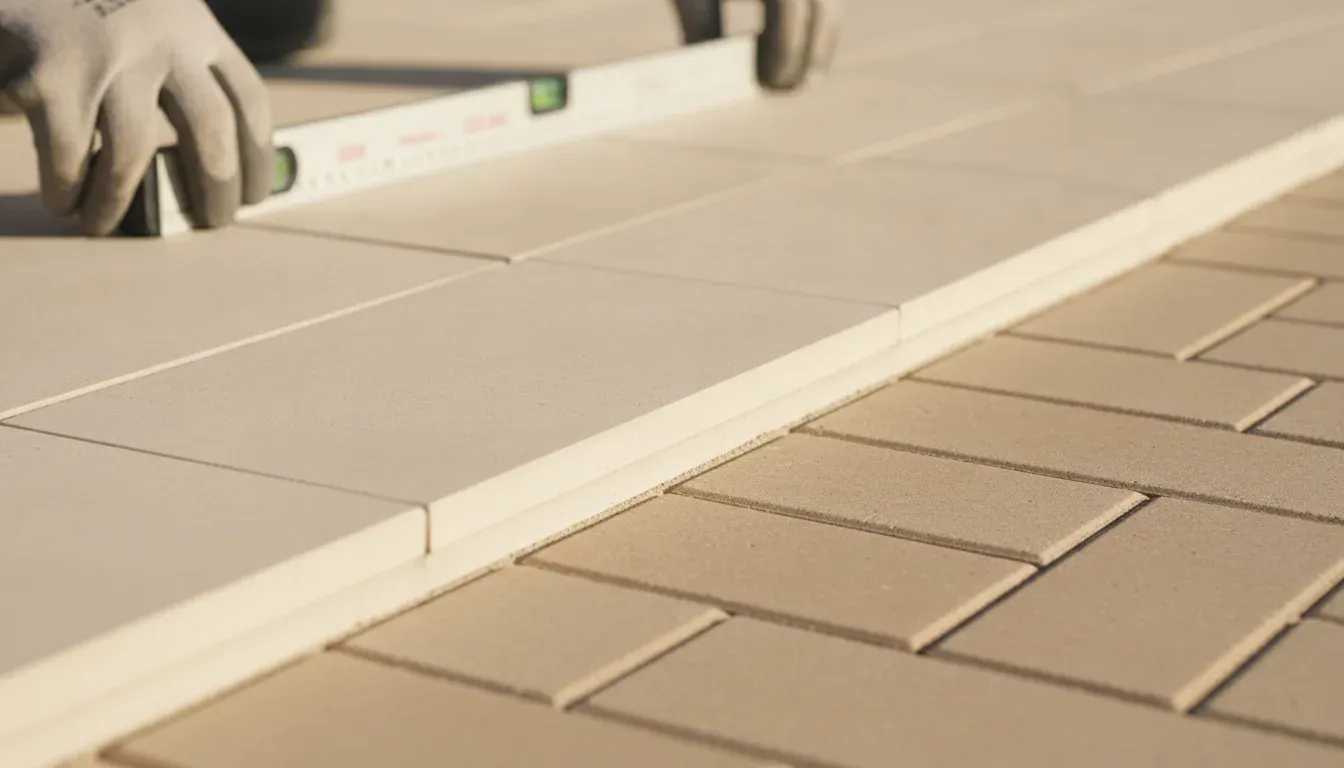
When the deck is planned as a sand-set porcelain paver assembly, keep the coping-to-deck transition in the installation conversation from the start. The installer should confirm the supporting conditions, elevations, joint layout, and drainage plan rather than treating the coping as an afterthought. These details are project-specific and should be approved before materials are ordered.
Bottom line: Coordinate pool coping with the deck as one visual and construction detail. Compare samples in the actual light, align the joint plan, and confirm the elevation and drainage approach. Hardscape.com's coping collection and porcelain paver collection provide a practical starting point, while the installer confirms the conditions for the specific pool.
Request product guidance from Hardscape.com before you finalize your pool coping profile.
A short project checklist can make the conversation between homeowner, designer, contractor, and supplier more productive. The goal is not to replace field measurements or installation guidance. It is to make sure everyone is discussing the same profile, application, and transition details before the order is placed.
If the project is in Florida, the design conversation should also account for how the pool will be used throughout the year. Homeowners in Jupiter, Boca Raton, Fort Myers, and nearby communities can use the checklist to bring a more complete set of questions to a showroom or project call. Hardscape.com's official company phone number is 561-998-5000, and the contact page is the best route to begin a project-specific conversation.
Bottom line: Before ordering, align the profile name, dimensions, thickness, deck relationship, renovation conditions, quantity, and sample approval. This checklist helps the project team catch gaps while changes are still manageable. It also keeps a homeowner's design preference connected to the details the installer and supplier must verify.
Pool bullnose coping is a pool-edge piece with a rounded front profile. The curved edge creates a softer perimeter line than a sharp linear edge and can be considered for pool decks, steps, and other outdoor edges. The correct selection still depends on the pool geometry, the deck transition, the available product, and the installation details confirmed for the project.
No. Hardscape.com lists a full-round bullnose, an eased edge, and a remodel edge within its porcelain coping options, as well as 5CM porcelain coping pavers. These profiles serve different visual and project conditions. Compare the product shape with the pool's corners, curves, elevations, and adjoining deck before choosing one.
Full-round bullnose coping has a clearly rounded front edge, while eased-edge coping keeps a more linear appearance with a softened corner. The choice is primarily a profile and transition decision. Review the edge from the pool, deck, and seating areas, then confirm how each option handles corners, returns, joints, and the surrounding porcelain paver layout.
A remodel edge is worth discussing when coping is being replaced and the surrounding pool deck or edge condition will remain partly in place. It may help the project team evaluate an existing transition, but it is not a substitute for field measurements. Confirm the current elevation, available width, supporting conditions, and the intended relationship to the replacement deck.
Begin with the pool shape, the new-construction or renovation context, the desired edge profile, and the way the coping will meet the porcelain paver deck. Then review live product information, samples, corners, thickness, quantity, and installation requirements with the project team. Hardscape.com's coping collection and product pages can help narrow the options before you request project guidance.
Bottom line: Pool bullnose coping is one profile within a larger porcelain coping decision. Compare the edge shape, project context, pool geometry, deck transition, and ordering details together. When the plan is specific, Hardscape.com can help homeowners, designers, and contractors move from a visual preference to a product conversation grounded in the actual project.