29 Jul
In Florida, a hardscape has to do more than create a polished outdoor surface. It also needs to work with intense rainfall, compacted soil, and the practical demands of patios, pool decks, and commercial spaces. A well-designed permeable system can help manage water where it falls instead of sending all of it toward drains and low points.
Ready to explore permeable paver options for your Florida property? Contact Hardscape.com or call 561-998-5000 to discuss your project.
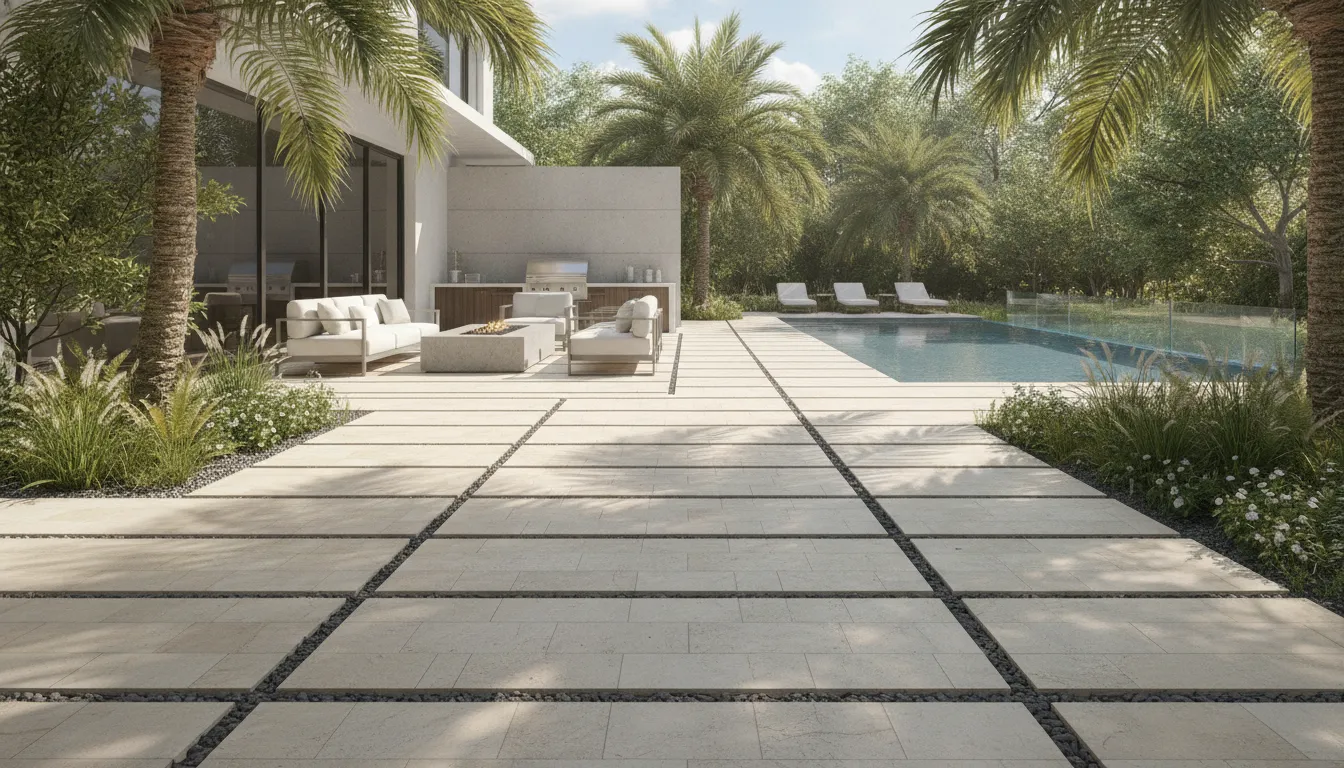
Permeable porcelain pavers Florida projects use porcelain units with planned joints over a drainage-ready base, allowing rainwater to move through the system even though porcelain itself is non-porous. This sand-set assembly can reduce surface runoff and support more responsible stormwater management. The U.S. Environmental Protection Agency explains that permeable pavement lets water pass into underlying layers and can help filter pollutants.
The result is an approach that combines the clean, durable character of porcelain with a system designed around infiltration, storage, and drainage. Understanding how the joints, base materials, and paver layout work together is the first step toward evaluating whether this solution fits a Florida property.
A permeable porcelain paver system is designed as an assembly, not as a porous paver alone. The porcelain units create the finished walking or driving surface, while carefully specified joints and the layered base below manage rainfall. Instead of sending every drop across the surface toward a drain, the system gives water a controlled path downward.
First, open joints between the pavers allow rainwater to pass through the surface. The joint material and the aggregate base are selected to preserve that drainage path while keeping the pavers stable. Beneath the surface, clean, open-graded aggregate provides space for water to move and temporarily collect. Depending on the site design and soil conditions, water can infiltrate into the subgrade, evaporate, or be directed to an approved overflow point.
Porcelain itself is non-porous, so it does not absorb stormwater through the unit. That is a useful material characteristic, but it also makes the system design essential. The drainage performance comes from the gaps between pavers and the engineered layers beneath them. Appropriate joint widths, aggregate gradation, base depth, slope, and subgrade preparation must work together for reliable performance.
The U.S. Environmental Protection Agency explains that permeable pavement allows rain and snowmelt to seep through the surface into underlying soil and gravel, reducing runoff. The agency also notes that permeable pavements can help filter pollutants that contribute to water pollution. This source-control approach is especially relevant when planning hardscaping for Florida properties, where heavy rainfall can quickly overwhelm conventional surface drainage.
As water moves through the aggregate, the base can slow and store it before infiltration. Properly designed systems manage wet weather close to where it falls, rather than relying only on downstream conveyance. EPA research describes permeable pavement performance in terms of accepting, storing, infiltrating, and evaporating stormwater. The system therefore needs both a suitable surface layout and a base engineered for the property's soil, grade, expected loads, and drainage goals.
For a closer look at the material and drainage advantages, review how porcelain pavers handle water.
Bottom line: Permeable porcelain pavers work because open joints and an engineered aggregate base manage water below a non-porous porcelain surface. When the assembly is designed for the site, it can reduce runoff, support natural infiltration, and help filter pollutants without sacrificing a durable, refined hardscape.
Florida properties must account for intense rainfall, high groundwater conditions, and sensitive waterways when planning outdoor improvements. A permeable porcelain paver system can support a site's stormwater strategy by allowing water to move through the joints and into properly designed base layers. The porcelain units themselves are non-porous, so drainage depends on the spacing, aggregate, and engineered assembly rather than absorption by the pavers.
That distinction matters when evaluating permeable porcelain pavers Florida projects. The paver surface can deliver a refined outdoor finish while the system below helps manage rainfall closer to where it lands.
Permeable pavement is commonly considered a form of green infrastructure because it helps manage wet-weather runoff and can filter some pollutants before they travel farther across a site. The U.S. Environmental Protection Agency identifies permeable pavement as a green infrastructure approach for reducing runoff and supporting healthier communities. See the EPA's overview of green infrastructure types for additional context.
It also aligns with low-impact development principles, which emphasize managing stormwater near its source instead of sending every drop immediately into conventional conveyance. A properly designed permeable assembly can accept, store, infiltrate, and evaporate stormwater within the site system. This approach may help reduce concentrated discharge that contributes to stream bank erosion, water-source contamination, and harm to aquatic life, outcomes evaluated in the EPA's permeable pavement research.
Because runoff is managed at the paved area, a project may need fewer conventional drainage features than an equivalent impervious design. The EPA notes that permeable pavement can reduce construction costs for residential and commercial development by reducing the need for some traditional drainage components. Actual savings depend on site conditions, soil infiltration, grading, regulations, and engineering requirements, so the system should be planned with the appropriate design professionals.
Bottom line: For Florida properties, a well-designed permeable porcelain paver system can combine attractive outdoor surfaces with source-level stormwater management. By supporting green infrastructure and low-impact development goals, it may reduce runoff impacts and limit the amount of conventional drainage infrastructure required, subject to project-specific approval and design.
A permeable installation depends on the space between pavers and the prepared base to move water. So the surface units do not need to absorb rainfall to support drainage. Porcelain is well suited to this approach because its dense structure remains stable while water passes through the designed joints. That distinction matters in Florida, where intense rainfall, humidity, pool chemicals, and year-round outdoor use place demanding conditions on hardscaping.
Porcelain pavers are fired at temperatures above 2,200 degrees Fahrenheit, producing a dense, durable material with zero water absorption and no degradation from water exposure. The result is a surface that can contribute to a carefully designed permeable system without becoming saturated or breaking down through repeated wetting. For a broader look at the material's environmental advantages, see this sustainable hardscaping choice.
Florida properties need pavers that resist the effects of moisture without creating a high-maintenance cleaning cycle. Porcelain is mold- and algae-resistant, which is especially useful around shaded patios, walkways, and pool areas exposed to persistent humidity. It is also slip-resistant and stain-resistant, helping the surface remain practical where water, sunscreen, food, and everyday outdoor activity are part of the environment. Porcelain's lower heat absorption than some traditional hardscaping materials can make exposed areas more comfortable under the Florida sun.
Yes. 2CM porcelain pavers offer the strength and load-bearing capacity needed for applications ranging from residential patios to high-traffic commercial spaces. Provided the system is designed and installed for the intended use. The pavers can support a refined outdoor setting while the permeable assembly manages water at the joints and below the surface. Product selection, base preparation, joint spacing, and site conditions should be evaluated together rather than treated as separate decisions.
Porcelain also reduces maintenance demands after installation. It does not require sealing, and routine care generally centers on cleaning with water and a mild detergent. That avoids adding a recurring sealing step to a system already engineered around drainage and long-term performance.
Bottom line: Porcelain is an effective surface for permeable installations because it combines dense. Water-stable construction with slip resistance, stain resistance, mold and algae resistance, lower heat absorption, and low maintenance. In Florida, those properties help a properly designed system remain durable and comfortable across residential and commercial applications.
Choosing a surface for a Florida project involves more than appearance. The pavement must help manage rainfall, remain practical to maintain, and support the design standard expected for the property. Permeable porcelain pavers use the joints and engineered base below the units to direct water into the system, while the porcelain itself remains non-porous. That distinction creates a different performance profile from both pervious concrete and conventional impervious pavement.
| Consideration | Permeable porcelain pavers | Pervious concrete | Impervious asphalt or concrete |
|---|---|---|---|
| Stormwater management | Water moves through designed joints into the underlying drainage layers, reducing surface runoff when the assembly is properly designed. | Open voids within the pavement allow water to pass into the base, where it can be stored and infiltrated. | Water remains on the surface and must be directed to inlets, drains, swales, or other conventional infrastructure. |
| Maintenance requirements | Stain-resistant and typically cleaned with water and mild detergent. No sealing process is needed. | Requires protection of its open pore structure and periodic attention to sediment buildup so infiltration capacity is not reduced. | Cracks, stains, vegetation, and drainage components may require recurring repairs or service. |
| Lifespan | Dense, non-porous units resist degradation from water exposure and harsh pool chemicals, supporting long-term outdoor use. | Performance depends on mix design, installation quality, traffic, and whether pores remain open over time. | Service life varies with traffic, weather, cracking, settlement, and the condition of the supporting drainage system. |
| Aesthetics | Offers a refined architectural appearance with flexible layouts for patios, pool decks, walkways, and commercial spaces. | Provides a functional, textured appearance but fewer design options than modular pavers. | Creates a broadly uniform surface with limited visual flexibility compared with individual paver units. |
| Pollutant filtration | The permeable assembly can help filter pollutants as runoff moves through its base layers, consistent with the benefits of permeable pavement identified by the EPA. | Can filter runoff through its open structure and aggregate base when properly designed and maintained. | Does not filter water at the surface. Pollutant management depends on downstream drainage and treatment features. |
| Cost over time | May reduce construction costs by lowering the need for some conventional drainage features. Low cleaning demands and no sealing can also reduce ongoing maintenance. | May reduce drainage infrastructure, but maintenance is important to preserve permeability. | Often requires additional drainage infrastructure and continuing repairs as the surface and drainage components age. |
Bottom line: Permeable porcelain pavers combine a designed stormwater pathway with a durable, stain-resistant surface that does not require sealing. Compared with pervious concrete and impervious pavement, they can offer a stronger balance of drainage performance, visual control, and long-term maintenance efficiency. Review the broader advantages in porcelain pavers vs concrete before selecting a system for your property.
Permeable installation does not require a property owner to give up a carefully planned outdoor aesthetic. The drainage strategy is created through the designed joint gaps and underlying assembly, while the paver layout supplies the visual structure. That separation gives Florida homeowners, designers, and contractors room to coordinate scale, color, circulation, and the character of each outdoor area.
Hardscape.com's 2CM porcelain pavers are available in several practical formats, including 12x24, 16x32, 24x24, and 24x48. Smaller formats can help define walkways, transitions, and detailed borders. Larger formats create a calmer, more expansive field across patios and pool decks, with fewer visual breaks. A designer can also combine sizes within a planned pattern to distinguish a seating area from a circulation route without introducing another material.
These pavers can support cohesive designs across patios, walkways, pool decks, and suitable driveway applications. A single color family, such as F010, can create continuity between connected spaces, while a deliberate pattern can add definition. Layout decisions should be coordinated with the required permeable joint gaps so that the pattern supports drainage rather than closing off the system.
Pool areas benefit from slip-resistant porcelain pavers, an important consideration around water and frequent foot traffic. Porcelain is also resistant to pool chemicals, helping the surface remain practical in a demanding setting. For Florida patios and walkways, designers can prioritize proportions and colors that complement the architecture while selecting a material suited to humidity, rain, and outdoor maintenance demands. The final pattern should be reviewed as part of the complete sand-set system, including its joint spacing and site-specific drainage plan.
The bottom line: Permeable porcelain paver systems offer meaningful design flexibility through multiple 2CM sizes, coordinated colors, and adaptable patterns. The key is to preserve the engineered joint gaps while selecting formats and layouts that fit each Florida application. From a slip-resistant pool deck to a connected patio and walkway.
Yes. Porcelain is non-porous, so the pavers do not absorb stormwater themselves. In a permeable assembly, water moves through the planned gaps between units and into the underlying aggregate and soil layers. The base design, drainage conditions, and installation details must be matched to the property.
They can. A properly designed permeable pavement system allows rainfall to pass through the surface into underlying layers instead of concentrating all runoff at the edges. The U.S. Environmental Protection Agency explains that permeable pavement can also help filter pollutants from stormwater. See the EPA guidance on permeable pavement for additional context.
They are well suited to pool areas because they offer slip resistance. Resist staining and pool chemicals, and do not absorb heat as readily as some traditional outdoor materials. Their low water absorption and dense construction also support easier day-to-day care in Florida's humid climate.
Maintenance is generally straightforward. Routine cleaning with water and a mild detergent is typically sufficient, and porcelain pavers do not require periodic sealing. Regularly keeping debris from the joints and drainage paths helps the permeable system continue accepting rainwater as designed.
2cm porcelain pavers can support a wide range of residential and commercial applications when the system is designed and installed correctly. Their strength and load-bearing capacity make them useful for patios, pool decks, walkways, and selected higher-traffic spaces, subject to project-specific engineering requirements.
A well-planned permeable system can help Florida property owners manage stormwater while creating a durable, low-maintenance outdoor space. Contact Hardscape.com to discuss options suited to your property, project goals, and sand-set installation needs. Call 561-998-5000 to connect with the Hardscape.com team.