28 Oct
Hurricane preparation for porcelain pavers starts with the space around the paving, not assumptions about how any material will perform in a storm. Florida property owners can reduce avoidable hazards by securing loose objects, checking that drainage paths are clear, and planning who will review the area before and after severe weather. Preparation is about safe, practical steps; it is not a guarantee against damage.
Contact Hardscape to discuss your project
Start with a walk-through while conditions are safe and there is time to act. Look at the patio, pool deck, walkway, driveway, and the spaces immediately beside them. Identify objects that could move in strong wind or block access: chairs, umbrellas, cushions, planters, grills, decorative pieces, lightweight bins, and temporary shade structures. Follow each item's own manufacturer guidance for storage or securing. Do not leave loose objects where they could become hazards or obstruct doors and paths.
Work methodically from the house outward so small items are not missed. If several people share responsibility, assign areas and confirm completion rather than assuming someone else handled them. Photograph the area before moving items if you need a personal record. A photo or visual check cannot prove that the paver system is storm-proof.
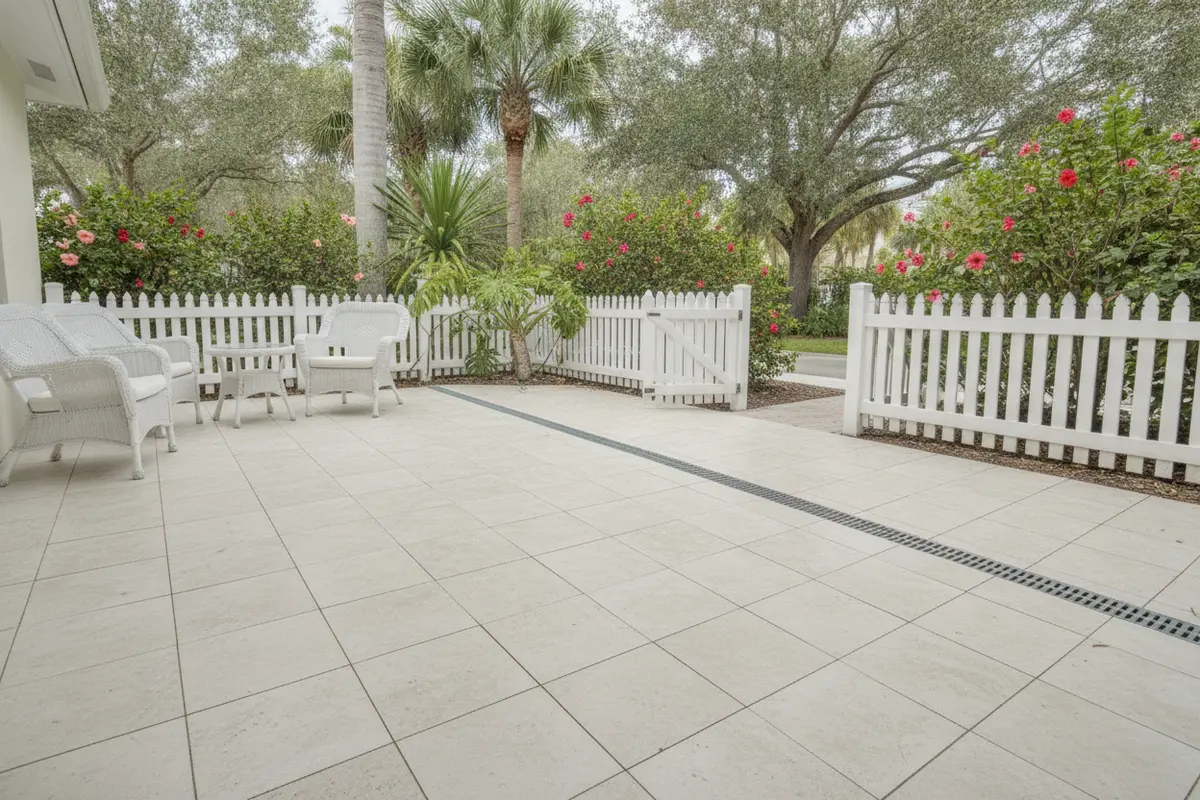
Consider adjacent features too. A pool cover, outdoor kitchen, lighting, irrigation equipment, and planters may have separate instructions and risks. Do not assume they share the paving's construction or care requirements. Keep emergency equipment and exits accessible, and follow local emergency guidance over general home-maintenance advice.
Think through how you will handle each item before a warning makes the schedule tight. Keep manufacturer instructions where household members can find them, and note whether a feature needs a particular shutdown sequence or specialist assistance. Do not disconnect electrical equipment, alter gas connections, or improvise a restraint based on guesswork. For umbrellas and shade equipment, follow their specific storage directions rather than assuming that closing alone is enough. For planters or decorative objects, consider both the risk of movement and whether moving them could block a drain or access route. If there is not enough time to move an object safely, prioritize people and follow official instructions rather than trying to complete every checklist item. Preparedness should reduce avoidable exposure, not create a new hazard in a rush.
Make the walk-through repeatable rather than relying on memory. Begin at the house and move in one direction around the paved area, then check the access route back to the door. Use a written list or phone note to mark each task complete. If more than one person is helping, assign zones such as patio furniture, pool equipment, and side-yard access. Before moving a heavy grill or planter, consider its weight, path, and whether the task can be completed without strain or risk. If it cannot, leave it in place and ask an appropriate professional for guidance. Keep children and pets away from the work area, especially when moving large objects or handling equipment. Once objects are stored, check that the remaining items are not blocking a drain, doorway, gate, or emergency route. This second pass catches the common tradeoff of moving clutter into a location that then obstructs access.
The bottom line: Remove or secure loose objects early, keep routes clear, and divide the work into manageable areas. These actions address movable hazards around the patio; they do not establish how the entire paving assembly will respond to a storm or promise that surrounding property will avoid damage.
Look for visible debris in drains, channels, and other designed water pathways. Clear leaves and ordinary surface debris only when conditions are safe and you can do so without disturbing the installation. Do not enter floodwater, work near electrical hazards, or climb onto unstable surfaces. Avoid redirecting water toward the house or changing grades, edging, or drainage components on your own.
Think about what you have observed during ordinary rain. Does water repeatedly collect in one spot? Have you seen a drain cover shift, an edge loosen, joint material wash away, or nearby construction alter the way water moves? Note the location and timing. These observations help a qualified professional understand the concern; they do not reveal the condition of concealed layers beneath a sand-set porcelain paver installation.
Walk the perimeter without prying at the edge or lifting pavers. Look for new gaps, visible movement, settled areas, or debris that could obstruct a channel. Compare the site with dated photos if you already have them, but avoid treating a visual comparison as a technical assessment. If a drain looks damaged or water has an unfamiliar route, record the issue and ask the project professional who knows the site to review it.
Hardscape's porcelain paver product information and care and maintenance information can help with general product questions. For drainage, grade, or installation concerns, seek site-specific advice instead of attempting a major change from a general article.
A useful observation log is specific and neutral. Record the date, whether it followed ordinary rain or another event, the approximate location, and what you observed from a safe position. For example, “water remained near the north gate after rain” is more useful than “the patio drains badly.” If safe, take a photo from the same spot on different days to show whether a condition changes. Do not use a hose to test flow, pour water into a drain, remove a grate, or lift a paver unless a qualified professional tells you how to do so safely. Those actions can alter conditions or create a new hazard. Keep the notes with project documents and share them with the installer or designer who can interpret the site layout. A record can help explain the concern, but it does not establish cause or confirm the condition of concealed layers.
The bottom line: Keep designed drainage paths free of ordinary debris when it is safe, and document pooling, displacement, or changes at edges. A surface inspection cannot verify hidden construction. Leave drainage alterations and repairs to an appropriately qualified professional familiar with the project.
A useful checklist separates simple tasks from decisions that need expertise. Include the paved area, edges, adjacent structures, drainage openings, and access routes. For properties with a pool, outdoor kitchen, planted areas, or equipment, list those components separately so their care directions are not confused with instructions for the paving.
| Area to review | Owner's safe check | When to seek professional advice |
|---|---|---|
| Movable objects | Store cushions and loose décor; follow manufacturer instructions for portable equipment. | An item is heavy, fixed, or has no clear safe securing method. |
| Drainage paths | Look for visible leaves or debris and keep access clear when conditions allow. | Water routinely pools, a channel appears damaged, or the intended flow is unclear. |
| Paver surface and edges | Note visible changes and take dated photos from a safe position. | Pavers appear displaced, edges have shifted, or joint material has changed noticeably. |
| Access and nearby equipment | Keep doors, gates, and routes open; review each item's instructions. | A feature requires specialist shutdown, securing, or assessment. |
| Responsibilities | Write down the task owner and completion status. | Several contractors or property representatives need to coordinate technical work. |
Make the checklist usable. Add the location, the responsible person, and a simple status such as “not started,” “complete,” or “needs advice.” Keep the list with household emergency planning materials. If a property manager or contractor is involved, share the same list so there is no uncertainty about who will check a drain, move an item, or contact the installer.
For a simple household version, make one line for each location rather than writing “patio” as a single task. You might list the pool deck, side walkway, driveway edge, outdoor kitchen, and gate route separately. Next to each line, note the item to secure or check, the person responsible, and any caution such as “do not move grill” or “professional review requested.” When a task is complete, mark the time and who completed it. If a condition needs advice, record the question and the person contacted instead of repeating an inspection or attempting an unplanned repair. Property managers can share the same checklist with residents or contractors so there is one reliable version of task status. Remove access details or sensitive household information before sharing more widely. A concise record supports coordination without implying that each surface or component has received a technical inspection.
For a project still being planned, record intended use, site drainage questions, nearby structures, and maintenance responsibilities. Hardscape offers porcelain pavers in different thickness options, but suitability depends on application and project design. Review 2CM paver details, 3CM paver details, or 5CM paver details with a design or installation professional rather than selecting by thickness alone.
The bottom line: A written checklist prevents routine tasks from being confused with technical work. Identify the location, person responsible, and conditions that call for professional input. For a new project, keep product selection tied to the intended application and site plan rather than assuming one thickness or detail fits every property.
Raise questions before a storm threat becomes urgent, when timing and conditions allow. Ask about the specific assembly, drainage route, edge details, and any nearby structures that affect the paved space. If you notice a concern, share clear photos from safe positions and describe when it appeared, whether it has changed, and what ordinary weather conditions reveal. Ask whether an inspection is appropriate and what conditions would make it unsafe or impractical.
For planned work, discuss how water is meant to move across and away from the site, where access must remain clear, and who is responsible for routine upkeep. Porcelain paver installation is sand-set; project details and site conditions still matter. Do not treat general product descriptions as a substitute for a site-specific plan or assume the surface alone determines storm outcomes.
Bring the discussion down to the actual property. Point out doors that must stay accessible, low spots noticed during routine rain, edges next to planting beds, drains, and any adjacent structure that could affect water movement. Ask the project team to explain which visible signs should prompt a call and which maintenance tasks are appropriate for the owner. For an existing installation, provide dates and photos where practical; for a new project, ask that responsibilities for ordinary upkeep and follow-up be clear before work begins. If multiple trades are working nearby, clarify who should be contacted when landscaping, irrigation, or other changes may affect drainage. This is coordination, not a prediction of hurricane performance. A qualified person needs to review the actual site and assembly before recommending repairs or changes.
Hardscape's professional-finding resource can help you explore installation support. You can also use the locations directory to find showroom information or contact the team with product questions. If your project involves a particular product, review the porcelain paver options before asking focused questions. Do not delay following local emergency instructions to seek product advice.
Prepare a short question list before calling: What should be observed? Which changes warrant an inspection? Who should be contacted if an edge or drain looks different? What routine care guidance applies after debris is removed? Clear questions make it easier for the professional to separate product questions from site conditions and urgent safety issues.
The bottom line: A professional familiar with the project can assess its particular assembly and setting in a way a general checklist cannot. Plan questions ahead, share observations, and rely on local authorities for immediate storm and evacuation decisions.
Wait until local authorities say it is safe to go outside. Avoid standing water, downed wires, unstable structures, sharp debris, and areas where the ground may be compromised. Do not walk across a damaged or flooded surface just to inspect it. From a safe position, photograph visible conditions before moving objects or beginning cleanup, especially if you may need a record for an insurer or property manager.
When access is safe, look for obvious displacement, damaged edges, debris in drainage paths, new pooling, or changes to nearby structures. Note what you can see without lifting pavers or probing joints. A surface that appears intact does not prove that concealed areas have no issue. If you see movement, a blocked or damaged drain, or an unfamiliar change in water flow, pause and contact a qualified professional.
Use a calm, staged review instead of trying to clean everything at once. First observe from a safe place and take photos before moving debris. Then identify hazards that make the area off-limits, such as unstable surfaces, exposed wiring, broken glass, or standing water. After authorities and relevant professionals deem access safe, separate ordinary loose debris from signs of damage. Avoid dragging heavy objects across the paving, and do not use tools to pry at joints or edges. If you need to clear a path for access, move only items that are safe to handle and keep a record of their original position. Contact the installer or a qualified professional if a paver has shifted, water is following a new path, or an edge appears unsettled. A gradual sequence protects people and preserves useful observations better than immediate sweeping or makeshift repairs.
Avoid pressure washing, aggressive scraping, or quick repairs until you have checked relevant care guidance and, when needed, spoken with a professional. Storm-borne sand, leaves, and other debris may call for different handling than ordinary dust. Do not use a method simply because it is convenient; follow product care information and consider whether the surface and surrounding site are safe first.
For routine cleaning questions, consult Hardscape's porcelain paver cleaning information. If a concern involves movement, drainage, or the installation assembly, contact the installer or a qualified site professional. Product guidance can inform routine care, but it does not replace a site assessment of potential storm-related damage.
When communicating about a problem, describe what is visible rather than guessing at the cause. Share the approximate area, when you first noticed the change, whether it has continued, and any relevant photos taken safely. For example, a note might say that debris was visible at a channel after cleanup or that an edge appeared different from an earlier dated photo. Keep damaged items and access hazards in mind; do not step over debris or enter a questionable area to obtain a closer picture. Ask the professional whether the location should remain unused and whether any temporary measure is appropriate. Avoid filling a gap, resetting a unit, or redirecting water before receiving advice, since a quick repair may hide the original condition or make assessment harder. Keep receipts and communications if the property owner, manager, or insurer needs a record, while following their specific documentation procedures.
The bottom line: Put safety first, document observable conditions, and arrange professional review when you see movement or drainage changes. Resume routine cleaning only after the area is safe and you have chosen a method appropriate to the product and condition.
Contact Hardscape with product questions
No paving material can guarantee that a property will avoid storm damage. Outcomes depend on the complete installation, site conditions, drainage, nearby structures, and the storm. This guide focuses on movable hazards and sensible coordination, not a performance guarantee.
Store or secure movable items according to their manufacturer's instructions and local emergency guidance. Lightweight objects, cushions, and umbrellas can become hazards if left loose. Do not attempt to move anything that is unsafe to handle.
Do not make major drainage, grading, edge, or installation changes based on a general article. Record the concern and ask a qualified professional familiar with the site to assess it.
First confirm that local authorities say the area is safe. Avoid floodwater, electrical hazards, unstable structures, and damaged surfaces. Then consult appropriate product care guidance and seek a professional assessment if you see movement or drainage changes.
Review Hardscape porcelain paver options and discuss application-specific questions with a project professional or the Hardscape team.
Thoughtful preparation means clearing what can move, keeping drainage paths visible, and seeking site-specific advice when something looks wrong; follow local authorities for storm safety.