28 Oct
Planning a bluestone patio alternative starts with more than choosing a color. A homeowner should compare the intended look, paver format, project use, installation plan, upkeep, and the details the design and installation team need. Porcelain pavers offer a range of styles and thicknesses for outdoor applications, so a clear comparison helps connect the visual goal to the right project questions.
Discuss your patio plans with Hardscape.com
Begin by writing down what you want the patio to do and how you want it to look. A comparison is useful only when the options are judged against the same needs. Consider the home’s architecture, the patio’s shape, the way people will use it, and how it connects to a pool, garden, or outdoor dining area.
The best alternative is not a generic stand-in for bluestone. It is the porcelain paver selection that meets the project’s aesthetic, use, installation, and care priorities. Record those priorities first, then compare specific products and verify product details with the manufacturer or project professional.
Explore porcelain paver options and review the available 2CM pavers, 3CM pavers, and 5CM pavers as starting points.
Before requesting a quote or ordering materials, make a short project brief. Include approximate dimensions, preferred colors, the intended use, and any areas that must align with existing construction. A brief gives a product specialist or installer something concrete to review and helps prevent a decision based only on a small sample.
The bottom line: Compare products against a written project brief, not a single color swatch. Define the look, use, format, and care expectations, then confirm the exact product and application with the project team before making a selection.
For a practical example, imagine a rectangular patio that meets a pool edge on one side and a sliding door on the other. Start with those fixed points on graph paper, then sketch two or three candidate layouts. Mark full units, likely cuts, and joint lines. This quick exercise can reveal that a preferred format creates narrow cuts beside the door or awkward alignment at the pool. It does not replace a site measurement, but it helps turn a vague style preference into questions an installer can answer.
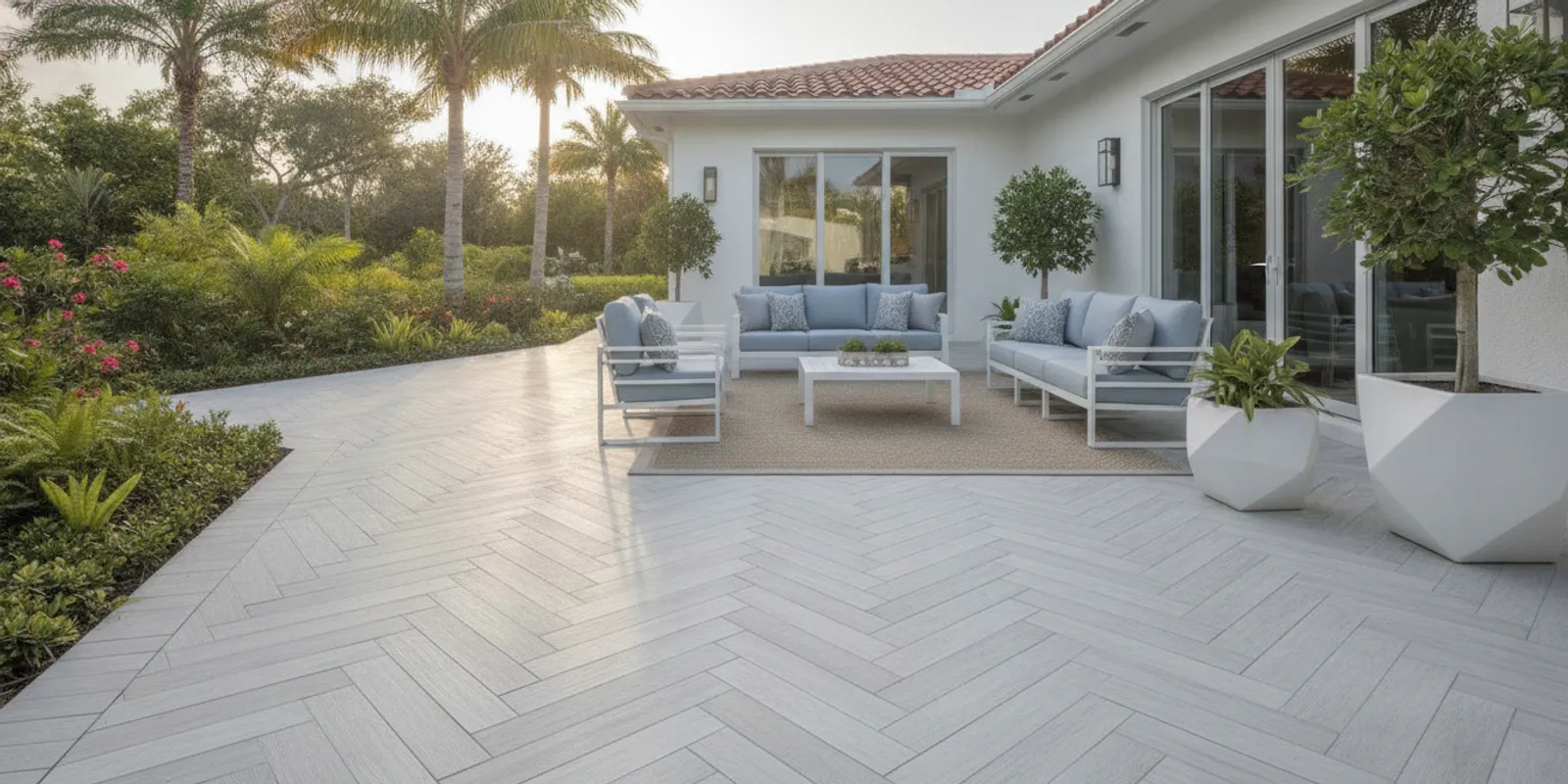
Porcelain pavers can support different outdoor design directions through variations in color, pattern, and format. Instead of trying to reproduce one material exactly, decide which qualities matter most: a calm, uniform field; a more varied visual pattern; or a layout that emphasizes the patio’s geometry.
Gather photographs of the house and the surrounding yard, then mark the areas where the patio meets walls, planting beds, pool coping, or walkways. These transitions influence which format and layout will feel coherent. Ask to see product samples in the actual outdoor setting when possible. Indoor lighting and a small screen image can make a color appear different from how it reads outside.
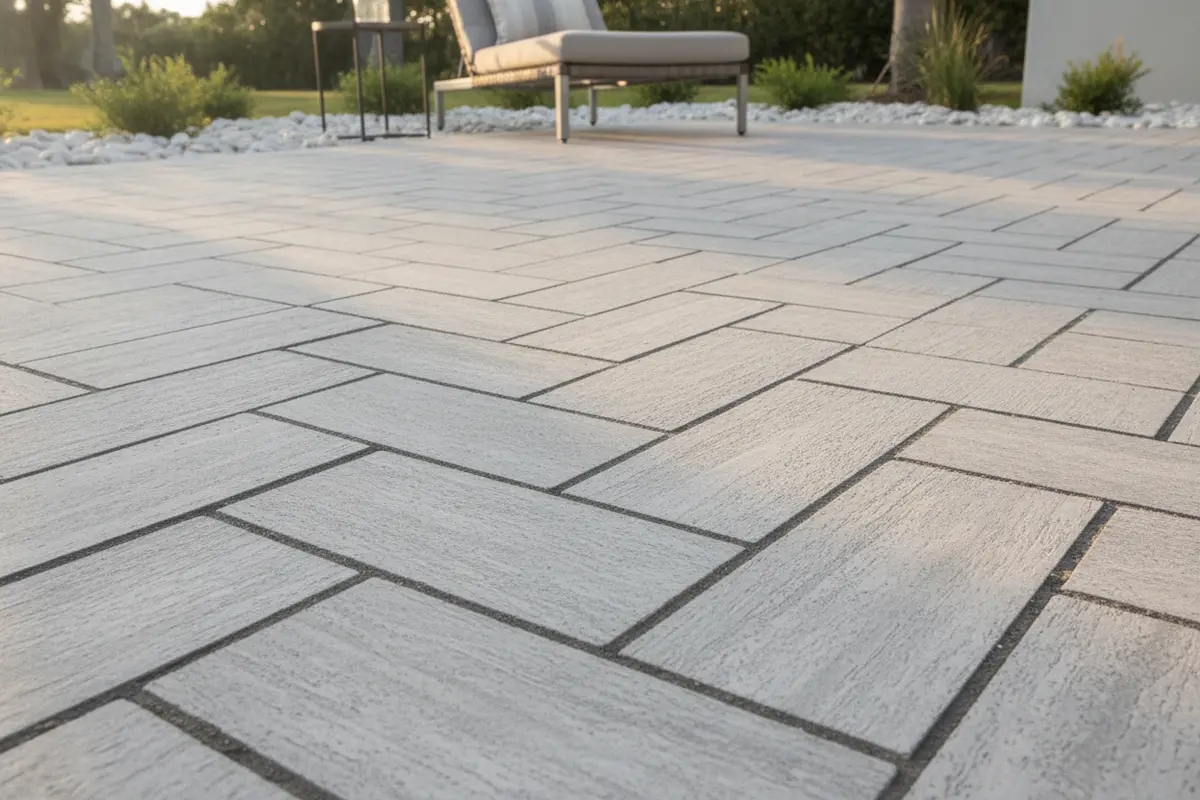
For a Florida project, consider how sun and shade move across the space, and evaluate samples at different times of day. Think through whether the patio should visually connect to adjacent porcelain coping or other paver areas. You can compare porcelain coping options alongside the field paver, and browse the project inspiration gallery for ideas about outdoor layouts.
Layout also affects how a patio feels at its edges. A running pattern may lead the eye toward a door or pool, while a grid can reinforce a formal geometry. Larger units may reduce the number of visible joints, but the actual product dimensions, cutting plan, and site shape still need review. Ask the project team to show how the layout will resolve at corners and transitions.
Do not settle layout questions from a product name alone. Confirm dimensions, edge details, and how the selected pavers coordinate with the surrounding design. A designer or installer can help assess transitions and cuts based on the actual site plan.
To compare samples consistently, place them next to the home’s exterior wall, coping, and any adjacent paving. View each in bright sun and in shade. Take photographs from the same position and distance, then compare the images rather than relying on memory. If a sample looks right by itself but competes with the house or pool edge, note that before settling on a color. This simple routine helps a homeowner explain a preference clearly to a designer or product specialist.
The bottom line: Appearance depends on the whole composition, not just the paver’s color. Review samples outdoors, map the transitions, and evaluate the field paver with coping and adjoining surfaces so the selected design works as one plan.
Thickness and product format are practical comparison points, but they should be assessed in relation to the intended application and the manufacturer’s current guidance. Hardscape.com offers 2CM, 3CM, and 5CM porcelain pavers. The product pages are the right place to review current product-specific descriptions and available designs.
| Comparison point | What to review | Question to ask |
|---|---|---|
| Thickness | 2CM, 3CM, or 5CM product options | Which product is specified for this project and application? |
| Format | Available dimensions and layout fit | How will the format work at edges, doors, and transitions? |
| Design | Color, pattern, and relation to the home | Can we review a sample in outdoor light? |
| Accessories | Joint, edge, and cutting requirements | Which compatible accessories and tools belong in the plan? |
| Installation | Site-specific preparation and sand-set approach | Who will confirm the site conditions and installation details? |
Use the table as a conversation aid rather than a substitute for technical review. Product specifications can vary by item, so do not assume a statement about one paver applies to every thickness or design. Check the specific product information and ask the project team to confirm suitability for the planned use.
Also consider details beyond the paver itself. The overall plan may include coping, spacers, polymeric sand, grout, or cutting tools depending on the design and application. Review paver accessories and discuss compatibility before finalizing quantities. If joints are part of the visual plan, confirm the intended joint width and the product recommended for that application instead of selecting a material by appearance alone.
Format should be reviewed with handling and access in mind as well. Ask how the selected units will be moved through the property, where materials can be staged, and whether the proposed pattern creates unusual cuts. These questions are useful for a homeowner and essential for a contractor preparing a material list.
Make the comparison concrete by recording one row per candidate product: product name, thickness, dimensions, preferred layout, accessories to verify, and any open technical question. For example, if two options share a color family but differ in format, compare how each handles the same patio outline. Ask the supplier or project professional to confirm current product details rather than inferring them from a category label. Keep the notes with the drawings so a later substitution can be reviewed against the original intent.
The bottom line: Compare the exact product, dimensions, accessories, and application rather than relying on broad category assumptions. Use current product information and a project-specific review to confirm that the chosen paver and supporting materials belong together.
Porcelain paver installation should be planned as a sand-set system. Site preparation, drainage, edges, and transitions need to be coordinated for the actual location. A product choice alone cannot answer those site-specific questions, so involve a qualified professional early enough to review the plan.
Bring a measured sketch, photographs, and any relevant project drawings to the conversation. Identify fixed points such as steps, drains, pool edges, and doors. For a Florida property, share any site conditions the installer should consider rather than assuming a general detail applies everywhere.
Hardscape.com provides a path to find an installation professional. For planning information, see the project planning guide and project timeline resource. These can help you organize questions before a project conversation.
A useful handoff includes the selected product name, thickness, dimensions, layout sketch, edge details, joint approach, accessory list, and the person responsible for confirming site conditions. Designers can use that list to communicate intent, while contractors can use it to identify unanswered questions before ordering. Homeowners should keep the latest version so product substitutions are reviewed rather than assumed.
On site, ask the installer to walk through the sequence before work starts: how the boundaries will be set out, how the sand-set system will be prepared, where edges and transitions will be resolved, and how the crew will check alignment as the field progresses. Ask who will make a decision if a measured condition differs from the sketch. Agreeing on that process in advance is more useful than trying to settle a design question after materials are placed. Record answers and any revised details in the project notes.
Drainage deserves a specific conversation because a patio is part of the property, not an isolated sample board. Point out low areas, downspouts, nearby planting beds, and places where water currently collects. Ask the qualified professional how the site conditions and proposed elevations will be evaluated. Avoid assuming the same detail works at every home; local conditions and the adjoining construction shape the plan.
The bottom line: Treat installation planning as part of material selection. Confirm the sand-set approach, site conditions, drainage, edges, and handoff details with a qualified professional, and keep the product choice tied to the actual project plan.
Ask what routine care the selected porcelain paver requires and what products are appropriate for cleaning. A patio’s maintenance needs also depend on how it is used, what is nearby, and the conditions at the site. Clarify how to clean ordinary dirt and how to respond to spills or other specific concerns.
Review the manufacturer’s guidance for the chosen product rather than applying a generic care routine to every surface. Hardscape.com offers cleaning products and care information. Before purchasing cleaners or accessories, confirm that they are suitable for your product and situation.
Think about daily use as well as cleaning. Where will furniture sit? Will planters or grills be placed on the patio? How will the surface connect to landscaping, and who will handle routine sweeping and rinsing? These practical questions help you choose a layout that is attractive and manageable for the household.
Ask about maintenance at the planning stage, when the layout can still be adjusted. A clear path for routine sweeping, access around furniture, and a sensible relationship between planting beds and the patio can make ordinary care easier. Keep product documentation with the project records so future cleaning decisions are based on the selected item and not on a generic assumption.
Use a short care-planning checklist for the household: note where leaves or soil tend to collect, whether furniture will be moved often, and which areas are likely to see food or drink spills. Ask the project team for the selected product’s care guidance and keep it with the product details. The point is not to predict every maintenance task; it is to make sure the people using the patio know what routine care is appropriate and where to check before trying a new cleaner.
For a family patio, also consider the way furniture legs, planters, and accessories meet the surface. Decide where heavier items will sit and whether they should be moved for cleaning. For a dining area, keep enough working space around chairs so routine sweeping does not require shifting every piece. These choices affect everyday convenience and can be considered while the layout is still being discussed.
The bottom line: Make care part of the comparison instead of treating it as an afterthought. Ask for product-specific cleaning guidance, consider the way the patio will be used, and choose a plan that fits the owner’s day-to-day expectations.
A focused discussion can resolve questions before ordering. Organize your priorities in a short brief that names the desired visual direction, approximate patio dimensions, intended use, and any key transitions. Bring photographs, a sketch, and sample preferences if you have them.
If you want to see product choices in person, check Hardscape.com showroom and dealer locations. You can also use the virtual showroom to explore available designs. For product or project questions, the contact page is the next step.
Before the conversation ends, ask who owns each next step. One person may confirm the product, another may measure the site, and another may coordinate delivery. Clarifying those responsibilities can reduce confusion when a patio includes several connected areas. It also gives the homeowner a clear point of contact for questions about samples, quantities, and timing.
Prepare a one-page brief with a simple plan view and a short list of decisions still needed. Separate confirmed choices from questions: for example, “patio connects to the pool coping” may be known, while “which format suits the narrow side passage?” still needs review. Add names or roles beside follow-up tasks and agree on when each answer is needed. This makes the conversation easier to act on and helps prevent a sample preference from being mistaken for a final product specification.
After the meeting, circulate the updated notes to the people involved. Confirm the product designation and dimensions in writing, attach the layout sketch, and identify any assumptions that remain unverified. If the project changes, revise the brief rather than relying on separate text messages or remembered conversations. A single current record supports clearer coordination from selection through delivery and installation.
The bottom line: Arrive with a clear brief and ask for product-specific, site-aware answers. A shared plan helps homeowners, designers, and installers align the material, layout, accessories, and installation details before the project moves forward.
Get help comparing porcelain pavers for your patio
They can be considered as an alternative material for an outdoor patio. Compare the specific porcelain paver’s appearance, format, intended application, installation plan, and care needs with your project priorities.
Hardscape.com offers 2CM, 3CM, and 5CM options, but the appropriate choice depends on the specific product and application. Review current product information and confirm the selection with the project professional.
Porcelain paver installation should be planned as sand-set. Have a qualified installer review site conditions, preparation, drainage, edges, and the selected product before work begins.
Bring approximate measurements, photographs, a sketch of transitions, notes about how the patio will be used, and examples of the visual direction you prefer. Those details help focus the product discussion.
A well-planned patio comparison connects the design you want with product-specific information and a site-aware installation plan. Use your project brief to start a conversation and confirm the details before choosing materials.